Weekly Roundup

Weekly Dispatches from the Frontlines of World Literature

The latest from Iran, the United States, and Morocco!

Ready for your Friday World Tour? We touch down in Iran just in time for the New Year celebrations—for which thousands of books are exchanged! Then off to the States, where writers of all backgrounds are reacting to the political tumult of the times. Finally in Morocco, we’ll catch the National Conference on the Arabic Language. Let’s get going!

Poupeh Missaghi, Editor-at-Large for Iran, updates on the New Year celebrations:

The Persian year of 1395 (SH for solar Hijri calendar) will come to an end and give way to the year 1396 on Monday March 21st, the day of the spring equinox, at exactly 13:58:40 Iran’s local time. The arrival of the New Year and spring is celebrated with various Nowruz (literally meaning “new day”) traditions such as haft sin, the special table spreading that consists of seven different items all starting with the Persian letter س [sin or the “s” letter], each symbolizing one thing or another. The International Nowruz Day was inscribed on the list of UN’s Intangible Cultural Heritage of Humanity in 2009.

To welcome the New Year, the Iranian literary community, like the previous year, has set up a campaign entitled Eydane ye Ketab [Nowruz gifts of book]. It began on March 5th and will run for a month, aiming to promote buying books as eydi (gifts for the Persian New Year) for friends and family instead of offering money or other gifts, or even as replacements for the calendars that companies widely give out as promotional year-end gifts. More than four thousand publishers around the country are part of this campaign and offer more than one million titles with special prices. In the first seven days of the campaign, more than 190,000 books were sold.

Some of the translation titles on the bestsellers list of the Eydane, have included: The Forty Rules of Love: A Novel of Rumi by Elif Şafak; Me Before You by Jojo Moyes; A Fraction of a Whole by Steve Totlz; After You by Jojo Moyes; Asshole No More, The Original Self-Help Guide for Recovering Assholes and Their Victims by Xavier Crement; The 52-Story Treehouse by Andy Griffiths and Terry Denton; One Plus One by Jojo Moyes; and The Little Prince by Antoine de Saint-Exupery.

READ MORE…

Dispatches from the Frontlines of World Literature

Hot off the press: the latest literary news from Latin America, Germany, and Austria!

This week, we set off from Buenos Aires, where Editor-at-Large Sarah Moses reports on the hottest literary events around the country. Then Editors-at-Large Paul Worley and Kelsey Woodburn take us from Argentina to Guatemala, Mexico, and more, updating us on the latest cultural happenings around Latin America. That’s all before we jet to Europe with contributor Flora Brandl for a rundown on the contemporary German and Austrian lit scene. Buckle up!

Sarah Moses, Editor-at-Large for Argentina, has the scoops on the latest literary events:    

The Ciclo Carne Argentina reading series held its first event of the year on February 17 at Nivangio Club Cultural in the Boedo neighbourhood. The series, which recently celebrated its ten-year anniversary, has become a Buenos Aires institution. Poets and authors, both acclaimed and just starting out, are invited to read at each event. Since the series began in 2006, over 150 authors have shared their work at different venues across the city. The February reading featured six writers including Vera Giaconi and Valeria Tentoni.

On March 3, the Seminario Permanente de Estudios de Traducción [Ongoing Seminar of Translation Studies] at the Instituto de Enseñanza Superior en Lenguas Vivas  “Juan Ramón Fernández” [Institute for Higher Education in Living Languages] started off the year with a special session. The series provides a space to discuss theoretical and critical texts in the field of translation studies, as well as one in which writers, translators, researchers, and teachers can interact. Canadian poet, translator, and professor Madeleine Stratford presented her research on creativity in translation through an examination of the process of bringing Marianne Apostolides’s novel Swim (BookThug, 2009) into French. Stratford’s translation, Elle nage (La Peuplade, 2016), was a finalist in the English-to-French translation category for the Governor General’s Award, a prestigious Canadian prize.

The British Council and the Filba Foundation, an NGO dedicated to the dissemination of literature, are hosting an upcoming conference and series of talks and workshops on the future of the public library. Gillian Daly, head of policy and projects at the Scottish Library & Information Council, will travel to Buenos Aires to share her experience, and the events are intended to serve as a dialogue between Scotland and Argentina. The conference will take place at the Museo del libro y de la lengua on March 10.

From April 6-9, Filba Nacional, the organization’s national literary festival, will bring together close to 30 Argentinian authors for talks, readings, and other activities. Each year, the event is organized in a different location in Argentina, and in 2017 the Patagonian city of Bariloche will host the festival.

READ MORE…

Weekly Dispatches from the Frontlines of World Literature

The latest news from Brazil, Egypt, and Spain!

This week, we take off on tour just south of the equator, where Editor-at-Large for Brazil, Maíra Mendes Galvão, gives us the scoop on Indie Book Day and some big-time literary awards. Then it’s east to Egypt, where we’ll catch up with Editor-at-Large Omar El-Adl about some exciting recent and upcoming events. Finally in Spain, Editor-at-Large Carmen Morawski highlights new releases and a chance to win poetry collections!

Maíra Mendes Galvão, Editor-at-Large for Brazil, has the latest from the lit scene:

The National Library Foundation of Brazil has issued an open call for publishers from all over the world interested in translating and publishing works by Brazilian authors to send in their proposals. Selected works will be eligible for a grant. Publishers have until May 2 to apply.

Raduan Nassar, veteran Brazilian writer with a short but acclaimed bibliography, has made headlines after giving a politically-charged speech on February 17 when he accepted the Camões Prize, issued by the Ministry of Culture of Brazil in partnership with Portugal. Mr. Nassar has called out the present government’s controversial claim to power, calling it anti-democratic and pointing out specific instances of misconduct by the administration, the president’s cabinet, and the Supreme Court nominees.

The popular Plana Fair, catalyst of a movement to popularize self-publishing and small publishing houses in Brazil, is holding its fifth edition under the name Plana – Art Book Fair at the São Paulo Biennial building, taking over the ground floor and the mezzanine of the iconic Pavilion Ciccillo Matarazzo from March 17 to 19. Plana will feature around 150 national and international exhibitors and a parallel program of talks, screenings, performances, and workshops.

Brazil is taking part on this year’s Indie Book Day on March 18, an initiative to promote and popularize independent publishing. It is a concerted action with a simple proposition: to go to a bookstore, any bookstore, on this particular day, buy an independently published book and post a picture of it on social networks with the hashtag #indiebookday.

Casa Guilherme de Almeida, the São Paulo State museum dedicated to Modernist journalist, poet, and translator Guilherme de Almeida, is holding a two-day conference dedicated to the translation of classics—the 3rd Translation of Classics in Brazil Conference—with the theme Re-translations in Conversation. Speakers will focus on comparative efforts of the differences between the premises, procedures, and results of translations of the same classical works.

READ MORE…

Weekly Dispatches from the Frontlines of World Literature

Your literary update from Romania, Cuba, and the UK

This week, we dock first in Romania, where Editor-at-Large MARGENTO updates us on the political climate and how it’s influencing literary output. Then we sail southwest to Cuba, where we’ll hear from Blog Editor Madeline Jones about the foreign diplomats barred from an awards ceremony, as well as highlights from the International Book Fair in Havana. Finally, back across the Atlantic, M. René Bradshaw, Editor-at-Large for the UK, maps out the best literary events taking place in and around the capital throughout March and April.

MARGENTO, Editor-at-Large for Romania & Moldova, catches us up on the Romanian literary scene:

The recent wave of rallies that have swept Romania, where hundreds of thousands took to the streets to protest the government’s decrees decriminalizing certain corruption-related offences, has sparked reactions both on social media and in literary and creative circles.  The “light revolution” received huge global media coverage when tens of thousands of smartphones converged their glows outside the government building in Bucharest, sending a blinding anti-graft message while also forming the image of a huge national flag.  The true hallmark of this revolution has been internationally perceived as the deployment of digital apps and catchy, pun-filled slogans in both English and Romanian, inundating social and mass media with what hip-hop star Călin “Rimaru” Ionescu has termed the new “OUGmented reality” (OUG being the Romanian acronym for a governmental decree).  As #Rezist has gone viral across digital media channels, it is apt to share from our past archives a celebration by Asymptote contributor Ruxandra Cesereanu of what she sees as a revival of the anti-Soviet and anti-communist rezistance, a Romanian partisan movement that heroically lasted from the late 1940s through the mid-1960s.

In a similar vein, American poet and translator Tara Skurtu—currently in Romania on a Fulbright grant—has revisited the Romanian gulag in a poem inspired by the recent protests and published in the Huffington Post. A couple of days later, the same publication ran an interview on similar issues with Radu Vancu, also an Asymptote contributor.  Still, one of the authorities on modern and post-communist history Mircea Stănescu, who has consistently and shrewdly chronicled and analyzed the protests, maintained a cautionary stance, pointing out the generation gap strongly manifest in the current movement and warning about deeper political and educational issues that might remain unaddressed and resurface later.  Yet it seems that the ongoing rallies and sense of solidarity are a breath of fresh air that has already inspired a great deal of writers. Poet, novelist, and essayist Cosmin Perța has already announced a forthcoming #Rezist literary anthology.

READ MORE…

Weekly Dispatches from the Frontlines of World Literature

Your Friday update from Spain, Morocco, and Slovakia!

This week, we begin our world tour on the Iberian Peninsula in the midst of political unrest—Podcast Editor Layla Benitez-James is on the ground in Spain with the full report. Then south to Morocco: we’ll catch up with Editor-at-Large Jessie Stoolman about the latest book fairs and literary trends. And finally, we’ll wrap up in Slovakia with Editor-at-Large Julia Sherwood, who has the scoop on the latest Slovak poetry available to English readers and more.

Podcast Editor Layla Benitez-James reports from Spain:

Political actions and gestures have been more overtly woven through the Spanish literary scene as writers seek to speak back against increasingly divisive governments. Writers called for remembrance of fifteen people killed in Tarajal on the two year anniversary of their deaths on February 6, 2014; a documentary about the tragedy was made to both inform the public and denounce such instances of institutional racism in the country.

Amidst celebrations of women’s roles in science, Bellver, the cultural journal of the Diario de Mallorca, highlighted three recent anthologies written by women: Poesía soy yo, 20 con 20,  and (Tras)lúcidas.

Another recent book has been getting a lot of attention not for its political weight, but because of the strange circumstances under which it’s being published. Michi Panero, who came from a very literary family but died young in 2004 has had his first book, Funerales vikingos, published by Bartelby Editores. La Movida madrileña called him the writer without books, as he had famously shunned the writing life. He wrote in secret, however, and eventually entrusted the work to his stepson, Javier Mendoza, who has finally sought to publish the unedited stories, together with his own work narrating his relationship with Panero. The product is bound to be an interesting read.

Similarly mysterious and posthumously discovered is a recent gift to the Madrid art world: drawings and sketches by the painter Francis Bacon that were previously unascertained. Bacon had also famously declared that he did not sketch or plan in this way, but some nearly 800 drawings were given to Cristiano Lovatelli Ravarino, the journalist and a partner of Bacon’s for some years. The works will be on display in the Círculo de Bellas Artes in Madrid until May 21.

READ MORE…

Weekly Dispatches from the Frontlines of World Literature

Your update from Taiwan, India, and Finland!

This week, put on your walking shoes so we can follow Vivian Szu-Chin Chih, Editor-at-Large for Taiwan, through Taipei, from an international book exhibition to a history museum. Then we’ll zip over to India to meet Assistant Managing Editor Janani Ganesan for discussions about literary translation and, wait for it—bull fighting. And finally in Finland, Assistant Blog Editor Hanna Heiskanen has some Finnish Publishing Industry gossip for us. Cheers! 

Editor-at-Large Vivian Szu-Chin Chih reports from Taiwan:

As the Chinese Lunar New Year ushered in the Year of the Rooster, as well as the Ding-You Year (丁酉年) in the Chinese Sexagenary cycle, readers in Taiwan have been anticipating the annual Taipei International Book Exhibition, which is kicking off on February 8 and will last till February 13. The international event for book-lovers will take place at the Taipei World Trade Center, only a few steps away from the landmark 101 building. Among this year’s featured sessions are a forum specifically dedicated to children’s books in Taiwan and a discussion concerning how local bookstores can be redefined and reshaped, featuring several Taiwanese and Japanese speakers and the founding chair of the Melbourne Writers Festival, Mark Rubbo. The eminent Chinese novelist and poet based in the U.S., Ha Jin, will also deliver two speeches, one on the art of humor writing in fiction, the other to announce his two latest books, “The Boat Rocker” (《折騰到底》) and a poetry collection, “Home on the Road” (《路上的家園》). The female poet and publisher from Paris, Anne-Laure Bondoux, will travel to the island to attend the book exhibition as well, giving several talks including a discussion with the Taiwanese novelist Nathalie Chang.

The 90-year-old Taiwanese poet Luo Men passed away this January in Taipei. His poems are rich in imagery, with an emphasis on the spiritual search of the human mind. The TSMC Literature Award will see its fourteenth iteration this year, presented by the Taiwan Semiconductor Manufacturing Company to encourage emerging young Sinophone writers in Taiwan and overseas. For 2017, all writers under the age of 40 composing in Chinese, traditional or simplified, are welcome to submit a piece of a novel. The deadline will be at the end of August. Since its establishment, the award has provided young Sinophone writers with a platform to debut their literary works. For example, the 2013 first-prize winner from Nanjing, Fei Ying’s novel, was published in Taiwan by INK this past week. One of the previous winners, Liou Dan-Chiou’s latest book on a couple surviving in the wild, is forthcoming, as well.

This year marks the seventieth anniversary of the 1947 228 Incident followed by one of the longest martial law periods in the world, imposed upon the island by the Kuomingtang government. To help the society further comprehend this historical trauma and to commemorate the victims of the incident, the National Museum of Taiwan History in Tainan is holding an exhibition and a series of talks on the event. The exhibition will last until late May.

READ MORE…

Weekly Dispatches from the Frontlines of World Literature

Updates from Spain, Morocco, and the United States, from the Asymptote team

This week, we visit Morocco with new Editor-at-Large Jessie Stoolman, who tells us about a new play based on a classic novel. Then in Spain, we have a publishing update with Editor-at-Large Carmen Morawski, and onto the United States, we strap in for today’s Presidential Inauguration and writers’ reactions to the historic event. 

Editor-at-Large Jessie Stoolman reports from Morocco:

A theatrical interpretation of Mohammed Khair Ed-dine’s novel Le Déterreur [نباش القبور], adapted by Cédric Gourmelon and starring Ghassan El-Hakim, is currently on tour in Morocco, with the next performance set to take place on January 21 at the House of Culture [دار الثقابة] in Tetouan.  In the novel, a man from southern Morocco shares his countercurrent perspectives on living in a marginalized community inside a wider, fractured, postcolonial space as he recounts his life story.

Winner of numerous literary awards, including Jean Cocteau’s Les infants terribles literary prize for his novel Agadir, Khair Ed-dine (or “The Blue Bird,” as he is sometimes called) mainly wrote poetry and novels in French. He is credited with establishing a new style of writing, what he coined guérilla linguistique, that resists, in both form and content, linguistic or societal domination. Considering his prolific contributions to the genre of revolutionary writing, it is unsurprising that Khair Ed-dine is commonly grouped among renowned, twentieth century North African authors writing in French, such as Assia Djebar, Yacine Kateb, Abdellatif Laabi, Driss Chraibi, and Tahar Ben Jelloun.

Some of Khair Ed-dine’s work has been translated into German and English. For more about the German translation of his posthumously published novel Once Upon a Time There Was a Happy Couple (Es war einmal ein glückliches Paar), Qantara.de published this article, which includes a summary of the book with excerpts and information about the writer.  Similarly, to read a sample of Khair-Eddine’s poetry translated into English, see this piece from Jadaliyya, that includes four poems from his collection Ce Maroc!

In other literary news, only a few more weeks until Morocco’s largest book fair will be back!  The 23rd edition of the International Book Fair in Casablanca will open on February 9.

READ MORE…

Weekly Dispatches from the Frontlines of World Literature

This week's literary updates from the Czech Republic, Iran, and England

This Friday, we present three very distinct reports from the world of literature. Slovakian Editor-at-Large Julia Sherwood looks back at what was a great year of Czech literature in translation and gives us a sneak peek at what to look forward to this year. Her Iranian colleague Poupeh Missaghi reports on language-related issues in a human rights Twitter campaign. And finally, the UK Editor-at-Large M. René Bradshaw tells us where to head for great readings in London this month and next.

Julia Sherwood, our Editor-at-Large for Slovakia, has good news from the publishing world:

Last year proved to be a big year for Czech literature in English translation, with no fewer than eighteen publications from eight different presses at the latest count. They include, to mention just a few, Worm-Eaten Time, poet Pavel Šrut’s elegy for his homeland after the Soviet-led invasion of Czechoslovakia, translated by Deborah Garfinkle, and symbolist poet Jaroslav Durych‘s (1886-1962) 1956 novella God’s Rainbow on the expulsion of the German-speaking population from Bohemia after World War II. First published in censored form in 1969, it is now available in full in David Short’s translation as part of Karolínum Press’s Modern Classics series, which also features Eva M. Kandler’s translation of the World War II literary horror The Cremator by Ladislav Fuks, a study of the totalitarian mindset that still resonates today (extract in BODY Literature), and served as the basis for one of the key films of the Czech new wave, directed by Juraj Herz.

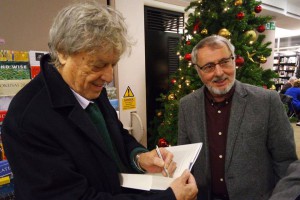
Stoppard_and_Bajaja,_photo_by_Pavel_Stojar

On 30 November, a packed audience at the launch of Antonín Bajaja’s Burying the Season (also translated by David Short) at Waterstones Piccadilly in the heart of London included the playwright Tom Stoppard. Stoppard’s father came from the town of Zlín, the setting for this novel depicting the early years of communism in Czechoslovakia. Czech literature scholar Rajendra Chitnis introduces the book as part of an Istros Conversations podcast on Audioboom, while Michael Tate of Jantar Publishing discusses on Czech radio the challenges of bringing Central European literature to English readers.

World Literature Today picked Czech writer Magdaléna Platzová’s The Attempt as one of its Notable translations of 2016, characterizing it as “historical fiction at its best”. In an interview with the Czech cultural bi-weekly A2, the novel’s translator Alex Zucker points out that while more books by Czech authors are now being published than ever before, they don’t necessarily reach many more readers since—like translated literature in general—quite a few are brought out by small independent presses and are therefore not visible in major bookshops and rarely reviewed.

In 2017, we can look forward to Zucker’s translations of two the most acclaimed contemporary Czech writers: Jáchym Topol’s Angel Station is due from Dalkey Archive in May, and Petra Hůlová’s taboo-breaking Plastic Three Rooms will be brought out by Jantar Publishing. Budding UK translators keen to be part of this unprecedented boom in Czech literature in English can participate in the fourth annual international competition for young translators, who this year are asked to tackle an excerpt from Bianca Bellová’s The Lake by 31 March (see their call for submissions). Budding Czech-to-English translators can also dip into the treasure trove of tricky issues, complete with solutions generously shared by Melvyn Clarke, in his blog post Translating Hrdý Budžes.

Acclaimed writer Zuzana Brabcová, who sadly passed away in 2015, was posthumously awarded the Josef Škvorecký prize for her haunting last novel Voliéry [Aviaries]. And as the year drew to a close, scores of students and literature lovers mourned the loss of the legendary Fišer bookstore in Kaprova Street near Prague’s Old Town Square, which closed its doors after selling books since the 1930s.

READ MORE…

Weekly Dispatches from the Frontlines of World Literature

Your literary updates for the turn of the year from Brazil, India, Mexico, and more!

Before we jump into our weekly world news tours of 2017, here at the blog we wanted to look back at the waning days of 2016 and give the literary achievements that closed such an eventful year their full due. There is already so much we’re looking forward to in the year ahead, but no piece of writing or writer exists in a vacuum; each new publication, reading, and translation takes from and makes space within the existing cultural consciousness. To be able to understand the developments in the literary scenes around the world this year, we have to see the full scope of 2016’s progress. Luckily, Asymptote has eyes and ears in every hemisphere!  

First stop on the map: India, where we check in with our first contributor this week, PhD student of postcolonial literature Tanushree Vachharajani:

2016 saw a huge uprising across India for Dalit rights. The suicide of Hyderabad PhD student Rohit Vemula in January 2016 and the assault of a Dalit family of cow skinners in Una, Gujarat in June 2016 have led to a resurgence of Dalit identity in social and literary fields, along with much dissent and unrest about the government’s attitude towards lower castes. The Gujarat Dalit Sahitya Akademi in Ahmedabad issued a special edition of their literary journal Hayati, on Dalit pride this fall under the editorship of Dr. Mohan Parmar. Also in September, under the editorship of Manoj Parmar, literary journal Dalit Chetna published a special edition on Dalit oppression, featuring works written by Dalit as well as non-Dalit writers.

The well-documented human rights violations continue to inspire a flood of responses. For the first time last month, Delhi saw a literary festival dedicated entirely to Dalit protest literature, offering a platform for Dalit regional literature and its translations into English, French, and Spanish to increase accessibility and broaden the demographic of its readers.

Dalit literature is also no longer in the realm of the purely literary. Inspired by the death of Rohit Vemula, three young activists from Mumbai—Nayantara Bhatkal, Prem Ayyathurai, and Shrujuna Shridhar—have set up the unofficially titled Dalit Panther Project for which phone numbers were collected on December 6, Babasaheb Ambedkar’s death anniversary. Through the popular social messaging app WhatsApp, they will transmit four videos on the origins and legacy of the Dalit Panther literary movement. The videos were shot at the homes of Dalit Panther supporters, and are in Hindi. The creators are also looking to bring out a full-length feature film on the subject this year.

Hearteningly, the Dalit community is pushing back strongly against abuse of any members of the lower castes. From threatening a sanitation strike to bringing Dalit literature into mainstream circles and creating inclusive literary institutions and awards, Dalit protest movements across India only seem to be getting stronger as the New Year begins.

READ MORE…

Weekly Dispatches from the Frontlines of World Literature

The latest literary news from Argentina, France, Taiwan, and Singapore.

The end of the year is nearly upon us, and we can hardly believe it here at the Asymptote blog. 2016 has been difficult the world over, but that hasn’t stopped a flourishing of creative energy in literature and the arts—which may be of more importance now than ever. This week, we check in with Asymptote team members on the latest literary happenings in places they call (or have once called) home.

Our world tour begins in Argentina, where Assistant Editor Alexis Almeida brings us the latest:

As the year comes to an end, there has been a steady stream of literary festivals in Buenos Aires. Most recently, the sixth annual Fanzine Festi took place at the Convoi Gallery, which featured zines and underground presses like Tren en Movimiento, alcohol y fotocopias, Fábrica de Estampas, Ediciones de Cero, and many others. On the same weekend, Flipa (Fería del Libro Popular [Popular Book Fair]) took place at the Paco Urondo Cultural Center. This initiative, free and open to the public, came out of “Construyendo Cultura,” a collective of cultural spaces in Buenos Aires, and aims to create a editorial circuit that reaches “the largest possible number of authors, readers, and spaces for the diffusion…of collective, homegrown presses and graphic cooperatives.” This is just another example of the thriving DIY print culture in Buenos Aires. Also held recently was La Sensacíon, a monthly book fair held at the bookstore La Internacional in the Villa Crespo neighborhood. It boasts titles from independent presses such as Blatt & Ríos, Fadel & Fadel, Milena Caserola, and others.

Two recent conferences spotlighted 20th century poets: Alejandra Pizarnik and Susana Thenon. The former was held at the MALBA contemporary art museum, and brought together various contemporary writers and literary critics, such as María Negroni, Daniel Link, and Federica Rocco, to discuss different aspects of Pizarnik’s work. There was also a screening of Virna Molina and Ernesto Ardito’s documentary, Alejandra. The latter was part of a series on gender and poetry presented by Arturo Jauretche University.

Ni Una Menos, the feminist advocacy group, recently led a march on November 25, for the International Day for the Elimination of Violence Against Women. There was also a national assembly held the same day in public spaces in cities throughout the country, in which advocates and citizens made public demands for legalized abortion and stronger legislation for the prevention of gender violence, among other issues.

READ MORE…

Weekly Dispatches from the Frontlines of World Literature

The latest literary news from Spain, England, and Iran

Holidays are nearly upon us, but there is no rest in the world of literature. This Friday, Asymptote staff brings you dispatches from Spain, The United Kingdom, and Iran. Spain mourns the death of poet Adolfo Cueto, says Editor-at-Large Layla Benitez-James, while her colleague M. René Bradshaw has plenty of awards news from the UK. To wrap up, Editor-at-Large for Iran Poupeh Missaghi writes about the recent scandal involving the late poet and filmmaker Forugh Farrokhzad. 

Layla Benitez-James, our Podcast Editor, gives us the rundown on literary awards and new publications:  

Many in Spain’s creative community are mourning the death of Spanish poet Adolfo Cueto who passed away unexpectedly in Madrid on Sunday, December 4 at the young age of 47. His collection of poetry, Dragados y Construcciones, won him the Premio Alarcos de Poesía in 2010, followed by the Ciudad de Burgos de Poesía in 2013 for Diverso.es, and the Manuel Alcántara Prize in 2016.

As Spanish writers come to terms with losing one of their literary greats, they are also celebrating the accomplishments of Eduardo Mendoza, who has just won the Miguel de Cervantes Prize. The award celebrates an author’s entire career, and for Mendoza, the honor comes on the heels of the Premio Ciudad de Barcelona, Premio al “Libro del Año,” Premio de Novela Fundación José Manuel Lara Premio de la Cultura de Catalunya, and the Premio Franz Kafka, among many others. Mendoza was born in Barcelona in 1943, and his win has been especially heartwarming to the city. A group of young writers born after the invention of the prize in 1976 were inspired to get together and talk about the modern state of writing in Spain and Barcelona’s role as a key literary city.

The work of twelve important writers is about to debut in a new collection, Mujer, lenguaje y poesía, which will be forthcoming early in the New Year. Poets Alicia García Núñez, Lola Nieto, Laia López Manrique, Miriam Reyes, Chus Pato, Flavia Company, and Elena Medel, among others, will appear in this new anthology which hopes to expand the contemporary conversation of poetry in the country.

Further discussion and promotion of modern verse took place at the event “Displaced Verses: Nomadic Poetry Recital,” part of the recent Encuentro euroMediterráneo, a meeting of creative people showing solidarity with refugees. Participants hailed from eighteen Euro-Mediterranean countries: Spain, France, Belgium, Italy, United Kingdom, Germany, Serbia, Croatia, Greece, Turkey, Syria, Libya, Jordan, Palestine, Egypt, Tunisia, Algeria, and Morocco. The conference continued the trend of poets and writers in Spain taking an active role in advocating for human rights, highlighting the overlap of the poetic and the political.

In a similar spirit, María Isabel Quiñones, also known as Martirio, dedicated her recent Premio Nacional de Músicas Actuales 2016 to “young people who are ready to fight.”

READ MORE…

Weekly Dispatches from the Frontlines of World Literature

The latest literary news from Tibet, North America, and South Africa.

Friday, as you well know, is world literature news day here at Asymptote. This week, we delve into news from three continents. In Asia, Social Media Manager Sohini Basak has been following the Tibetan literary discussion, while in North America, Blog Editor Nina Sparling is keeping a close eye on post-election developments. Finally, we go to South Africa where Editor-at-Large Alice Inggs has plenty of awards news. 

Social Media Manager Sohini Basak sends us this fascinating report on the Tibetan literary scene:

Some very interesting work on Tibetan literature is in the pipelines, as we found out from writer and researcher Shelly Bhoil Sood. Sood is co-editing two anthologies of academic essays (forthcoming from Lexington Books in 2018) on Tibetan narratives in exile with Enrique Galvan Alvarez. These books will offer a comprehensive study of different cultural and socio-political narratives crafted by the Tibetan diaspora since the 1950s, and will cover the literary works of writers such as Jamyang Norbu, Tsewang Pemba, Tsering Wangmo Dhompa, Tenzin Tsundue as well as look at the cinematographic image of Tibet in the West and the music and dance of exile Tibet.

Speaking to Asymptote, Shelly expressed concern for indigenous Tibetan languages: ‘It is unfortunate that the condition of exile for Tibetans, while enabling secular education in English and Hindi, has been detrimental to the Tibetan language literacy among them.’ She also pointed towards important work being done by young translators of Tibetans like Tenzin Dickie and Riga Shakya and UK-based Dechen Pemba, who is dedicated to making available in English several resistance and banned writings from Tibet, including the blog posts of the Sinophone Tibetan writer Tsering Woeser (who is prohibited from travelling outside Tibet), on highpeakspureearth.com.

At Himal magazine, which Asymptote reported in an earlier column will suspend operations from November due to “non-cooperation of regulatory state agencies in Nepal”, writer and scholar Bhuchung D Sonam has pointed to another facet of Tibetan literature, in what could be one of the last issues of the magazine. In his essay, Sonam looks at the trend in Tibetan fiction to often use religion and religious metaphors as somewhat formulaic devices which ‘leaves little space for exploration and intellectual manoeuvring’. He sees this trend being adopted by several writers as a challenge to locate themselves ‘between the need to earn his bread and desire to write without fear, and between the need to tell a story and an urge to be vocal about political issues and faithful to religious beliefs.’ READ MORE…

Weekly Dispatches from the Frontlines of World Literature

The latest literary news from Slovakia, Hungary, and the Nordic countries.

Friday is once again upon us, dear Asymptoters! This time, our report brings you the latest literature in translation news from Europe. Editor-at-Large for Slovakia Julia Sherwood has been at the Central European Forum conference and Blog Editor Hanna Heiskanen attended the Helsinki Book Fair, while Zsofia Paulikovics has an update from Hungary. Enjoy the ride!

Editor-at-Large for Slovakia Julia Sherwood has these stories from Slovakia:

On 20 October, the emerging writer Dominika Madro’s story Svätyňa [Sanctuary] won the annual short story contest Poviedka 2016. Now in its twentieth year, the competition is run by the publisher Koloman Kertész Bagala and all submissions are anonymous. This year’s runner-up was the story Šváby [Cockroaches] by novelist and Elena Ferrante’s Slovak translator and Asymptote contributor Ivana Dobrakovová.

A survey of reading habits, commissioned by the Slovak Publishers’ and Booksellers’ Association, has recently published very depressing findings: 72 percent of the public don’t buy a single book in any year; 40 percent read books only once a month and 28 percent don’t read at all. Nevertheless, judging by the crowds attending a huge variety of literary events taking place across the capital, Bratislava, over the past month, the picture isn’t perhaps quite as bleak as these figures suggest.

Slovak-Swiss writer and journalist Irena Brežná, Polish novelist Grażyna Plebanek, and recent Neustadt Prize winner Dubravka Ugrešić sought antidotes for despair as part of Bratislava’s annual Central European Forum conference from 11 to 13 November (video recordings here); Dubravka Ugrešić also read from her book of essays, Europe in Sepia, which will be published soon in a Slovak translation by Tomáš Čelovský. Parallel with the conference, some 200 publishers displayed their recent publications at the Bibliotéka Book Fair, held in the somewhat drab Incheba exhibition halls and vying for space with a “World of Minerals” exhibition. At the Centre for the Information of Literature stand two young authors, Peter Balko and Peter Prokopec, along with graphic designer David Koronczi, introduced their new “anti-logy” of Slovak writing. Aimed at schools but very far from being a stuffy textbook, Literatúra bodka sk (Literature.dot.sk) aims to show that contemporary authors inhabit the same world and share the same sensibilities as young readers, and includes samples of fiction and non-fiction as well as a graphic novel, Rudo, by Daniel Majling. Rudo started life as a Facebook cartoon strip and has now been issued in book form by Czech publisher Labyrint (in a Czech translation!).

slovakiaimage_rudo_obalka

On the other side of the Danube, housed inside the Slovak National Gallery and overlooking the river, Café Berlinka is fast establishing itself as a vibrant literary venue, in association with the adjoining Ex Libris bookshop. Since September 2016, the café has been hosting Literárny kvocient [Literature quotient], a series of debates featuring leading literature scholars and critics.  Of the many book launches that took place over the past few weeks, the liveliest must have been the feminist press Aspekt’s presentation of a selection of poems by Hungarian activist poet Virág Erdős, Moja vina [My Fault].  The book was translated into Slovak by Eva Andrejčáková (a past Asymptote blog contributor) in cooperation with poet Vlado Janček, who read some of the hilariously outrageous poems to his own guitar accompaniment (you can watch Virág Erdős perform “Van egy ország”/ “There is a Country” in Hungarian with the band Rájátszás here). READ MORE…

Weekly Dispatches from the Frontlines of World Literature

The latest literary news from South Africa, Nigeria, Hong Kong, and Singapore

Catch up with latest book festivals, translation awards, and advances in the fight against free speech restrictions with the Asymptote team this week. Editor-at-Large for Hong Kong Charlie Ng reports on the a new PEN branch, while Executive Assistant Theophilus Kwek sends us the scoop on graffiti-poetry and more from Singapore. Editor-at-Large Alice Inggs knows the best new publications coming out of South Africa and Nigeria and takes us along on the lit festival circuit. 

Editor-at-Large Charlie Ng Chak-Kwan calls in the news from Hong Kong:

PEN Hong Kong was re-established this September. The official launch of the organisation was held on 13 November to introduce its mission, work, and founding members to the community of writers, journalists, translators, publishers, and those interested in writing or concerned with free expression in Hong Kong. The re-launch at this timely moment is aimed at addressing the restraints on freedom of speech in Hong Kong in face of tightening political control from the Chinese Government, seen in such incidents as the disappearance of five members of a Hong Kong bookstore that sold publications critical of Chinese leaders. Additionally, Beijing’s interpretation of Article 104 of the Basic Law has led to the disqualification of two newly elected pro-democratic Legislative Councillors.

Besides featuring the launch of PEN Hong Kong, the Hong Kong International Literary Festival this year put together a broad range of activities for all literary lovers. Hong Kong-born, Chinese-British poet and winner of the 2015 T. S. Eliot Prize Sarah Howe read from her poetry collection Loop of Jade and gave a lecture at the University of Hong Kong. Meanwhile, renowned Chinese Misty poet Bei Dao also gave a poetry reading in the Festival. The two panels, ‘Lost and Found in Translation I and II‘, shed light on the significance of translation for poetry, fiction, and cultural exchange.

READ MORE…