Posts filed under 'Drama'

Winter 2026: Highlights from the Team

Still not sure where to start with the new issue? Let our team members be your guide!

Reading Minna Canth’s Children of Misfortune (translated from the Finnish by Minna Jeffery) felt like a jolt of moral clarity. In a year when I stopped apologizing, the play reminded me why anger, when shared and articulated, can still feel invigorating. Canth refuses the lie that oppression is inevitable, insisting instead that the world we inhabit was made and can be remade. There is something bracing, almost ecstatic, about watching oppressed people unite in fury, turning their rage against the lifeless property their masters prize so dearly.

That same refusal of appeasement runs through Hélène Laurain’s On Fire (tr. Catherine Leung from the French), whose blunt, abrasive narrator feels almost instructive in a moment when calls for meek compromise echo as loudly as calls for violence. Laurain offers no heroes, no romanticism, only a clear-eyed account of what resistance actually costs: police brutality, surveillance, isolation, depression. And yet resistance remains necessary, as does art.

If Canth and Laurain speak to the anger of the present, Zekine Türkeri’s A Jihadist Dried Up a Sea (tr. Keko Menéndez Türkeri from the Turkish) does justice to its grief. Few endings have struck me as forcefully as Türkeri’s explanation of the title. Stripped of sentimentality, the piece insists that meaning is not born from grief but constructed against it, and that only by recognizing our shared pain can we find the strength to go on.

That recognition undergirds Anatoly Loginov’s The Narrow Neck of Being (translated from the Russian by the author himself), a staggering survey of attention in Russian literature. For all its scholarly precision, the essay is bound to the issue’s most politically outspoken works by its insistence that attention and suffering are inseparable. To be aware is to be fragile, mortal, and therefore attuned to the vulnerability of others. Loginov’s call to spend attention lavishly, even on another’s suffering, feels like an ethical compass for an age of ceaseless crises.

I ended my reading in a quieter register with Rokhl Korn’s Four Poems (tr. Pearl Abraham from the Yiddish). Their exactness captures the shared longing of romantic love, but what stayed with me most was Korn’s use of the future tense in “My Wait” and “My Dreams.” Desire, she seems to accept, will never be fulfilled. And still, she grants it beauty.

—Julia Maria, Digital Editor

Reading Zekine Türkeri’s A Jihadist Dried Up a Sea (tr. Keko Menéndez Türkeri from the Turkish) alongside Sidsel Ana Welden Gajardo’s As a Child of a Refugee, I Have Learned That War Lives on Across Generations (translated from the Danish by the author) was devastating. Even knowing, intellectually, that war and displacement scar across generations, both pieces force a confrontation with that truth. Türkeri reminds us that every person in a refugee camp carries a story worthy of more than a report, while Gajardo’s letter to her father wrestles with how trauma persists long after exile, living on in loneliness and the mind. If time heals, these pieces ask, what does healing even look like? Can war ever truly end?

I was struck, too, by A Poetic Psychology of Attention, the interview with Kristin Dykstra, particularly her observation that interruption itself can signify. In a world saturated with stimuli, dissonance becomes not a flaw but a necessity. Estranging ourselves from the familiar may be the only way to recognize what realities truly matter. READ MORE…
The Winter 2026 Issue Has Arrived!

World literature remains, at heart, a problem of attention: of who is seen, who is heard, and who is permitted to remain invisible.

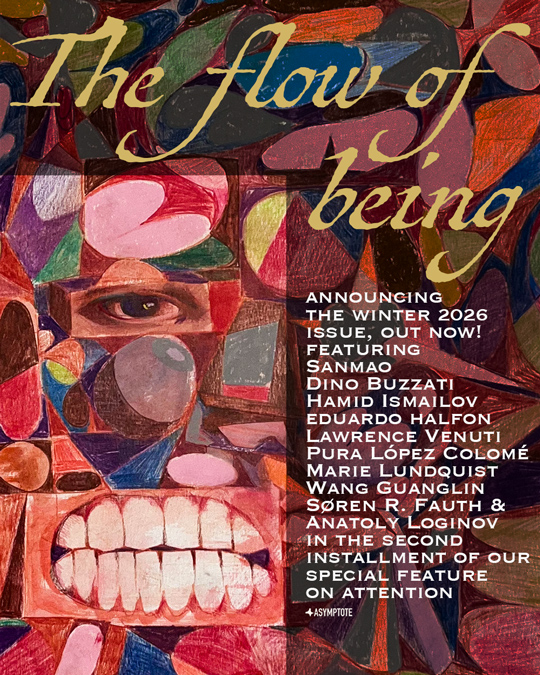
As authoritarianism continues to take hold across the world, writers and translators are compelled to revisit an age-old question: What might art offer in response? Perhaps not answers, but something quieter and more resilient—a reminder of shared human frailty, and of the possibility that our “flow of being,” as Anatoly Loginov writes, might arrive at a “narrow neck” where attention itself becomes an existential force. Writing in our Winter 2026 Issue, which also marks Asymptote’s fifteenth(!) anniversary, Loginov turns to a literary and philosophical tradition that seeks “not mastery over an object, but communion with it, even if that communion burns.” For this second of our two issues devoted to attention, we bring together his tour de force survey of 200 years of Russian thought with a luminous travelogue by the beloved Taiwanese writer Sanmao, an excerpt from Guatemalan author Eduardo Halfon’s prizewinning Tarantula, an exclusive interview with Uzbek novelist Hamid Ismailov, a quietly devastating story by Italian master Dino Buzzati, and new translations of Milo De Angelis by Lawrence Venuti, alongside never-before-published work from 32 countries. All of it is illustrated by our talented Dublin-based guest artist Yosef Phelan.

Winter-2026_blog

If Loginov argues that attention, when cultivated deeply, can ground compassion toward others, Finnish playwright Minna Canth takes this ethical impulse further into the realm of collective action. In her barnburner drama, railway workers pushed beyond endurance channel their shared anger into defiant sabotage, making exploitation visible at last. Writing from a different frontline, Kurdish journalist Zekine Türkeri bears witness to life in the Mahmur refugee camp in the days preceding an ISIS attack, showing how attention to the living entails the inescapable labor of mourning the dead. Elsewhere, in Egyptian writer Mariam Abd Elaziz’s fiction, characters struggle to care for one another as they swim and sink in the deadly currents of maritime refugee smuggling. The issue’s arc closes with an interview in which China’s Wang Guanglin reflects on the difficulty of imagining a genuinely global literature at a moment marked by isolationism, xenophobia, and resurgent nationalism. World literature, he suggests, remains, at heart, a problem of attention: of who is seen, who is heard, and who is permitted to remain invisible.

For fifteen years, Asymptote has been organized around this problem. Founded on the conviction that literature across languages deserves sustained, serious attention, we have worked to widen the field of vision—introducing readers to voices beyond dominant centers, and treating translation not as a secondary act but as an ethical and imaginative practice in its own right. If this project has mattered to you—if you believe that attention, patiently given, can still resist the forces that would narrow our view—we ask you to help keep it alive by becoming a sustaining or masthead member. Your support ensures that the flow of being we trace here continues to move, freely and exuberantly, into the years ahead.

READ THE ISSUE

GET INVOLVED

What’s New in Translation: November 2025

New work from India, Serbia, France, Colombia, Mexico, Puerto Rico, Iran, Spain, Lithuania, Palestine, and the Vietnamese diaspora!

This month, we’re bringing reviews of eleven different titles from eleven different regions, from a trilingual text of experimental fiction that veers between Vietnamese and English, a visceral and psychically frenetic portrait of a marriage gone wrong, a rich collection from a master Iranian poet that gestures towards his remarkable life, and the latest metafiction from a Spanish literary giant. 

dog

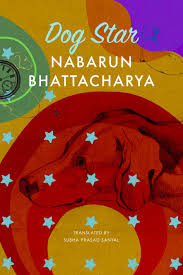
Dog Star by Nabarun Bhattacharya, translated from the Bengali by Subha Prasad Sanyal, Seagull Books, 2025

Review by Jason Gordy Walker

Something’s rotten in the city of Kolkata. A corrupt managerial class—within which mad scientists and war-mongers play a major role—has conspired with local authorities to capture, confine, and starve as many canines as possible. While the city’s “dead serf-servants and healthful, cellphone-carrying ever-connected mummies and balloons” stagger through their dystopia, the dogs have disappeared from the urban bustle, and no one cares. Animal rights groups have been eliminated, and in the way of Nazi death camps, the system targets even newborn pups. What’s a dog to do in these last dog days? “Bark! Bark!” replies the snappy refrain of Dog Star, the lyrical, subversive, and highly re-readable novella by Bengali writer and poet Nabarun Bhattacharya, delivered in a kinetic English by Subha Prasad Sanyal, who has doubtlessly advanced this innovative author’s reputation in world literature.

A self-proclaimed fable, Dog Star leads the reader through dark alleys where street dogs—“nerikuttas”—hide from “pincers,” form alliances, trade information about current dangers, and strategize escape plans, looking to the constellation “Lubdhok, aka Dogstar, aka Sirius aka Alpha Canis Majoris” for liberation. These survivors, along with their unlikely feline allies, are anthropomorphized in their emotions and dialogues, and their plight, although set in West Bengal, is familiar enough to seem representative of any place under political (dis)order. The Netanyahu regime’s genocide against Gaza comes to mind, for example, as do the active “detention centers” in the US: “They’ll yank and drag you by your neck with the pincers to the caged car. Then throw you in.” Bhattacharya does not avoid visceral descriptions of animal torture, but he balances its brutality with astute irony, giving the murderers absurd lines like: “We must pay heed that there aren’t ridiculous expenses.” READ MORE…

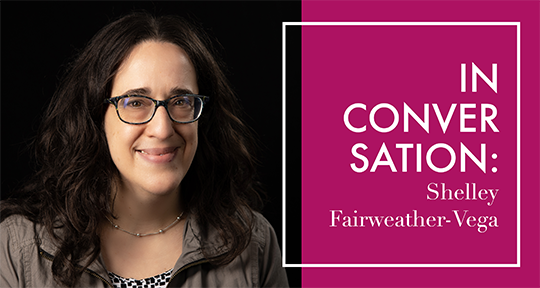
The Dastardly Things a Translator Might Do: An Interview with Shelley Fairweather-Vega

My advice is to simply get started. Pick up anything from the region and go.

The enormously prolific Uzbek writer, Hamid Ismailov, is one of the vanishingly small number of Central Asian authors to crack the code of being translated into English. He experiments in virtually every literary form and genre—from the novel to the play, from translation to poetry; has lived in exile from Uzbekistan since 1992; and continues to build on the wealth of Central Asian culture and memory.

The breadth of history that informs his work can be felt in “Trinity”—a dramatic scene excerpted from a sprawling, six-book novel (Russian Matryoshka) that follows a peasant as he harvests a field of wheat only to have the yield stolen, again and again, when the wider world forces its way into his life. Published in Asymptote’s Summer 2024 issue, “Trinity” is a fragment of a fragmented text, a scene from an unfinished play embedded within an unpublished novel. In many ways, it is emblematic of the whole, knotted process that is translation. The short, dramatic scene is ripe with pungent symbols of the past, yet also exhibits a linguistic dexterity such that each word seems to impose its own gravity on the text. Longtime Ismailov collaborator Shelley Fairweather-Vega’s sensitive translation of “Trinity” achieves an exquisite balance between intimacy and distance, accessibility and mystery. I had the distinct pleasure of speaking with her about staging this piece, the influence translators exert on a text (and each other), and much more.

Willem Marx (WM): Your translations of Hamid Ismailov’s writing have introduced him to many English readers, myself included, so I’d like to start off by asking: how did you discover his work? And what set you on the path to become one of his principal English translators? 

Shelley Fairweather-Vega (SFV): Willem, that might be the most gratifying thing a translator can hear, that our work introduced a reader to a great author they might not have discovered otherwise. I’m so happy to hear it.

The story of my collaboration with Hamid Ismailov began more than a decade ago, when he happened across a pro bono translation I did of an essay by an Uzbek political prisoner. He contacted me through the organization who published that translation, looking to add to his very small list of people who could translate from Uzbek to English. Within a short time, he had convinced me to try translating his short story, “Tosh mehmoni,” which Words Without Borders published as “The Stone Guest” in September 2014. That story is so sad and powerful, and working with the author was such a good experience, that I was instantly, permanently hooked. So, you could say I also discovered Ismailov through my translations. You and I have that in common.

After translating several more of Ismailov’s short stories and essays, and now four of his novels, I’m nowhere near tired of his work and will always jump at the chance to translate it—but I do have competition, especially in the UK where he was first published in English, and where American translators sometimes aren’t eligible for the funding Ismailov applies for. A forthcoming short story collection combines work translated by me and several others. Ismailov did a very good job building that collection of translators.

WM: It’s telling to hear how tenacious an author must be in order to have their work translated into English. To shift slightly, I wonder if you ever find that your work is influenced by the way other translators have approached his writing. Do you notice different emphases or ways of tackling an aspect of voice among your fellow Ismailov translators?   READ MORE…

Summer 2024: Highlights from the Team

Find out what our very own editors have to say about our bountiful Summer issue!

Last week’s Paris 2024 Olympics Opening Ceremony featured numerous nods to literature, art, and music, calling to mind Georgi Gospodinov’s statement in his interview for our Summer 2024 issue: “Culture is a continuous conversation, a hum of different voices, and it’s actually wonderful music, a sort of polyphony. We are not only immersed in that conversation, we are also part of it.” Indeed, as our very own Mary Hillis points out, this brand-new Summer edition is a “veritable parade of nations with works from 35 countries.” Read on to discover some of the highlights, courtesy of our multicontinental crew!

My favorite in this issue is Honora Spicer’s Spitting Sutures, with its mesmerizing fluid interplay of drafting a translation, selling a house, and experiences of the body. Fluidity also defines Olivia Sears’s in-depth historical exploration of Italian Futurist Ardengo Soffici in a conversation with Eugene Ostashevsky. Krzysztof Umiński’s Three Translators (tr. Soren Gauger) is also a wonderfully detailed dip into translation history, this time Polish. Two other texts I really enjoyed were Farah Ahamed’s The Day You Ate our Deliveroo Delivery and the dramatic excerpt Trinity by Hamid Ismailov (tr. Shelley Fairweather-Vega), the first for its many-faceted examination of an ethical confrontation, the second for its gorgeously translated insults and imprecations.

 —Ellen Elias-Bursać, Contributing Editor

I love the compact, compressed nature of Adelheid Duvanel’s The Poet (tr. Tyler Schroeder). It’s got an amazing opening line that hooked me right away. The journey of the story that goes from childhood vignette to the awareness of the narrator as poet is really striking, showing how transformative and creative language can be, how altering a shift in perspective can be.

Micaela Brinsley’s Nothing to Be Owed is such a unique piece of writing, hybridic in its tone and structure, lyrical and poetic prose. The reflections on care in italics intersperse beautifully what’s going on in the almost journal-like entries. The line “I’m trapped by the transactional” will stick with me for a while.

Sarah Gear’s conversation with Georgi Gospodinov (tr. Angela Rodel) is a huge interview for Asymptote and it was a privilege to get such intimate access to the Booker International Prize-winning author’s mind.

—Hilary Ilkay, Assistant Managing Editor READ MORE…

Weekly Dispatches From the Frontlines of World Literature

The latest in literary news from North Macedonia, Spain, and Kenya!

In this round of weekly updates from our Editors-at-Large, we hear about literary festivals, awards, and the latest translations from North Macedonia, Spain, and Kenya! From a festival themed “Air. Wind. Breathing.” to a recently completed translation of the Bible, read on to learn more!

Sofija Popovska, Editor-at-Large, reporting from North Macedonia

The first weeks of autumn in North Macedonia brought exciting developments to the literary scene: the third installment of the Skopje Poetry Festival took place from September 24–28. The event spanned several venues, including the historic movie theater “Frosina”, the Skopje city library, and the bookshop-cafe “Bukva”. The festival opened with a performance entitled “Air. Wind. Breathing.”—a theme that was maintained throughout, as some of the readings were accompanied by musical improvisations with wind instruments. 

Represented at the Skopje Poetry Festival was a diverse range of cultures; Danish, Serbian, French-Syrian, Maltese, and Croatian poets gave readings alongside local authors. Aside from readings, there were screenings of several movies based on the poetry of Aco Šopov. One of the adapted poems was Horrordeath, which was featured in the Winter 2023 issue of Asymptote Journal in Rawley Grau and Christina E. Kramer’s translation. The screenings were followed by a musical concert, a creative writing workshop headed by Immanuel Mifsud (a Maltese author and recipient of the European Union Prize for Literature), a panel discussion on increasing the visibility of Macedonian literature abroad, and a yoga session in nature. Young Macedonian poets also had a chance to make their voices heard, during the “Springboard” event on September 24 dedicated to poets between the ages of 16 and 25.

READ MORE…

Weekly Dispatches From the Frontlines of World Literature

The latest in world literature from Sweden, Guatemala, and Ireland!

This week, Asymptote‘s Editors-at-Large take us around the global literary scene, featuring book fairs and the highlights of Women in Translation Month! From the multimedia cultural event Bokmässan by Night in Sweden to the Taiwan/Ireland Poetry Translation Competition, read on to learn more!

Eva Wissting, Editor-at-Large, reporting from Sweden

A month from today, it will be time for Scandinavia’s largest literary event, the Göteborg Book Fair—an event spanning four days with around eight hundred exhibitors and the same amount of seminar speakers. Started in 1985, it now attracts eighty-five thousand writers, publishers, librarians, teachers, and book lovers every year. This year’s themes are Jewish Culture, The City, and Audio. The club concept Bokmässan by Night was introduced last year, which combines bar hopping with various cultural experiences. The fair has now announced that Bokmässan by Night will return on September 29 with four stages, five bars, multiple DJs, and stage performances. The evening includes Swedish writers and dramatists Jonas Hassen Khemiri—known to Asymptote readers through pieces like I Call My Brothers and Only in New York—and Agneta Pleijel, whose novel A Fortune Foretold was published in Marlaine Delargy’s English translation by Other Press in 2017. Bokmässan by Night will also offer live literary criticism with critics Mikaela Blomqvist, Jesper Högström and Valerie Kyeyune Backström, as well as live podcasts, including Flora Wiström’s Röda rummet—a literary podcast which borrows its name from the Swedish Modernist writer and playwright August Strindberg’s 1879 debut novel The Red Room. While Bokmässan by Night is an in-person experience, many other events during the fair are available online through Book Fair Play

READ MORE…

When Woe Means No: Translating Women’s Survival as Resistance 

Carson grants her Trojan women agency, even if it seems that hostile men and unfeeling gods control their lives.

In our new column, Retellings, Asymptote presents essays on the translations of myths, those enduring stories that continue to transform and reincarnate. Here, Hilary Ilkay considers the contemporary rendition of an ancient tragedy by Euripedes, as told by poet Anne Carson and artist Rosanno Bruno in the acclaimed The Trojan Women: A Comic.

Thanks to cinematic blockbusters like Troy and Emily Wilson’s bestselling translation of Homer’s Odyssey, the story of the Trojan War has established itself within the cultural mainstream. However, its continual revival is not just a contemporary phenomenon; as early as 5th century BCE, the mythical war had already taken on legendary status, and was ripe for adaptation and retelling.

Arguably the most tragic of the ancient Greek tragedians, Euripides’s plays are infamous for their bleak explorations of human hubris and divine cruelty. In his lifetime, as Athens was embroiled in the Peloponnesian War, a violent 27-year conflict with rival city-state Sparta, Euripides drew on the Trojan War specifically to reflect on the uncertainty of his time, making a connection between Athenian imperialism and the Greeks’ pretense of invading Troy for the sake of a single woman. Taking its cue from the ending of the Iliad, which features funeral laments from three women characters, Euripides’s play The Trojan Women casts a spotlight on the fates of the wives, mothers, daughters, and sisters of the male heroes—who typically occupied center stage in narratives of war. As a focused treatment of women’s suffering rarely seen in ancient Greek tragedy, the play is a brutal exploration of the commodification of women’s lives and bodies, as well as the ambivalence of “surviving” a tragedy when those remaining have lost all sense of meaning, stability, and security.

Given Euripides’ interest in the experience of women and the retelling of myths, it’s no surprise that his legacy continues through the work of poet and translator Anne Carson, who has received much acclaim for her rewritings of Greek classics. Carson constantly stretches the boundaries of translation in her work, dramatizing how every translation is necessarily its own “version” of the source material and not necessarily a “faithful” replica. In 2006, she published her loose translations of Euripides’s lesser known tragedies under the title Grief Lessons; in 2019, she adapted his infamously bizarre play, Helen, into Norma Jeane Baker of Troy, which interweaves the stories of Helen of Troy and Marilyn Monroe. READ MORE…

Weekly Dispatches From the Front Lines of World Literature

The latest in literary news from Slovakia, Czechia, Kenya, and Bulgaria!

This week, our editors are providing coverage of headlining events featuring intercultural dialogues, book launches of groundbreaking texts, and political corruption. In Slovakia and Czechia, the two countries discuss the ramifications of Czechoslovakia’s breakup on the two nations’ respective literatures. In Kenya, a collection featuring the stories of women hawkers—a burgeoning national economy—is released to the public. And in Bulgaria, a beloved theatre director takes aim at the National Theatre’s “moral degradation.” Read on to find out more!

Julia Sherwood, Editor-at-Large, reporting on Slovakia

The thirtieth anniversary of the breakup of Czechoslovakia prompted reflections in both the Slovak and the Czech press on the legacy of the common state, and how the cultural links between the two nations have evolved since the countries went their separate ways. Summing up the literary developments in a recent episode of Knižná revue, an excellent podcast produced by the Slovak Literature Centre, the Czech literature scholar and translator of Slovak literature Lubomír Machala suggested that there are now more differences than parallels between the two literatures—although what has not changed is that the Czech reading public shows less interest in Slovak literature than vice versa. The Slovak literature scholar Magdalena Bystrzak also sees this relationship as asymmetrical, as does her colleague Radoslav Passia, who points out that the ties between the two literatures are, nevertheless, much stronger than those between either nation and any other literature, as reflected in numerous bilateral literary projects, such as a Czech/Slovak poetry competition, or the Month of Authors’ Readings.

The end of January marked the 105th birthday of Leopold Lahola (1918-1968): playwright, film director, screenwriter, poet, and essayist, whose short stories reflect his harrowing wartime experiences. Lahola’s promising postwar literary career was cut short when his plays were denounced as “existentialist” in 1948, upon which he emigrated to Israel, where he helped to launch the country’s burgeoning  film industry, before moving to Austria and Germany. Although he spent nearly half of his life in exile, Lahola never stopped writing in Slovak. In the late 1960s, Lahola began to visit his native country again but, sadly, died of a heart attack in January 1968, shortly before his fiftieth birthday. It is a pity that so far, only one of his short stories is available in English.

The 2022 recipients of one of Slovakia’s major awards, the Tatra Banka Foundation’s Arts Prize, were announced at the end of January. The prize for a debut work of literature went to Nicol Hochholczerová for Táto izba sa nedá zjesť (This Room is Too Much to Swallow, as reported here) and the poet Mila Haugová added to her many previous accolades the main prize for literature, for her collection Z rastlinstva (From Flora). And although not strictly speaking a literary prize, it is  worth mentioning  the bank’s Special Prize, awarded to Gabriela Garlatyová for her monograph on the extraordinary visual Slovak artist Mária Bartuszová. Garlatyová was a consultant on a major exhibition of Bartuszová’s work at London’s Tate Modern, which has just been extended to June 25, and which I urge everyone to visit. READ MORE…

Blog Editors’ Highlights: Spring 2022

Introducing our favorites from the latest issue!

Featuring work from thirty-four countries, the Spring 2022 issue is once again charting new territory across the landscape of world literature. From Hermann Hesse to Kim Hyesoon, as well as coverage of Ukrainian poetry and exceptional Swedish works in our Special Feature, these wonderful inductions into the English language are full of discoveries. Not sure where to begin? Read on for our blog editors’ curated selections!

Through the brutal scorchings and flighty erasures of passed time, Greek tragedies have endured—as though stone, and not words, were their material. Near as our own stories, ancient as storytelling itself, and inextricable from the passions they depict, the characters that had suffused the fifth-century Athenian air with their spectacle defy temporality, continuing to walk and rage within the immediate theatre of our world. In the betrayal of fathers and the names of flowers, in funerals and weddings, in any force that could be mistaken for fate. By the logic of the tragic’s pervasive mutability, their untimely timeliness, one is made to think of the ways cycles are kept and broken, if whether the knowledge of something coming has ever been enough to stop it.

In José Watanabe’s Antígona, translated with an impeccable ear by Cristina Pérez Díaz, Sophocles’s Antigone is given fluid, elemental form, a series of poetic rooms built for one actress to walk through, inhabiting their rhythm as she inhabits time. Written beneath the dense terror of civil conflict in Peru, Watanabe’s distilling of chorus into a single rivulet of speaking is to run a thin-wire sieve through the voracious appetite of mass violence and statistic, provoking the wide overarch of trauma into open intimacy, into something that is suffered individually, in bodies united by the likeness of experience but ruthlessly alone in bearing it. The voice is torn with the tension between thinking and knowing, between feeling and narration, spreading itself amidst the leaves of time:

The sacred eye of daylight does not penetrate that far
nor the cries of friends and relatives. In that silence,
death, laborious, enfolds the girl
in a dense cocoon of shadows.

READ MORE…

Weekly Dispatches from the Front Lines of World Literature

News this week from Vietnam, Japan, and Southeast Asia!

This week, our editors from around the world present reimaginings of Sophocles in Hanoi, memorials and debuts from Japan, and witness writing from Southeast Asia. Read on to find out more!

Thuy Dinh, Editor-at-Large, reporting from the Vietnamese Diaspora

Since November 2021, The Goethe Institute in Hanoi has been in collaboration with the Youth Theatre of Vietnam (Nhà Hát Tuổi Trẻ) to produce six interpretations of Sophocles’s Antigone, exploring a variety of salient themes—fate versus freewill, the family versus the state, moral integrity and political order, feminism versus patriarchy, reason and emotion, loyalty and disobedience. While most of the productions were performed live in Hanoi after the gradual easing of COVID-19 restrictions, “Portrait” (“Bức Chân Dung”)—Antigone’s fifth iteration—is shown online from February 19 through February 26, 2022.

Directed by Lê An of Ho Chi Minh City’s Saigon Theatreland, “Portrait” shifts the first act of Antigone into 1970s wartime South Vietnam, where An (Huỳnh Ly)—whose name means peace and contentment—must forge her identity out of her family’s traumatic past. Creon, Antigone’s uncle in Sophocles’s play, is transposed into her emotionally repressed father, Đắc (Công Danh), a high-ranking officer in the South Vietnamese Army. Đắc forbids An to bring home Kỳ’s dead body—his son and An’s brother—an enemy soldier who fought and died for the Communist cause. Despite the obvious ideological landmines evoked by this premise, director Lê An, in a pre-performance podcast, sidestepped politics by discussing her heroine’s psychological quest “to find herself”— possibly to detract from the production’s more provocative implications.

While ideological heresy still cannot be addressed explicitly in modern adaptations of Antigone within Vietnam (despite the heroine’s Greek name which can mean “one who resists/is of the opposite bend”), this theme plays a central role in Vũ Thư Hiên’s oeuvre—including his newest story collection, Confessions at Midnight (Lời Xưng Tội Lúc Nửa Đêm) (California: Văn Học Press, 2022). A well-known dissident writer and translator, Vũ Thư Hiên has become Vietnam’s persona non grata since the 1997 publication of Night at Midday (“Đêm Giữa Ban Ngày)—a memoir, inspired by Arthur Koestler’s 1940 novel Darkness at Noon, which recounts the nine years (1967-1976) he spent in various North Vietnamese prisons after being charged with “anti-Party, anti-State, spying and revisionist conduct.” READ MORE…

Rosa Chávez: “Poetry is my spine.”

"Poetry has always moved me, but I’ve also been moved by history, by my people’s history."

Rosa Chávez is La Poeta here, but she defies definition. The Mayan artist and writer has walked a variegation of paths and left her indelible mark on scores of people and places, ensuring that her legacy will be a monument to curiosity, surprise, and multiplicity. In the following profile, Editor-at-Large José García Escobar speaks to the Guatemalan La Poeta and her ever-widening world of poetics, which trespass the page—and language—to take on other numinous forms.

La Poeta walks towards a small table. She lays a sonaja, a tiny drum, some colorful ronrones, and a few whistles made of clay upon it, as the electric sounds of a turntable fill the room. Soon, from the speakers, the voice of Berta Cáceres comes: “We are fighting to protect the rights of indigenous people,” and her speech echoes across the small room of a school in rural El Salvador. “We have struggled for more than five hundred years,” Berta goes on. “We have always lived as a community,” steps in the voice of the indigenous leader Lolita Chávez, “and our community includes mankind, but also plants, birds, fish too, and all the animals.” Wearing a shirt and a pair of small glasses, the DJ turns the knobs to move the musical landscape, which carries the activists’ voices.

“I remember that children had decorated the classroom using bits of paper, mimicking the lush fields outside, the green mountains,” says Rosa Chávez, La Poeta.

La Poeta takes then the microphone.

“Pick it up. Take what’s yours,” she says, she recites, she conjures. “Take it. It’s yours. Don’t let them take it from you. Pick it up. Leave it under the sun. Let it dry. Pick the weevils off it,” La Poeta says, and a tiny whistle and a pair of soft cymbals hiss across the room. “One by one, remove the kernels. Look how it shines: red, yellow, white, black. Undo its body. Grind its body. Cook its body. Don’t toss it aside, though. Don’t give it a bad look. Never forget to grow more.”

That’s how one of Selva y Cerror’s first shows occurred—August of 2017, during the Festival Mundial de Poesía Cien Voces, in El Salvador; the song I’m describing is called La Abuela y el Maíz. Selva y Cerro is a Guatemalan musical duo consisting of DJ and producer Teko (Andrés Azmitia)—best known as Sonido Quilete—and Rosa Chávez. It is also the latest project of Chávez, out of her wide-ranging roles as poet, mother, performer, actress, teacher, artisan, cultural manager, screenwriter, filmmaker, bisexual, Maya K’iche’-Kaqchikel.

Rosa contains multitudes. She insists, however, that she’s a poet—an interesting fact considering that she never sought publication. She says that even today when she writes, she’s not thinking of “putting together a book,” despite having published five. Urges move her, motivate her. The multitudes inside Rosa talk to each other. Poetry took her to performance. Performance to the theatre. Theatre to community work and human rights. Poetry is the thread that weaved, and still today weaves, the urges of Rosa’s career. For Rosa Chávez, poetry has no end.

READ MORE…

Blog Editors’ Highlights: Winter 2022

The reconstituting of memories that have been erased is a central concern for the playful yet meditative Winter 2022 issue.

Asymptote’s Winter 2022 issue is now out, marking the magazine’s eleventh year in publication! The newest edition features writing from a record forty-three countries and twenty languages. Here to introduce you to what this issue has to offer are our blog editors with some thoughts on the pieces that stood out to them the most.

In Maria Stepanova’s 2021 genre-defying work In Memory of Memory, she wrote that her excavation of family history was motivated by a desire to discover “the way memory works, and what memory wants from me.” Stepanova was absorbed with not only recovering the stories of her Jewish family but also probing her own obsessive relationship with memory itself. The memoir suggests the faultiness of memory in its rips and tears, while betraying an anxiety over its artifice in the way the memoirist manipulates the archive through inclusion, exclusion, and distortion for the purpose of her narrative. The reconstituting of memories that have been erased through the forces of time and displacement is a central concern for the playful yet meditative Winter 2022 issue. Like Stepanova, the authors of these varied works construct complex inquiries into the past through reappraisals of memory, dreams of alternate lives, and imaginative play with form. They seek the truth through memories while contesting their inevitable artificiality and malfunctioning.

In Rose Bialer’s deeply affecting interview, the Hungarian poet, memoirist, and translator George Szirtes speaks of returning to certain memories and themes in his personal history throughout his career in poetry, sometimes writing new poems that function as continuations of collections published decades before. This idea of Szirtes’s “return” to the same moments for their comprehension reflects his mistrust of memories but also his belief that truths are embedded within them. One of the talk’s many astonishing moments is when Szirtes claims that the return over time to the same memories in his poems reveals parallel narratives that add up to a palimpsest of personal history and identity. For Szirtes, formal constraints such as the terza rima continuously open the same memories to new facets and understandings. This illuminating conversation demonstrates how the fluidity of memory allows the poet-translator to construct an unstable past and self while “registering the sense of truth in all its complexity.”

READ MORE…

What’s New in Translation: May 2021

New work from Iceland, Chile, France, and Argentina!

We take our jobs of bringing you the best new releases from the realm of world literature very seriously, and this week, we have four astounding texts from authors notorious for their intelligence, their variousness, and their ability to captivate. From Iceland, Sjón explores the banality of evil in a charged, probing character study. In Argentina, the legendary Norah Lange comes to new light as she evolves beyond her reputation as a literary muse, and tells her story in her own, singular language. The latest from French writer and playwright Yasmina Reza is a poignant meditation, guided by oratory, on selfhood, aging, and human frailties. And lastly, Chile’s award-winning Lina Meruane comes out with an exploration of illness and intergenerational trauma that is at once dreamy and deeply grounded in physicality. Read on to find out more!

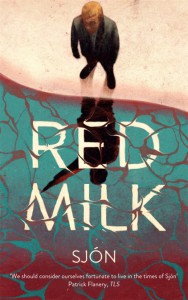
red milk

Red Milk by Sjón, translated from the Icelandic by Victoria Cribb, Sceptre, 2021

 Review by Lindsay Semel, Assistant Managing Editor

Sjón, one of Iceland’s most internationally recognizable literary figures, is a lifelong cultural miscegenationist. Since his earliest days as a neo-surrealist poet and musician, he has drawn proudly and liberally from global artistic lineages. In Red Milk, his latest collaboration with long-time translator Victoria Cribb, he employs an intentional, methodical restraint to examine the survival of Nazism post-World War II through the life and early death of Gunnar Kampen, a fictionalized version of a real, small-time Icelandic neo-Nazi. Sjón’s policy of omission—of drama, psychology, violence, grandeur of any kind—results in a delicious tension. He tempts us to expect so much of the novel, and though he never provides the relief of clean culminations, he manages to keep the reader wanting.

More than anything, we want Gunnar to either damn or to redeem himself, but he refuses to be anything more than a tempest in a teacup—a chess piece carved in ivory rather than ebony. He passes his brief life engaged in the mundane building of a movement that never comes to fruition. He stumbles into nationalist socialism the same way any young person stumbles into their solidified adult identity. This is not a psychoanalytic assessment of what draws him to Nazism so as much as a collection of images, inputs, choices, and feedback that nudge him there. One such curious image comes from a party he attended with his parents as a child. Bored with the adults, he wanders through the house until he encounters “a human figure, sitting in the shadow thrown by the curved back of the armchair,” in the library. He marvels at her brown skin and colorful clothing.

Without releasing her grip on his left hand, she raises his right hand and pulls it under the lampshade, holding it up to the strong bulb until the light shines red through the child’s flesh, revealing the silhouettes of the bones inside.

            ‘Only possible with such a hand.’

The woman nods at him. The filigree brooch on her shoulder gleams, exposing the pattern from which it is made: a myriad tiny swastikas that differ from the hated one only in that they stand upright rather than tilted on their side.

            ‘Only white people let the light into themselves.’

The imagery is not attributed any meaning besides its own aesthetic potency. The woman’s exoticism is a neutral source of intrigue for Gunnar, unrelated to his blossoming racial beliefs. The woman—as an ideologically educated Gunnar discovers later—might well have been Savitri Devi, the all too real mother figure of contemporary neo-Nazism, but Gunnar’s brush with history is told with the same tone as if she had simply been Reykjavik’s witchy spinster. READ MORE…