Posts filed under 'Memoir'

What’s New in Translation: June 2023

New work from Shumona Sinha, Dorothy Tse, and Berta Dávila!

In this month’s selection of the best in translated literature, our editors present a selection of texts that range from the intimate, to the surreal, to the furious. From Galicia, a mother writes a poetic rumination of abortion and post-partum depression. From Hong Kong, a love story unfolds between two unlikely characters as the city clamours in protest. From France, an interpreter gives a searing account of the immigration system and its many failures, in the aftermath of her own violent act.

the dear ones

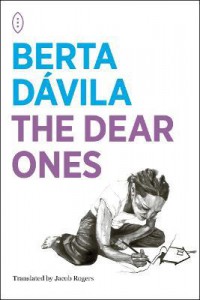
The Dear Ones by Berta Dávila, translated from the Galician by Jacob Rogers, 3Times Rebel Press, 2023

Review by Samantha Siefert, Marketing Manager

Five years after becoming a mother, a woman chooses to have an abortion. This uneasy duality forms the premise of Galician author Berta Dávila’s intimate, probing exploration of motherhood in her memoir, The Dear Ones, now available in an excellent English translation by Jacob Rogers. “It takes nine months for a child to form in the womb and be born, but no one knows how long it takes for a mother to do the same,” Dávila muses, never pretending to know or even seek a precise answer to the unstated question, instead dedicating this short but intense novel to articulating plainly the spaces between the themes of motherhood—the ones discussed openly, and the ones that are not.

READ MORE…

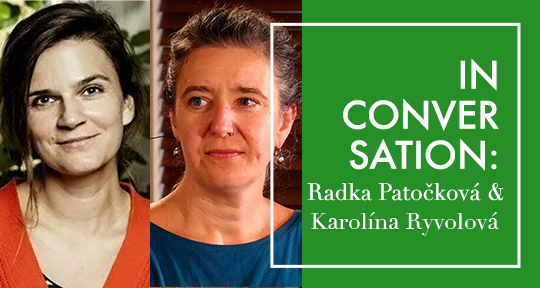
Roma Literature and Identity: In Conversation With Radka Patočková And Karolína Ryvolová, Part II

Romani literature . . . is always political and never only individual.

Picking up from yesterday’s interview with Radka Patočková and Karolína Ryvolová on the founding of KHER, the only independent publishing house in the Czech Republic to spotlight Roma literature, today we delve further into Roma literature and identity—its history, notable figures, and ethos—with interviewer and Asymptote Editor-at-Large Julia Sherwood.

Julia Sherwood: What are the main themes, genres, and stylistic features of Czech and Slovak Romani literature?

Karolína Ryvolová (KR): Although the themes have naturally changed over time, the dominant feature and vessel of Romani stories continues to be memory. The writers relate their private histories in different contexts (persecution during World War II, post-war migration, successful pre-1989 integration followed by the tempestuous nineties, and so forth) and in that way contribute to the history of their community, which is still largely ignored by mainstream works of history. An important minority stream is feminist topics, pertaining to the traditionally subordinate role of the Romani woman as opposed to her ambitions and dreams, pioneered by Tera Fabiánová in 1970 and since successfully elaborated on by such writers as Ilona Ferková, Irena Eliášová, Erika Olahová, and Iveta Kokyová. The dynamics of the mutual Romani and non-Romani relationships in society is another regularly recurring theme. Most recently, we have seen the emergence of LGBTQ+ themes in Roma literature and interesting attempts at a complete divorce from ethnic narratives and issues.

JS: Traditionally, Romani culture has been predominantly oral––a good example is Elena Lacková’s memoir, Narodila jsem se pod šťastnou hvězdou (published in English as A False Dawn: My life as a Gypsy woman in Slovakia), which was recorded by Milena Hübschmannová (Czech scholar and founder of Romani studies, who is discussed in greater detail in the first interview). Lacková’s life story, providing an insight into the history and the tough realities of growing up and living as a Roma in twentieth-century Slovakia, also demonstrates the close historical links between Czech and Slovak Roma. Yet it wasn’t until 2022 that the book appeared in Slovak, translated by Júlia Choleva Vrábľová and published by BRaK (see Asymptote’s interview with publisher František Malík). What do you think is the reason for this late reception in the country of its author’s birth?

KR: I have no definite answer. On the one hand, I believe that until recently, most Slovaks have been able to read in Czech and vice versa, with reference to the more than seventy years of joint Czechoslovak history, so a Slovak translation has not been necessary. On the other, it seems from what we are hearing from our Slovak colleagues that the field of Slovak Romani literature is still quite scattered, distributed in fairly isolated hubs such as Nitra, Banská Bystrica, Košice, and Prešov, and it is perhaps not easy to develop a joint initiative in support of one of their classics. While Romani is much more widely spoken and present in Slovakia than in Czechia, there is at present no organisation with the visibility and impact of the likes of KHER in Slovakia. However, Alexander Mušinka from Prešov University has been working on rectifying this oversight. In 2021, he released the first volume of a monograph on Lacková, prefaced by a well-researched biographical paper that showed the breadth of the many years of her journalism for the Slovak Romani magazine Romano nevo ľil. READ MORE…

Weekly Dispatches From the Front Lines of World Literature

The latest literary news from the United States, Vietnam and the Vietnamese Diaspora, and the Philippines!

This week’s roundup of literary news from around the world highlights exciting new publications and publishing trends! From a literary marriage in the United States to the return of a beloved author and history titles in the Philippines, read on to find out more!

Meghan Racklin, Assistant Blog Editor, reporting from the United States

Last week, at their annual awards ceremony—in person again for the first time since the onset of the pandemic—the National Book Critics Circle awarded the inaugural Gregg Barrios Book in Translation Prize to Grey Bees by Andrew Kurkov, translated by Boris Dralyuk. The new award brings attention to books translated into English and published in the United States, where only a small number of books in translation are published each year—Publishers Weekly’s translation database lists only 419 books in translation published in the United States in 2022.

Dralyuk, the award winner, is a poet and critic as well as a translator and until recently was the Editor-in-Chief of the Los Angeles Review of Books. His translation was selected from a competitive group of finalists which, notably, also included the translation of Olga Tokarczuk’s The Books of Jacob by Jennifer Croft—Dralyuk’s wife. Prior to the announcement of the award winner, the two gave an interview to the L.A. Times about their relationship to translation and to each other. Croft said “Once we started dating, I would find Boris on my steps, where he would tell me about what he had just translated. He gets so emotionally invested. . . . He’s so careful about every word. It was very moving and, I think, a large part of how we came together.”

READ MORE…

Asymptote at the Movies: Happening

But how does the visual operate in cinema, as opposed to literature?

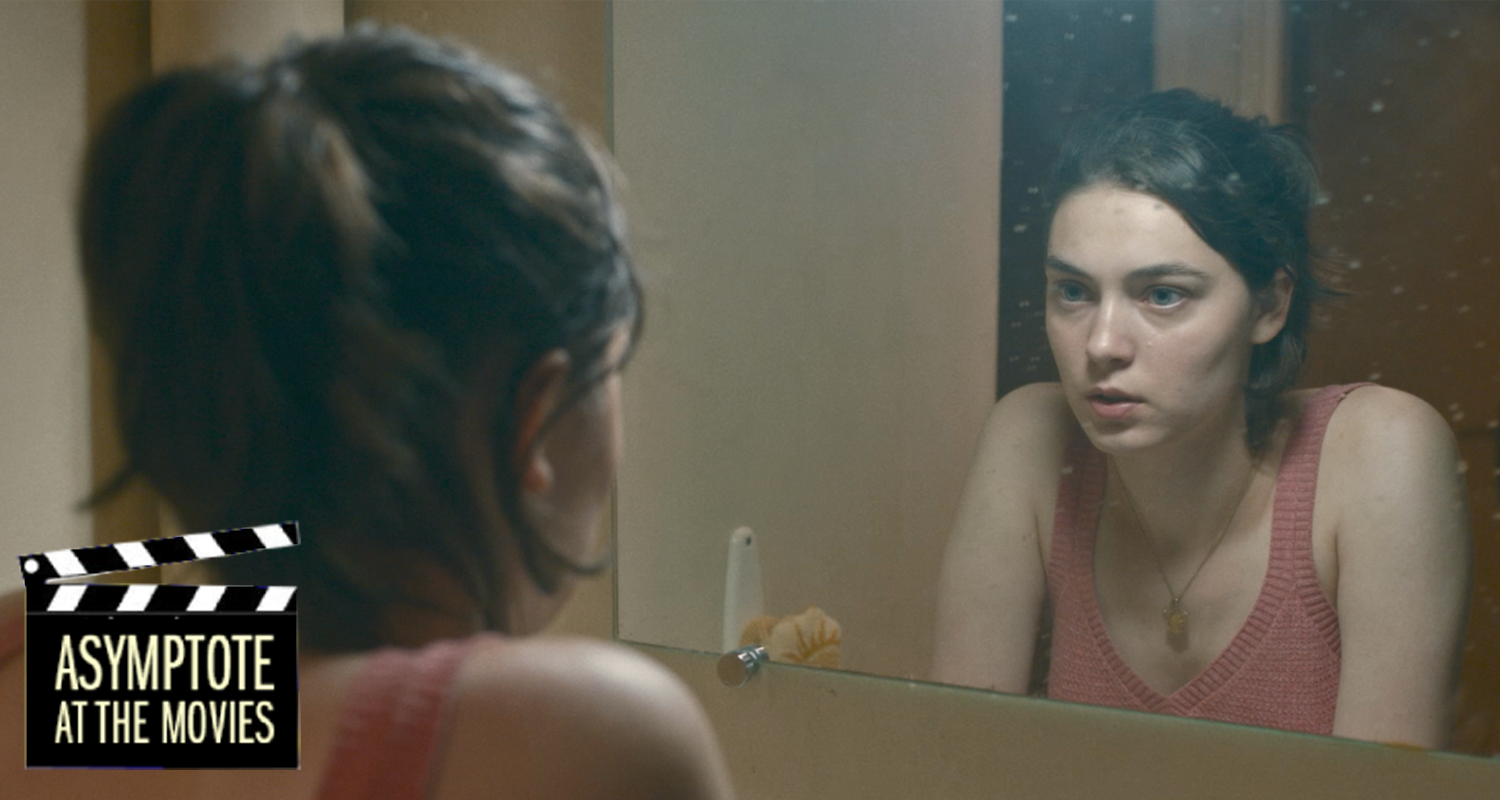
Annie Ernaux’s memoir of her 1963 abortion, Happening, originally published in 2000, and Audrey Diwan’s 2021 movie adaptation of the same name are the subject of our latest edition of Asymptote at the Movies. Ernaux’s memoir tells the story of an abortion she sought before the procedure was legal in France, and the story of her reflecting on the experience decades later, well after France legalized abortion. Diwan’s movie came out in a very different world than the one Ernaux’s memoir reflects on and, indeed, the one in which Ernaux wrote her memoir. Both the book and the movie follow young Annie’s struggle to find the medical care she needs—Ernaux said that watching the film “plunged” her back into the experience she wrote about. Taking the two together underscores the urgency of her situation and raises questions about the difference between cinematic immediacy and memoiristic distance. In the following roundtable, Meghan Racklin, Xiao Yue Shan, and Georgina Fooks discuss the relationship between these two works, the translation of memoir into fiction, and experience of reading and watching the movement of time.

Xiao Yue Shan (XYS): Halfway through the pages of Ernaux’s Happening, there’s a line that I saw as a kind of summation of her entire corpus’ ethos: “I believe that any experience, whatever its nature, has the inalienable right to be chronicled.” It seems to me that a similar sentiment across nearly all of her texts—which are, after all, in their obsessive tunnelling and metaphysical depth, a refusal of any verdict that women’s lives are mundane, and their thoughts unserious.

And there is a particular impact to that Serious Verb—chronicled. In French, Ernaux opts for the less indomitable l’écrire, but I’d like to believe that Tanya Leslie, in her translation, understood that to write would have been too pliant for what Ernaux wanted to say: that such experiences needed to be inscribed into the archives of human history, that they needed to be preserved as well as they can for future excavation, and that such texts would fill the void in the scaffolding of time.

Happening, then, is a text about writing, but also the remembering that feeds the writing, and also the rupture that must be navigated when reality and recognition are trying to find one another on the page. If there was any image that came to mind while I read Happening, it was only of the older Ernaux holding a pen, gazing out the window, closing her eyes in conjuration of an image. Because Happening does not centralise the abortion that propels its narrative, but the intellectual clarity that is required to unveil “what can be found there,” I almost expected a cinematic replication of that once-removed perspective in Audrey Diwan’s adaptation: voiceover narration, analepsis/prolepsis, superimpositions . . .

The film, however, makes no use of such manipulations, and completely isolates itself within the parameters of the Event; it is a movie about abortion, and its illegality and ramifications in 1960s France. It is so dissonant from its source text—not in content but in intention—that it jarred me when Anamaria Varolomei, who plays Ernaux, is first addressed as Annie. It was impossible for me to connect her with the woman of the book—not only because the woman is older, but because the woman is remembering, not living through. The film is an intimate, occasionally chilling, and politically effective film about the alienation and humiliation of being accidentally pregnant in that era—and as such it is rooted in the immediate, in the physical, and in the cinematic present. Ernaux’s text read to me in direct opposition, weaving and defining that tenuous space of the eternal past. How did the two of you feel about this variation in treatment? Was it as disconcerting for you?

READ MORE…

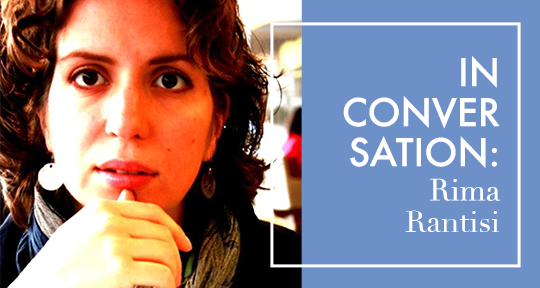
Leave From or Arrive There: A Conversation with Rima Rantisi

Form offers freedom, but also creativity, another layer through which to see, and ultimately create.

Biography, The University of Hawaii Press’s quarterly academic journal, surveys the contemporary landscape of Lebanese and Arab women’s memoirs. In this, they have named Rima Rantisi as among the champions of “highly intimate personal narratives,” whose work portray their own “constructions of home.” As an essayist, Rantisi inhabits interiorities, taking time in its own tracts, but also incites reexaminations of how we think of (and therefore, how we read and write) the external—places we dwell in all our lives and have always felt ourselves to know. As an editor, she is a nonbeliever of geographic boundaries, welcoming works of art and literature from the ‘Arab-adjacent’ regions. How does she write about home, something ideally stable, when it happens to be a city that is ever-changing and fluid, a mere construct?

In this interview, I asked Rantisi about Rusted Radishes, the Beirut-based multilingual and interdisciplinary journal of art and literature she co-founded; framing the memoir as a genre within place-based writing; and contemporary Arabic and Anglophone literatures written from Lebanon and its diaspora.

Alton Melvar M Dapanas (AMMD): There is a point in your essay “Waiting” where you write about O’Hare Airport: “Each time I leave from or arrive there, I am away—from people I love, from other homes. I am reaching, always.” Can you speak more about this metaphorical always being away, always on the move

Rima Rantisi (RR): Home is one of those subjects that Lebanese writers and artists are intimately familiar with, and sometimes in ways they prefer not to be. But because of the country’s modern history of war and migration, complex conceptions of home are inevitable. For me, I was raised by Lebanese immigrants in the United States, in the small town of Peoria, Illinois. Later, I made a new home where I went to college in Chicago. And then I moved across the world to Beirut. The move to Beirut is when the ever-present awareness of place began to take form. Not only because it was so different from where I had come from, but also Lebanon now became a new lens to see the world through—including my parents, world politics, my past and future. One place that brings these places together is O’Hare Airport. It had always been exciting for me to travel from there as a Midwesterner, but now it gives me a deeper sense of distance between who I was in the United States, and who I am now in Lebanon. In this sense, “I am away” both physically and metaphorically. One thing we don’t talk about as much is how place changes us; not only does it affect us emotionally, but it changes our perception of the world, and the language we use to communicate it. 

READ MORE…

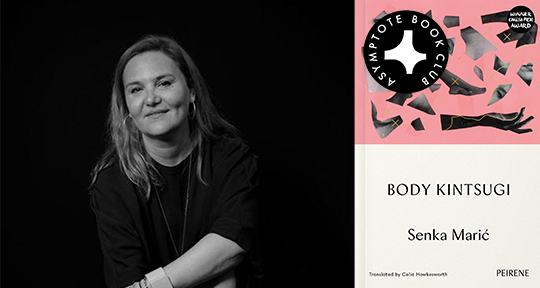
Announcing Our October Book Club Title: Body Kintsugi by Senka Marić

Marić has honored the vibrant, silent energy that the body contains, bringing it to the page in its truest form.

This month, the Asymptote Book Club is proud to present Senka Marić’s Body Kintsugi, a moving and lyrical documentation through a woman’s interrogation of her own body as it undergoes disease, fracturing, and metamorphosis. Tracing the lineage of her physical fracturing through a fight with cancer, Marić reconstitutes the ideas of bodily fault lines and ruptures to conceive of a new wholeness, addressing the rifts and traumas of life to incorporate loss as an essential fact of survival. 

The Asymptote Book Club aspires to bring the best in translated fiction every month to readers around the world. You can sign up to receive next month’s selection on our website for as little as USD15 per book; once you’re a member, join our Facebook group for exclusive book club discussions and receive invitations to our members-only Zoom interviews with the author or the translator of each title.

Body Kintsugi by Senka Marić, translated from the Bosnian by Celia Hawkesworth, Peirene Press, 2022

We don’t like to think of ourselves as a collection of fragments, but it is in our nature, as humans, to be cleaved into pieces by time and death—into “corpses strewn over the pages of history,” with nothing but the remnants of stories to tell of our struggles and victories.

Out of this nature of fragmentation arises Body Kintsugi by Senka Marić, a daring, visceral meditation on the female body and its reckoning with loss, fear, and mortality. A “story about the body” and “its struggle to feel whole while reality shatters it into fragments,” the book centers on Marić’s experience with breast cancer, a vehicle by which she uses to explore self-perception, self-preservation, and relationships. Although Marić begins with her singular, personal history, her discursive space gives birth to an ambiguous “you”; the narrative quickly evolves into a discourse on the collective reality of shreds and patches, enticing a metaphysical reconciliation of impermanence—our own and of those closest to us.

The protagonist’s rupture begins with the loss of her husband to adultery, followed by a more visceral loss: that of one breast, then the other, and finally her hair and life force through the traumatic process of chemotherapy. Although the protagonist loses her former self piece by piece, she comes to reassemble it through surgery, treatment, and radical acceptance, focusing not on the disease itself, but what remains in lieu of it. This theme blossoms to take hold of the entire text—that of physical and spiritual kintsugi. READ MORE…

The Redemption of the Collective Past in the Infinite Present: Annie Ernaux’s The Years

With her narrative having already begun, she must live, and in doing so continuing this act of physical telling.

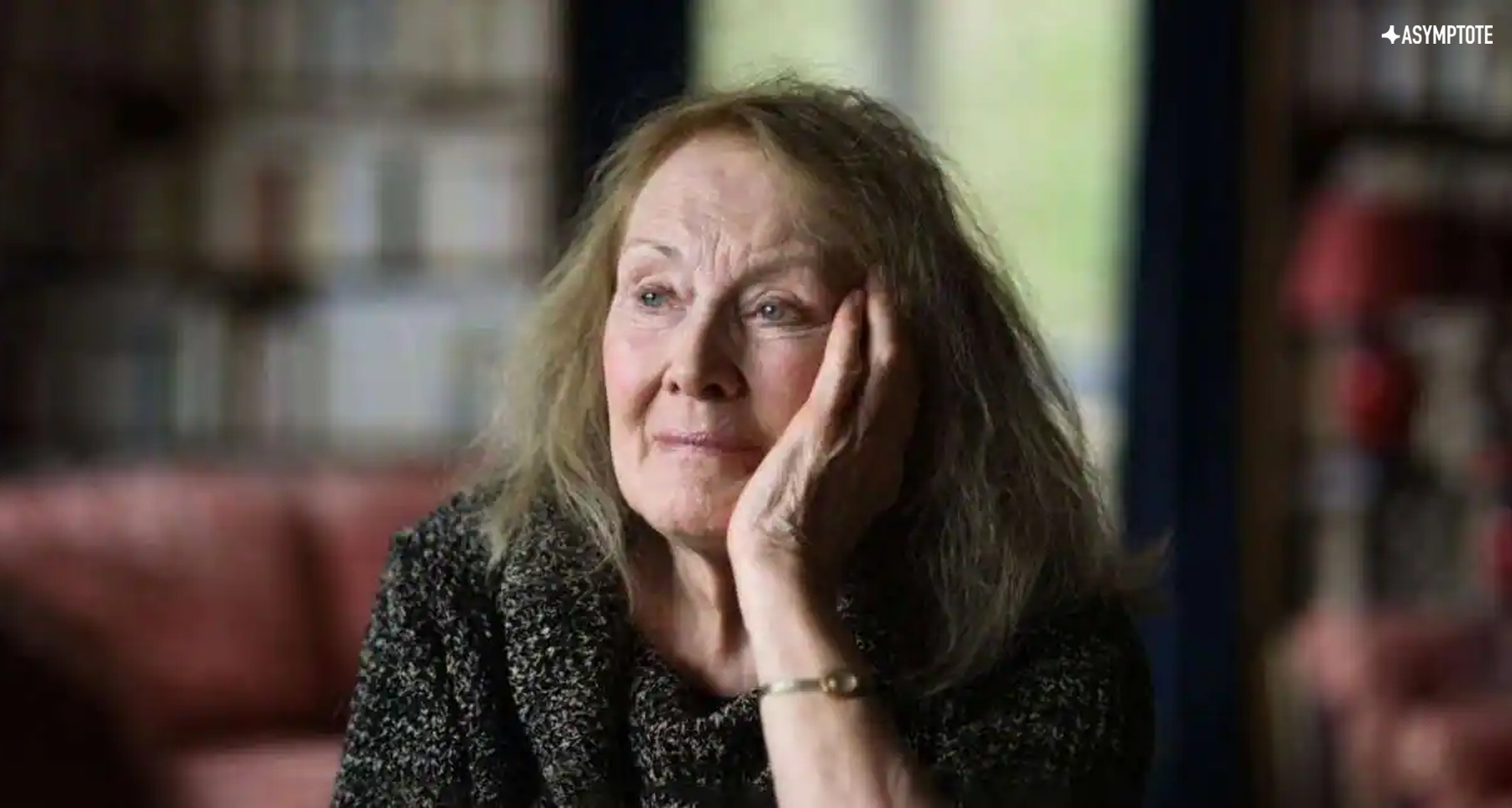
The Nobel committee’s decision to award Annie Ernaux with the 2022 Nobel Prize for Literature communicated a certain message: of writing‘s pivotal responsibility to situate the individual life amidst the ever-elaborating stream of history, and that personal experience—no matter how specific or inward-looking—speaks to the greater picture of a landscape, a culture, and a time. In this following essay, Katarina Gadze takes a close look at Ernaux’s 2008 memoir, The Years, an emblematic work of her masterful collapse of private and public time, of her mind’s stabilizing force as it moves through a constantly shifting world.

In attempting to decipher the uses of autobiographical writing, Sébastien Hubier, in his Littératures intimes, speaks of what he calls reflexivity: “the phenomenon by which discourse refers to its own enunciative activity rather than merely speaking about the world.” Autobiography is then defined by “the narrative of one’s life . . . infused with the critical discourse of the one who writes it.” As a “heuristic project,” it stands for all personal writing that makes, by fact of its production, “a mode of resolution for the conflicts associated with profound shifts in social space.” Objectification of an identity, recourse to writing and the distancing it entails, lends itself to all the symbolic manipulations—reconstructions and redefinitions—of that identity. Such was the mechanism of Annie Ernaux’s writing in The Years, and her lifelong experiments with the autobiographical genre, as well as her construction of temporalities—in relation to both herself and society at large. When the Swedish Academy awarded the 2022 Nobel Prize to Ernaux, they praised her “courage and clinical acuity with which she uncovers the roots, estrangements and collective restraints of personal memory,” perfectly summarizing her work. Indeed, by penning these paradoxically impersonal texts, she inevitably moves away from traditional autobiography and spares us the usual novelistic practices in The Years; the resulting memoir is less a traditional recollection and more an existential examination of Ernaux’s sixty years, told in the third person. The years meander along in the order of her life events, though chronology comes second to Ernaux, whose goal is to expose the illusion (or delusion) of time. She moves through time in leaps and bounds, talking about what it means to live not just as one person in the present, but as one person (and an entire generation) that exists across centuries.

Autobiography as reconstruction places the past in chronological order, which, as Hubier points out, is illusive. Despite the “temporal linearity inherent in an organized retrospection” that probes collective memory, to write truly of the constant scrambling that is our general experience of time interferes with the reader’s ability to feel any dynamic flow—which treads backwards into the past, the opposite direction that the narrator claims. Ernaux interrogates this literary device by highlighting the intertwining of its present, past, and future dimensions, as well as its inevitable divide into two distinct temporalities: personal identification and cultural identity:

Then, in a state of profound, almost dazzling satisfaction, she finds something that the image from personal memory doesn’t give her on its own: a kind of vast collective sensation that takes her consciousness, her entire being, into itself. She has the same feeling, alone in the car on the highway, of being taken into the indefinable whole of the world of now, from the closest to the most remote of things.

READ MORE…

What’s New in Translation: May 2022

New writings translated from Arabic, Croatian, and Italian!

In this month of new releases from literatures around the world, we present a poignant and transcendental collection of poems from Palestinian writer Maya Abun Al-Hayyat, a mesmerizing journey through Latin American from Croatian author Marko Pogačar, and a stunning psychological novel of detachment from Erica Mou, in her Anglophone debut. Read on to find out more!
leaf

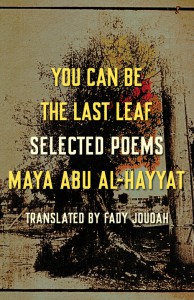
You Can Be the Last Leaf: Selected Poems by Maya Abu Al-Hayyat, translated from the Arabic by Fady Joudah, Milkweed Editions, 2022

Review by Laurel Taylor, Assistant Managing Editor

To raise one’s pen is a political act. As I write these words, it’s been less than forty-eight hours since journalist Shireen Abu Akleh was fatally shot in Jenin. Having acted politically, having written politically, her death is now being used for political means. Words within and about war function as powerful political weapons, bandages, sirens, and songs, all in one. This is what Maya Abu Al-Hayyat shares with us through her incisive verse, as translated from the Arabic by Fady Joudah.

Lovers Swap Language

the way enemies exchanges stabs:
he takes a word from her lexicon
and she takes one from his book.
That’s how poems are made
and also bigoted speeches

And when lovers and enemies sleep,
the ether carries a hot hum
the universe digests
unaffected.

Words weaponize, the world marches on, but Abu Al-Hayyat rests between breaths, demonstrating through a brilliant puzzle of verbal turns the ways in which trauma has distorted our time. This collection, You Can Be the Last Leaf, brings together verses from multiple times and tomes, holding them in conversation, exchanging the writer’s lexicons and books through the years, and digesting the whole in the face of an indifferent universe.

In his brilliant introduction, Joudah describes Abu Al-Hayyat’s place both as an individual soul but also as someone writing to the collective trauma of the Palestinian people. “The multifarious Palestinian voice lives on in Maya Abu Al-Hayyat’s words, ordinary as grief and daily as laughter.” In the vein of the kitchen table, many of her poems do indeed touch on the quotidian, the life of motherhood and of aging, of love and family. “Mothers Arrange Their Aches at Night,” for example, opens “Joint pain, high sugar, / rheumatic ailments, / a boy who missed school because of a cold”. Quickly, however, the shade of the larger region—of that political conflict—ghosts over the next lines. “mothers feel sadness for mysterious reasons, / like sadness over other mothers / who stand in public streets / holding photos of their sons’ / well-groomed faces / with sideburns and mustaches, / waiting for the camera to capture them / and their chapped hands.” Like Abu Akleh’s reporting, Abu Al-Hayyat’s verse is a camera, and what it captures, what it turns toward, is not only the violence but also the aftermath, the void left by time cut short.

In “Mahmoud,” for example, Abu Al-Hayyat imagines a different future for herself and her lover, who was killed by a bullet from Israeli forces on the first day of the second intifada, as Joudah tells us in his introduction. The poem opens in the hypothetical. “Mahmoud could have been our son. / I’d have objected to the name / and, for family reasons, you’d have insisted on it.” Midway through the poem though, other temporal modes wriggle in. “You’d have forgiven him, / you’re kind like that. He’d only smoked in secret. / But the first rock he’d have thrown / at soldiers at the checkpoint, / to raise his heroic stock in Mana’s eyes, / would have declared war in our house / biting followed by flying slippers.” Mahmoud is forgiven in another timeline, but the lover is kind even now. Mahmoud smoked, but he only hypothetically threw the rock. The poem ends with a slap, the same slap which never landed on Mahmoud’s cheek. READ MORE…

Weekly Dispatches From the Front Lines of World Literature

Translation competitions, new publications, and poetry readings from Japan, Guatemala, and El Salvador!

This week, our editors from around the globe report on a translation competition and an event to support Ukraine in Japan, the publication of a harrowing new memoir from Guatemala, and a celebration of women poets in El Salvador. Read on to find out more!

Mary Hillis, Educational Arm Assistant, reporting from Japan

Give Artists a Voice was held on March 15 at the Goethe-Institut in Tokyo and live-streamed on social media. Organized by EUNIC Japan and E.U. member cultural institutions and cultural departments in Japan, artists expressed their support of Ukraine through music, film, poetry, dance, and talks. Joining from Kharkiv, contemporary artist Olia Fedorova read text in Ukrainian documenting life during the war. Poet Marie Iljašenko read “Five poems from collection St. Outdoor” in Czech and Yoko Tawada read “Auszeit von Menschheit” (“Timeout from Humanity”) in German. Michal Hvorecký, author of the novel Troll (published in Slovak in 2017), delivered a message on disinformation and literary translation as a vehicle for deeper understanding.

Earlier in the month, at Bungaku Days Spring 2022, the award winners of the JLPP (Japanese Literature Publishing Project) sixth International Translation Competition were recognized: English grand prize winner Grant Lloyd and Spanish grand prize winner Eduardo López Herrero. Contestants translated two texts, “Namiuchigiwa made” by Maki Kashimada in the fiction category and “Ojigi” by Kuniko Mukōda in the criticism and essay category. The original texts and winning translations can be read on the JLPP website.

Designed to both recognize and provide support for emerging translators of contemporary Japanese literature, the event began with a prerecorded video showcasing comments from the judges and messages from the top three awardees in English and Spanish respectively. Former contest winners Polly Barton and Sam Bett joined this year’s winner, Grant Lloyd, for a symposium on the topic of becoming a translator, moderated by Yoshio Hitomi of Waseda University. They discussed Lloyd’s prize-winning translations and also analyzed the challenges of working with stories, novels, and essays from Japanese, while revisiting steps on their journeys to becoming literary translators. The publishing panel was moderated by Allison Markin Powell and included Anne Meadows (Granta Books), Yuka Igarashi (Graywolf Press), and Tynan Kogane (New Directions), who discussed their points of view on pitching, the acquisition process, and barriers to publishing literature in English translation. The seventh edition of the competition is now in progress and entries are being accepted in English and French.

READ MORE…

Weekly Dispatches from the Front Lines of World Literature

News this week from Vietnam, Japan, and Southeast Asia!

This week, our editors from around the world present reimaginings of Sophocles in Hanoi, memorials and debuts from Japan, and witness writing from Southeast Asia. Read on to find out more!

Thuy Dinh, Editor-at-Large, reporting from the Vietnamese Diaspora

Since November 2021, The Goethe Institute in Hanoi has been in collaboration with the Youth Theatre of Vietnam (Nhà Hát Tuổi Trẻ) to produce six interpretations of Sophocles’s Antigone, exploring a variety of salient themes—fate versus freewill, the family versus the state, moral integrity and political order, feminism versus patriarchy, reason and emotion, loyalty and disobedience. While most of the productions were performed live in Hanoi after the gradual easing of COVID-19 restrictions, “Portrait” (“Bức Chân Dung”)—Antigone’s fifth iteration—is shown online from February 19 through February 26, 2022.

Directed by Lê An of Ho Chi Minh City’s Saigon Theatreland, “Portrait” shifts the first act of Antigone into 1970s wartime South Vietnam, where An (Huỳnh Ly)—whose name means peace and contentment—must forge her identity out of her family’s traumatic past. Creon, Antigone’s uncle in Sophocles’s play, is transposed into her emotionally repressed father, Đắc (Công Danh), a high-ranking officer in the South Vietnamese Army. Đắc forbids An to bring home Kỳ’s dead body—his son and An’s brother—an enemy soldier who fought and died for the Communist cause. Despite the obvious ideological landmines evoked by this premise, director Lê An, in a pre-performance podcast, sidestepped politics by discussing her heroine’s psychological quest “to find herself”— possibly to detract from the production’s more provocative implications.

While ideological heresy still cannot be addressed explicitly in modern adaptations of Antigone within Vietnam (despite the heroine’s Greek name which can mean “one who resists/is of the opposite bend”), this theme plays a central role in Vũ Thư Hiên’s oeuvre—including his newest story collection, Confessions at Midnight (Lời Xưng Tội Lúc Nửa Đêm) (California: Văn Học Press, 2022). A well-known dissident writer and translator, Vũ Thư Hiên has become Vietnam’s persona non grata since the 1997 publication of Night at Midday (“Đêm Giữa Ban Ngày)—a memoir, inspired by Arthur Koestler’s 1940 novel Darkness at Noon, which recounts the nine years (1967-1976) he spent in various North Vietnamese prisons after being charged with “anti-Party, anti-State, spying and revisionist conduct.” READ MORE…

Blog Editors’ Highlights: Winter 2022

The reconstituting of memories that have been erased is a central concern for the playful yet meditative Winter 2022 issue.

Asymptote’s Winter 2022 issue is now out, marking the magazine’s eleventh year in publication! The newest edition features writing from a record forty-three countries and twenty languages. Here to introduce you to what this issue has to offer are our blog editors with some thoughts on the pieces that stood out to them the most.

In Maria Stepanova’s 2021 genre-defying work In Memory of Memory, she wrote that her excavation of family history was motivated by a desire to discover “the way memory works, and what memory wants from me.” Stepanova was absorbed with not only recovering the stories of her Jewish family but also probing her own obsessive relationship with memory itself. The memoir suggests the faultiness of memory in its rips and tears, while betraying an anxiety over its artifice in the way the memoirist manipulates the archive through inclusion, exclusion, and distortion for the purpose of her narrative. The reconstituting of memories that have been erased through the forces of time and displacement is a central concern for the playful yet meditative Winter 2022 issue. Like Stepanova, the authors of these varied works construct complex inquiries into the past through reappraisals of memory, dreams of alternate lives, and imaginative play with form. They seek the truth through memories while contesting their inevitable artificiality and malfunctioning.

In Rose Bialer’s deeply affecting interview, the Hungarian poet, memoirist, and translator George Szirtes speaks of returning to certain memories and themes in his personal history throughout his career in poetry, sometimes writing new poems that function as continuations of collections published decades before. This idea of Szirtes’s “return” to the same moments for their comprehension reflects his mistrust of memories but also his belief that truths are embedded within them. One of the talk’s many astonishing moments is when Szirtes claims that the return over time to the same memories in his poems reveals parallel narratives that add up to a palimpsest of personal history and identity. For Szirtes, formal constraints such as the terza rima continuously open the same memories to new facets and understandings. This illuminating conversation demonstrates how the fluidity of memory allows the poet-translator to construct an unstable past and self while “registering the sense of truth in all its complexity.”

READ MORE…

What’s New in Translation: December 2021

Czech women's writing, German autofiction, and Japanese mystery!

This month, our selections of the best in global literature present a bevy of questions to be answeredrectifying the neglect of Czech women’s writing at the end of the twentieth century, solving murders, and chasing that ever-wandering place of home. Read on for these pivotal texts that are taking place amidst the most sustaining inquiries of our time: of secrets, of memory, and of desire.

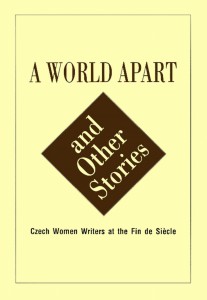
a world apart

A World Apart and Other Stories by Various Authors, translated from the Czech by Kathleen Hayes, University of Chicago Press, 2021 

Review by Maddy Robinson, Social Media Manager

Kathleen Hayes’s collection of fin-de-siècle Czech women’s writing, A World Apart and Other Stories, is to be granted a second edition—twenty years after its initial publication, and around a century after the heyday of its writers. As Hayes informs us in her introduction, despite the proliferation of women’s writing in Czech literary magazines and anthologies at the time, or the academic attention the period has received, there continues to be a distinct lack of English translations for feminine texts from the turn of the century. In an effort to combat this dearth of material, Hayes carefully selected and translated eight short stories written before the First World War, to offer English language readers entry into a literary movement that might otherwise have remained solely within the domain of Central European Studies academics. We are presented with invaluable insight into the societal and individual concerns which accompanied this turbulent period in history, especially viewed in the context of a people struggling with “the woman question.”

The book opens with Božena Benešová’s “Friends,” an evocative tale of childhood sensitivity to perceived social hierarchies, and a frank condemnation of anti-Semitism. Hayes remarks that this is rather unusual, given that “at the time it was written, negative references to the Jews were still the norm in Czech literature.” The story also constitutes an anomaly in this anthology, as from this point on, there is but one central theme around which each story revolves: passion, forbidden or otherwise.

She was a strange woman, but perhaps, after all, strange only from my point of view. I was totally incapable of getting close to her soul.

The titular story, “A World Apart,” was published in an anthology of the same name in 1909 by Růžena Jesenská and is perhaps the most striking and complex of the collection. Travelling by train, the protagonist Marta recounts the story of a friendship she once had with a Miss Teresa Elinson, an intense woman whom she also met on a train, and who convinces her to visit her manor house “A World Apart.” Miss Elinson’s attempts to seduce Marta are not initally met with outright rejection—however, there is a foreboding, Du Maurier-like sense that if she were to remain at A World Apart, she might suffer the same fate as her deceased predecessor, Berta. Though Hayes puts the unlikely subject matter of lesbian desire more down to “literary convention than psychological realism,” Jesenská’s depiction of the risks of breaking worldly norms, as well as her portrait of the passionate, Dandy-esque figure of Teresa Elinson, make for a fascinating contribution to any study of turn-of-the-century queer desire and its manifestations. READ MORE…

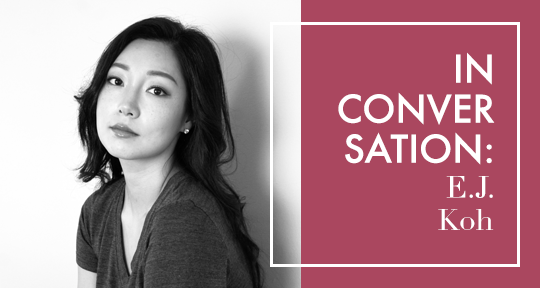
Writer and Translator E.J. Koh Explores the Bridged and Braided Histories of Language

If my mother’s letters could sleep, my translations would be their dreams.

E.J. Koh’s memoir, The Magical Language of Others, was published in January 2020, but I read it in lockdown a few months later. Since March, I have read or listened to this book at least four times, each time encountering something else that makes me come back to it. Koh’s memoir is a coming-of-age story framed by translations of the letters her mother sent her from Korea, where she and Koh’s dad relocated for work. It tells the heartfelt story of a young Korean-American woman who comes to poetry and translation, to Japanese, and to a deeper understanding of her own languages, English and Korean. And she weaves into this story, with palpable sincerity and magnanimity, the stories of generations of women before her who survived the Japanese occupation, the Jeju massacre, and one abandonment after another. In this interview, she talks about avoiding seamlessness and translating war, wounding, and the seemingly impossible.

Ruwa Alhayek (RA): Has translation allowed you to inhabit your mother’s letters in a different way? 

E.J. Koh (EJK): Translating my mother’s letters for me is inseparable from experiencing the vast distance between us in my youth—from the US to South Korea, between English and Korean—and the violence of when that distance suddenly collided to a close. I am living my way back toward the pain of being separated and reunited again. I am holding two strings at the same time. One is the mother who delivered her child. The other is the child who can deliver her mother. That is why I say if my mother’s letters could sleep, my translations would be their dreams.

RA: If you were to issue a new translation of these letters, how do you think they might change? 

EJK: I am in love with and feel deeply grateful for the work of translators. I’d be honored to see her letters translated again, by different translators. What occurs to me is how I leaned away from seamlessness, translation as if written in the historically dominant English, and hoped to let Korean remain—against erasure—choosing instead words with sound, syntax, and rhythm to keep pace with my mother’s voice running circles inside me. But I feel there is no one way, and the assumption of one is the failure to see what can be different and what can be changed.

RA: I was really inspired by the scene of your morning ritual in Japan where you sit in the coffee shop with the hanging vines from dawn until your classes start, memorizing ten pages from your pocket dictionary every day—is there something about that type of immersion that resembles the process of translation for you?

EJK: When I lived in Japan, I starved myself. I wouldn’t eat a proper meal until I could order in Japanese without error. My eating disorder entered my language, and discipline became a place where I could intellectualize my self-harm. I learned the language quickly but with shame and guilt—not opposites to but the very sources of pride. I used language to isolate myself. I say, Languages, as they open you up, can also allow you to close. Where before I depended on separation, now I move in the world by way of connection and humanity. READ MORE…

Blog Editors’ Highlights: Summer 2021

Our blog editors pick their favourite pieces from the Summer 2021 issue!

As Asymptote celebrates the first issue of our second decade in world literature, we bring to you new work from thirty-five countries and twenty-four languages in our Summer 2021 issue! Drawing from the theme of our Special Feature, “Age of Division,” these varied writings speak to a moment of mounting borders, fractious politics, and heightened suspicion towards the other—but so too do they hint at the possibility of unexpected solidarities, strange encounters, and new geographies of affinity. Not sure where to begin with this bountiful issue? Let our blog editors take you through some of their favourite pieces to reveal a world that is, in the words of Lêdo Ivo, “sweet, full, pungent, and luminous.” 

In the spring of 2004, an intifada singer in Ramallah said to his interviewer, “What I do on stage and what martyrs do on the streets are one and the same, just with different instruments.” Were resistance embodied in genre, the shape would undoubtedly be that of music. The art which “all art constantly aspires towards” for its certain coherence of form and content, this singular quality also speaks to its ability to move people passionately, crucially, to action. For music is a verb; it must be performed and enacted. It embodies, within its very idea, its eventual actualisation.  

In the excerpt from Olivia Elias’s forthcoming poetry collection Your Name, Palestine, she makes a graceful address: “Musicians, a few minutes more.” Moving on to materialise the scene in sensual, wondering lines, she makes gentle work of speaking the terrible wreckage done to the country where she was born. Born in Haifa and living now in France, she is said to occupy a privileged space within the Palestinian diaspora as one of the few poets in French. In these poems, translated masterfully by Sarah Riggs and Jérémy Robert, she creates in her adopted language the continuation of the Palestinian nation, transcending geographical realities to rhyme with the poetics of Palestinian agency, with both singing and the witness of singing.

Musicians, I am speaking to you of a country
engulfed in a fault of history
of a people chosen to pay the price
of another sacrifice
of a story more than a hundred years old
full of sound and fury and blood

Intended for voices set to instruments, Elias’s work speaks to the intifada singers, the debke performances that conceptualise art from the violences of occupation, and the traditional melodies evoking the dignity of liberation. But without violence and ideology, the measured cadences of her lines are patient with painterly instinct. These poems draw their necessity from their stoic dreams of clarity. Palestine, untorn, in concert, singing.

In Mulugeta Alebachew’s “Heaven Without Prickly Pears,” writing similarly seeks physical qualities—the savoury texture of the language, the kinetic scan of the eye as it seeks and takes in. The topography of the Ethiopian town, Geneté, is overlaid with the infinite dimensions of the mind. Familiarities, kinships, intimacies run through in capillaries of psychogeography, drawing further on its composite, ramified history: “her mosaicked gum-tattoos of more than a dozen languages and myriad cultures.” With co-translator Bethlehem Attfield, Alebachew has done a wonderful job of rendering the original Amharic text, lush with dialect, into a fluent poetry that nevertheless beholds the precision of references outside of the English language.

This town bears my fondest memories, life vividly lived, and lessons well learned . . . my yesterdays, todays, and predictable tomorrows lay on its streets. . . My home includes the highway. My home does not exclude the other homes. 

In this beautiful passage which eclipses the cautious private/public boundary, Alebachew speaks to the growing of the world. Just as in the acts of reading and writing, the dialectic division of outside and inside loses its binds, and one bleeds into the other. By bringing us into his Geneté, the subtle resentment of possessive being is defied; we are given interior knowing without it being our interior. In this world there is no space indifferent or vacant. It is all compounded in an infinite geometry of living; to inhabit a text that so generously navigates a place, it is an astonishing gift. 

—Xiao Yue Shan

READ MORE…