Language: Arabic

Section Editors’ Highlights: Summer 2020

From Misty poetry to texts both visual and conceptual, our latest issue is bright with offerings.

As testament both to our times and to Asymptote’s ongoing commitment to accentuating the richness and value of global literature, our Summer 2020 issue is replete with texts that vary in their gifts but are unified in their resonance. To help you navigate this selection, our section editors are here with their top picks.

From Lee Yew Leong, Fiction Editor and “Vignettes” Special Feature Editor:

Less diverse than a typical Asymptote lineup, I’m nevertheless proud of the five pieces I curated for the regular Fiction section: Each one wrestles with despair—even if it’s a different timber of dread than the one we’re currently in. In Italian author Christian Raimo’s “No More Cult of the Dead for Twentieth-Century Italy,” two men, haunted by dreams of dead bodies, set out to find and bury one. It’s an exhilarating tale of redemption set against the backdrop of a financial crisis—rendered in Brian Robert Moore’s tonally perfect translation. Don’t miss Czech novelist Daniela Hodrová’s Puppets (Living Pictures); cotranslators Elena Sokol and Véronique Firkusny took home a 2020 PEN Translates Award for their masterful work. In the hypnotic excerpt that we were lucky to present, the reader is whisked across time via a jump-rope. Featuring translations from the Arabic, Chinese, Macedonian, Portuguese, Russian, and Telugu, our more diverse wildcard Special Feature shines a spotlight on the humble vignette. From conventional shorts to metafictional haikus, there’s truly something for everyone. My favorite is perhaps Marianna Geide’s People and Other Beings. Via translator (and past contributor) Fiona Bell, Geide conjures up bizarre creatures—insects shaped like bird droppings, predators shaped like human ears, uselessly decorative bugs, mushroom people—and examines each of her specimens with the precision of a jeweler.

From Garrett Phelps, Poetry Editor:

“Dead Sea” by Yang Lian feels about as close as a piece of writing can get to its subject. Even more impressive is that he does this in two hundred and seventy words, and that the subject is a country gripped by a modern plague. It’s a vision of hell illustrated with “a dense tessellation of images, often hard for the translator to disentangle, which build and build to powerfully symphonic effect,” in the words of translator Brian Holton. Despite the obscurity, however, it’s oddly tangible and even familiar at times, probably because this same hell has become global.

dead fishies drift with the tide     with no high hopes of escaping underwater
there is no underwater in your world

From Sam Carter, Criticism Editor:

In a review of Dmitri Prigov‘s Soviet Texts, Dan Shurley makes the Russian conceptualist writer’s work come alive by grounding an analysis of his work in broader trends both inside and outside the former Soviet Union. Prigov was, as Shurley explains, “a shape-shifter and a master of appropriating the lofty rhetoric of Soviet authority in whatever form it took,” and Shurley carefully guides us through the many offerings and intricacies of the collection that was published by Ugly Duckling Presse and translated by Simon Schuchat with Ainsley Morse.

Another collection, this time of work from multiple writers, is discussed in Ysabelle Cheung‘s review of That We May Live, which contains seven stories of Chinese speculative fiction that delve into alternate realities not entirely separate from our own. Cheung walks us through examinations of particular concerns that, taken together, allow this anthology to “reference global philosophical quandaries and anxieties.” READ MORE…

Where Sunsets & Anguish Collide: Isolation in Lebanese Literature

Despite their preoccupations, be they literary or ideological, they both pause and capture love during calamity.

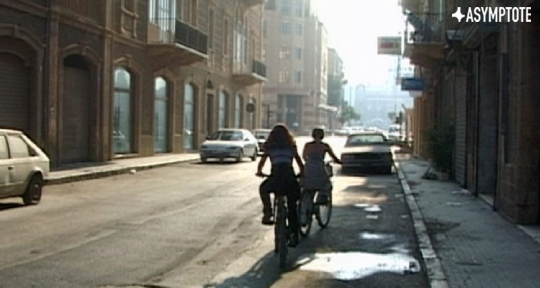
In the past few months, we’ve been forced to dwell on our place in the world in the light of extraordinary circumstances. As most of us experience a certain degree of forced isolation, we predictably turn to literature, in hopes that its wisdoms will enable us to regard our realities with increased awareness, understanding, and presence. In this following essay, writer MK Harb takes us through the various manifestations of isolation as seen in Lebanese literature, and more specifically via two extraordinary texts by two Lebanese-American authors, Rabih Alameddine’s An Unnecessary Woman and Etel Adnan’s Sitt Marie Rose.

“During these unprecedented times . . .”

I have heard and read this line over a thousand times since the pandemic began. In a fortnight, we have entered an echo chamber in which a voice is constantly screaming “unprecedented times” at us. Sometimes this voice comes in the form of an email, other times a news clipping, but mostly, it speaks to us as a marketing gimmick. Countless products remind us that these times are in fact unprecedented as they encourage us to buy sanitization stations, virtual university booths, luxury hazmat suits, and other products that commercialize placebo. Maybe the academic part of myself hates the word unprecedented; I have found that the cynicism of academia manifests in teaching that every time is precedent. From pandemics to famine to injustice, it has all been here before.

What is unprecedented in our current cataclysm is our collective online grief; from Zoom calls to Skype sessions, it has never been more ravenous and visible. However, after a while, one realizes that this excessive online engagement numbs the mind more than reassures it. Instead, resorting to literature has been one of the few escapes out of the confines of my living room to more alluring worlds. From Yasmine Seale’s new translation of Aladdin, to Toni Morrison’s The Bluest Eye, and Garth Greenwell’s Cleanness, I feel the intimacy of reading and caressing a text much more deeply than that of a video call. During these literary excursions, I discovered the omnipresence of isolation as a theme in contemporary Lebanese literature. The irony of this discovery was not lost on me; the isolation of a pandemic led me to isolation in fiction.

As I drew out these conceptual maps of society’s outcasts, I noticed their versatility. Sometimes it manifests in the trials and trepidations of a gay man in Hoda Barakat’s The Stone of Laughter, in which the character navigates a war-torn and derelict Beirut from his lonely apartment. Other times this isolation results from the acts of resistance and radicalism, as in Emily Nasrallah’s The Oleander Tree, which takes place during an epoch when the protagonist Rayya resists the feudal and patriarchal roles set for the women of her village. However, two authors in particular were naturally and strongly united in this theme: Rabih Alameddine and Etel Adnan.

READ MORE…

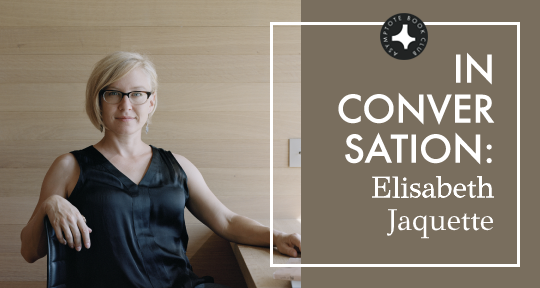
Textual Echoes: Elisabeth Jaquette on Translating Adania Shibli’s Minor Detail

In the novel, social and political commentary operate at the level of events, as well as at the level of language.

As thousands of Palestinians protest against Israel’s newly announced annexation plans for significant parts of the West Bank and Jordan Valley, Adania Shibli’s haunting, persistent novel, Minor Detail, seems especially potent as our May Book Club Selection. The text is written in two parts: the first is set in 1949 and details a horrifying act of violence committed by Israeli soldiers, while the second takes place during present day, in which another young woman discovers the crime and makes a place for it within her own life. As Palestinians continue to struggle in turmoil, Shibli’s masterful language transposes the past into now, in a profound recognition of violence and its intricate legacies. In the following interview, Daniel Persia speaks to the translator of Minor Detail, Elisabeth Jaquette, about how she has rendered this powerful narrative for English-language readers.

The Asymptote Book Club aspires to bring the best in translated fiction every month to readers around the world. You can sign up to receive next month’s selection on our website for as little as USD15 per book; once you’re a member, you can join the online discussion on our Facebook page!

Daniel Persia (DP): Time seems crucial to our understanding of Minor Detail, both in terms of its historical context and the passing of events. Can you talk a little bit about time in translation—how it’s expressed in the Arabic language, and whether this presents any challenges when thinking about English tenses or ways to recreate stillness and movement?

Elisabeth Jaquette (EJ): Time often poses challenges for me as a translator working from Arabic to English, but oddly enough this book didn’t pose particular conundrums in that regard. With other books, I’ve found that English publishing has a greater expectation that readers be able to place events on a precise timeline in relation to one another, whereas that’s somehow less crucial in the Arabic book. In Minor Detail, I felt that the reader’s sense of time was constructed less through events or tense, and more through repetition, pacing, and tone. In Part I in particular, there’s a somewhat paradoxical contrast between dates being directly stated: “9 August 1949 . . .Before noon, 10 August 1949,” and so on, and the way that the officer’s repetitive, enumerated actions make one day bleed into the next, creating stillness even though the passing dates are marked. In Part 2, I also felt that tone and voice, and especially narrative digression, were central to the reader’s sense of movement.

DP: The scene in which Israeli soldiers capture and hose down the young Arab woman is, I think, one of the novel’s most haunting. What was it like to translate this kind of trauma? Does a scene like this demand more of you as a translator—not only technical skill, perhaps, but something like emotional resilience?

EJ: In the face of such traumatic scenes, should we understand readers as bearing witness, or as implicated onlookers? Translators, like writers of course, are more intricately involved: a translator recreates the scene word-by-word in English, actively crafting it. The scene where the soldiers hose down the girl, and her subsequent rape, were certainly the most raw for me. There is tension between the emotional trauma of the actions and the matter-of-fact way in which they is narrated, and I consciously worked to maintain that impassivity at the level of language, following the Arabic’s choice of neutral words, even though the emotional impact of these scenes is high. In some ways I felt that the distanced style of narration amplifies the horror, because the girl is all the more isolated in what she endures. READ MORE…

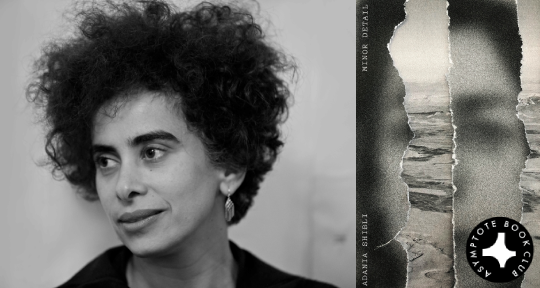
Announcing our May Book Club Selection: Minor Detail by Adania Shibli

This is one of Shibli’s greatest strengths as a storyteller: she trusts her readers to fill in the gaps.

One of the most powerful responsibilities of literature is to ascribe human voices to the momentous, overarching events of our world. This month, Asymptote has selected Adania Shibli’s unflinchingly powerful Minor Detail, a novelistic reflection on the violent and painful consequences of the Israeli-Palestinian conflicts, from the War of 1948 to present day. With an astutely visual language and an unwaveringly intelligent morality, Shibli’s work is an impeccably crafted totem of resistance and justice. 

The Asymptote Book Club aspires to bring the best in translated fiction every month to readers around the world. You can sign up to receive next month’s selection on our website for as little as USD15 per book; once you’re a member, you can join the online discussion on our Facebook page

Minor Detail by Adania Shibli, translated from the Arabic by Elisabeth Jaquette, New Directions (US), Fitzcarraldo (UK), Text Publishing (Australia), 2020

The smell of gasoline, the sound of a dog howling, the taste (or distraction) of a simple stick of chewing gum—these are only a few of the motifs surrounding trauma and pain in Minor Detail, by Adania Shibli, translated from the Arabic by Elisabeth Jaquette. It is August, 1949, and a group of Israeli soldiers have set up camp in the Negev desert. As they patrol the nearby areas, they encounter and ambush a group of Bedouins, returning with a single survivor: a young Arab woman. Shortly after, she is hosed down and raped by the officer in charge. Over half a century later, a woman living in the West Bank crosses the border into Israel, looking to uncover the details of the case. Her journey reflects a changed Middle East.

As a literary project, a historical record, and a translation, Minor Detail is, simply put, brilliant. My knowledge of the Arabic language is limited, and so my goal here isn’t to compare the translation to the original text. Instead, I want to focus on narrative structure and style—two elements clearly on the minds of both Shibli and Jaquette, whose collaboration proves a success on all fronts.

READ MORE…

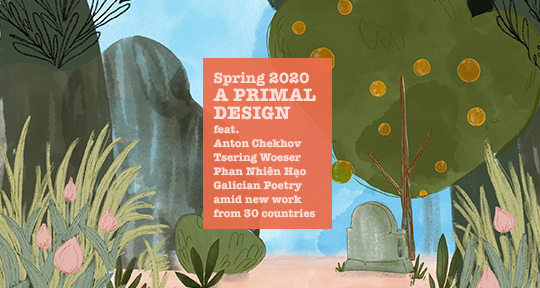
Our Spring 2020 Issue Has Landed!

Feat. Anton Chekhov, Tsering Woeser, Phan Nhiên Hạo, Chus Pato and Alba Cid in our Galician Feature amid new work from 30 countries

Explore the grand scheme of things in Asymptote’s Spring 2020 edition “A Primal Design,” featuring poetry by Zuzanna Ginczanka and Phan Nhiên Hạo, drama from the great Anton Chekhov, Joshua Craze’s review of António Lobo Antunes’ latest fiction, and Fiona Bell’s essay on the “diva mode” of translation. Our Special Feature this season showcases Galician poetry, headlined by Chus Pato. The vivid colors of guest artist Ishibashi Chiharu set the tone for exciting new work from 30 countries and 24 languages, while Ain Bailey’s sonic art provides a fitting soundtrack!

The oracle reveals the obscure plan that drives history, and Galicia, as evoked by its poets, shimmers with oracular resonance. “Language endures / Bodies do not,” declares Gonzalo Hermo, and indeed, these verses seem meant for stone inscriptions. Lara Dopazo Ruibal’s work takes a more visceral approach: “the fig tree grows inside me while the scorpion hunts the ants coming out of my eyes.” But everywhere these poets deal in the essential, the “gold in its original depths,” as Alba Cid writes.

The primeval and the primordial abound in highlights like Matteo Meschiari’s dive into prehistory in his powerful fiction, “Red Ivory,” or Auschwitz survivor Edith Bruck’s lyrics, as immediate as they are minimal. Tareq Imam considers the sublime terror of blindness in a Borges-inspired tale, “Through Sightless Eyes”: truly we are as the blind before destiny. History, like that of Tsering Woeser’s immemorial Buddhist Tibet, provides an illusion of clarity in our confusion. Amidst all that disorientation, writes Seo Jung Hak, “Even if I scribble a poem, the absurdity like a fly who doesn’t bother to fly away somewhere is sitting on a chair like an old joke.”

As we sit quarantined in Plato’s cave pondering our collective conundrum, consider casting shadows of your own when you share news of the issue on Facebook or Twitter; as thanks, here’s a free flyer of the issue to print and share with friends!

If the work that we do touches you, consider signing up to our Book Club, or becoming a sustaining member from as little as $5 a month. We couldn’t do it without you!

Read the issue | Join our family 

Translation Tuesday: “Balancing Act” by Hisham Bustani

He sees that she believes his crossing is The Immutable Truth—nothing else—nothing else but that decision to cross.

For this week’s Translation Tuesday, acclaimed Jordanian writer Hisham Bustani conveys longing and estrangement with a death-defying metaphor in “Balancing Act.” Two individuals are divided by impossible circumstances. Will one risk walking a tightrope to reach the other? The mature and unexpected conclusion defies the simplicity of most parables, and one can even read this poetic story as a meditation on choice itself. Part of the power of Hisham Bustani’s allegory is its applicability to various real-life scenarios: the risks of choosing to cross a divide, be it personal, political, or geographical, always carries the weight of lost (but also new) possibilities.

A rope stretched taut between two tall buildings.

He stands on one rooftop and she on the second, watching each other.

The distance between them isn’t far. Had they been on the ground, they might cross it in twenty paces. But there, on those rooftops with the rope between them, the distance has grown.

The two buildings have no stairs. The two buildings have no elevators. The two buildings have no fire escapes. No one enters the buildings and no one leaves, and they are on those rooftops. There is no other path, and they watch each other from the ends of the tightrope. READ MORE…

Weekly Dispatches from the Front Lines of World Literature

This week's literary news from Morocco, Albania, and the United States!

This week our reporters bring you news of Morocco’s publishing industry—including reports of a plagiarism scandal—the release of Albanian LGBT activist Kristi Pinderi’s memoir, and a series of events celebrating global literary publication and design in New York. Read on to find out more!

Hodna Nuernberg, Editor-at-Large, reporting from Morocco 

The King Abdul-Aziz Al Saoud Foundation, a Casablanca-based non-profit organization that provides rare and rigorous documentation about Morocco’s publishing industry, released its fifth annual report in February to coincide with the Casablanca International Book Fair.

According to the report, some 4,219 titles were published in Morocco last year, representing a steady growth of the publishing industry’s output. In 1987, by comparison, Morocco published 850 titles. But this increased production is served by an increasingly fragile distribution network: whereas Casablanca was home to 65 bookstores in 1987, only 15 remain today. Kenza Sefrioui, author of the meticulously researched (if disheartening) Le livre à l’épreuve, estimates that there is no more than one bookstore per 86,000 inhabitants and 84.5 percent of Moroccans do not have a library card.

The trend towards the Arabization of Morocco’s publishing industry continued in 2019, with Arabic accounting for 78 percent of literary works; French comprised 18 percent, and Tamazight just over 1 percent. Of these literary works, poetry is the dominant genre with the novel coming in a close second. And while 11.5 percent of literary works published last year were translations, nearly half of these translations were from the French (and almost a quarter from the English).

Moroccan books are, on average, the least expensive books in the Maghreb. The average price of a book published in Morocco is 72.74 dirhams, or about the cost of 10 liters of milk. In neighboring Algeria, the average price is 85.93 dirhams, while in Tunisia it’s 90.81. But in a country where a majority of people earn less than 2,500 dirhams a month, 72.74 dirhams can seem a prohibitive price.

The report ends with a sobering statistic: in Morocco in 2019, a whopping 83 percent of published works were written by men. READ MORE…

Section Editors’ Highlights: Winter 2020

Our Section Editors pick their favorites from the Winter 2020 issue!

We thought of the Winter 2020 issue as a fantastic salad, surprising and delightful in its compact variety. We’re willing to concede, however, that it is a large salad; the challenges it presents might be more approachable if they’re coming from a buffet. With so many delights and delectables on offer, where does one begin? Perhaps, we humbly suggest, with these selections from our section editors, which include a Federico García Lorca play and an Eduardo Lalo essay.

From Lee Yew Leong, Fiction, Poetry, and Kurdish Feature Editor:

Brought into English by Caitlin O’Neil (a former team member, I’m thrilled to say), Corinne Hoex’s sensuous—and sensational—Gentlemen Callers is full of exquisite treats, rivaling Belgian compatriot Amélie Nothomb’s wit, humor, and imagination. Although Asymptote makes it its mission to move beyond world literature’s Eurocentric focus, it’s gems like this that remind me that there’s still much to discover from smaller, less heard-from countries within Europe. I would consider it scandalous if Hoex’s fiction is still unknown in the world literature canon ten years down the road. From the Poetry section, Gnaomi Siemens accompanies her sexy, updated take of Ephemeris (horoscopes from the 16th century) with a thought-provoking note: “Horoscopes (hora / time, skopos / observation) are ephemeral. Translation is an observation of time and a holding up of the writings and ideas of one time to observe them in a new temporal context.” Pair with Joey Schwartzman’s 21st-century renderings of T’ang dynasty poet Bai Juyi. Whip-smart and bittersweet, these timeless poems about transience will stay with you for at least a little while.

From Sam Carter, Criticism Section Editor:

This issue’s Criticism section introduces us to two poetry collections that embody the Asymptote mission by refusing to be contained by borders, whether linguistic or geographic. Our very own Lou Sarabadzic takes us through the important work done by Poetry of the Holocaust: An Anthology, which contains poems from ninety-three writers and nineteen languages in order to provide a comprehensive portrait of this terrible atrocity. And Emma Gomis reviews Time, Etel Adnan’s latest exploration of temporality and poetic form that arose from a series of postcards exchanged with the Tunisian artist Khaled Najar. READ MORE…

Translation Tuesday: Two Poems by Samer Abu Hawwash

But still; / what illusion always makes you / wait for something . . .

For this week’s showcase, we are thrilled to present two surreal, staccato zen koans by contemporary Palestinian poet Samer Abu Hawwash in Huda Fakhreddine’s concise translation. If you admire these spare lines that probe the relationship between appearance and reality, check out a recent profile of the author by translator Fakhreddine in the online portal Jacket2.

Kafka on the Beach

I hear the trees passing behind the window.
One of them, maybe a palm tree, opens the curtain, stares me down, and moves on.
At the corner, there’s a cat yawning, saying to the old man: “So . . . you can speak?!
The old man responds: “But I am not very bright.”

I think I am looking into a mirror. READ MORE…

Blog Editors’ Highlights: Winter 2020

Our blog editors pick their favorite pieces from the Winter 2020 issue!

Asymptote celebrates its ninth anniversary with the Winter 2020 issue, featuring new work from thirty-one countries and twenty-two languages (including three new ones: Kurmanci, Old Scots, and Serbo-Croatian)! To help you navigate through such an abundance, our blog editors reveal their favorite pieces below:

Each issue of Asymptote brings with it a utopian vision—that many nations (thirty-one, in this case) may share a page, with each literature distinct but gathered in communion, resulting in a chorus that somehow does not subjugate any single voice. As always, I am astounded by the way one is allowed to travel along the cartography of these collected texts, and how vividly they summon the worlds available in their language.

For a while now I’ve been entertaining the thought that the first step to harnessing language (if there is such a thing) is to distrust it, and so was stopped short by the first line of Eduardo Lalo’s “Unbelieve/Unwrite”:

Unbelieve. Unbelieving the world means questioning the structures that sustain it.

And a couple lines on:

Unbelieving so that writing will wash ashore, like a gift.

These writings are the result of a great loss that causes one to take solace in nothingness, and seems particularly resonant today in the age in which traditional anchors—nationality, religion, family, certainty in our survival as a species—are quickly being drained of their staying power. Arriving in the aftermath of Puerto Rico’s devastation, Lalo seeks to dismantle our reliance on infrastructures both physical and psychological, while simultaneously being brilliantly aware of life’s unassailable fullness. Lalo continuously returns to the art of writing as a source of stability and control, and in doing so affirms the act of writing as a way of approaching the world, absolving the art of its mystery but instilling it with conviction. It is bleak and somehow victorious. READ MORE…

New Year, New Horizons!

Reading resolutions for 2020—brought to you by the blog team.

Happy New Year, reader! To ring in the ’20s, we are getting personal and sharing our own reading resolutions. From literature engaged with the effects of climate change to classic theological texts, here are the reads we have on the radar for 2020. Maybe our titles overlap with some of yours? If you’re inspired, share your resolutions with us in the comments below.

Xiao Yue Shan, Assistant Blog Editor:

We are becoming ever more impelled by the worst-case scenarios, the ultimate consequences of our carelessness. Climate change is cemented at the pinnacle of every engaged mind, consuming the concerns of those on the forefront of human progress—the writers. December is a month of returns, and a trip across the Pacific on my part meant a reabsorption into the beloved stacks of books left behind by a past self who had endlessly imagined the present. I found in those volumes an incredible vitality—it takes considerably more courage to speculate on the future now, yet in our infinitely ideating language, we can’t help it, we imagine naturally, as we have always done.

Usually my reading directives are predictable, by which I mean they’re somewhat “in accordance” with my being a female Chinese poet—the tendency veers towards a healthy majority of women writers, plenty of Chinese literature, and as much poetry as possible. As we approach the new decade, however, I’ve turned my attention to literature more specifically in dialogue with our planet. In Amitav Ghosh’s beautifully urgent book-length essay, The Great Derangement, he convincingly argues for an overhaul of the fiction genre so that it may better address and reflect upon our contemporary precarity. Though the best of our stories are inevitably engaged with our environment, I found Ghosh’s take riveting in its insistence that we continue to build and invent language that is ever more precise, alert, and curious. READ MORE…

An Impeccable English: Notes on the 2019 National Book Award for Translated Literature

The unstated significance of the way the books are written in English is the meaning of the Translated Literature Award.

As both writers and readers anticipate the results of the National Book Awards this upcoming Wednesday, we at Asymptote, to no surprise, are keeping a particular eye out for the outcome of the Translated Literature category. In this following essay, Assistant Editor Erik Noonan gives us a probing and interrogative look at the five books on the shortlist, looking beyond content to pursue answers regarding the linguistic journeys that these works have taken, in order to be chosen.

With the reinstatement of the Translated Literature category, the National Book Foundation is clearly attempting to correct the gender and culture biases of years past. From the beginning of the category in 1967 until 1983, when it was discontinued, every winning author was European with only four exceptions: Yasunari Kawabata in 1971, the anonymous author of The Confessions of Lady Nijo in 1974, the anonymous Chinese author(s) of Master Tung’s Wester Chamber Romance in 1977, and Ichiyō Higuchi with the Japanese authors of the Ten Thousand Leaves anthology in 1982. Lady Nijō and Higuchi were the only two women, albeit long deceased, to be awarded during the prize’s first iteration. Among the translators, Karen Brazell and Helen R. Lane won in 1974, Clara Winston won with Richard Winston in 1978, and Jane Gary Harris and Constance Link won in 1980. The rest were male. In 2018, the category was reinstated and the entry criteria revised, so that both the author and the translator had to be alive at the beginning of the awards cycle to qualify. Last year, the first of its new phase, author Yōko Tawada and translator Margaret Mitsutani took the award for The Emissary. This year, you can expect this corrective trend to continue (for example, every book on the longlist was written in a different language). READ MORE…

Weekly Dispatches from the Front Lines of World Literature

Our editors have you covered with the latest news in world literature!

This week, our editors report on the commemoration of Amjad Nasser, one of Jordan’s most celebrated writers, as well as Syrian poet Adonis’ discussion with his translator Khaled Mattawa at London’s Southbank Centre. From Brazil, the International Literary Festival of the Peripheries (FLUP) and the Mulherio das Letras have taken place, with both festivals seeking to give voice to underrepresented writers and speakers. In France, the winners of two of the most prestigious literary awards were announced at the beginning of the week. Read on to find out more!

Ruba Abughaida, Editor-at-Large, reporting from Lebanon

This week, word-lovers celebrate the life and work of Jordanian poet, novelist, essayist, and travel memoirist Amjad Nasser (1955-2019), who launched his writing career as a journalist and activist for Palestinian rights. His debut poetry collection, Praise for Another Café, was published in 1979 when he was just twenty-four years old. A Map of Signs and Scents, a collection of sixty poems spanning from 1979-2014 and published by Northwestern University Press, features new English translations of his work by Fady Joudah and Khaled Mattawa.

In 2014, his poem A Song and Three Questions, was praised by Saison Poetry Library as “one of the fifty greatest love poems of the last fifty years.” Translator Jonathan Wright said of Nasser’s lyrical novel Land of No Rain: “I’m not sure what to call Land of No Rain. The publishers call it a novel. I call it a meditation.” 

The UK’s Southbank Literature Festival saw Syrian poet Adonis in conversation with Khaled Mattawa, Libyan poet and Adonis’ regular translator. They discussed poetry, translation, the blurred cultural lines between geographical points of East and West, and read their poems to a packed audience.  READ MORE…

Prose Against the City: Ibrahim Al-koni and the Matters of the Desert

Al-koni is . . . giving the desert an ideological value that he believes has been lost.

Emptiness, desolation, and thirst—these evocations of the desert are the ones most familiar to the bulk of us, but for some, this wild landscape resists such simple evaluations, holding instead a kingdom of history, knowledge, and narrative. In this essay, anthropologist and writer MK Harb takes us through the literature of the North African author Ibrahim Al-koni, whose sagas reveal the historic philosophy that these regions have preserved. Despite the othering hierarchical nature that has plagued literature, Al-koni’s writings invoke tender and human shapes from his landscapes, arising from that mysterious creature: the Sahara. 

MK Harb recommends listening to this playlist while reading this article and the works of Al-Koni.

The mahri convulsed and its skin turned bloody red. It jittered with pain, its stomach containing a fire burning within and howled “Aw-a-a-a-a-a-a-a.”

Ukhayadd had given the mahri a silphium plant known for its magical capabilities for physical healing, but also for its mind-twisting qualities. Ukhayadd himself began to convulse, through his emotions he felt every bit of the pain the mahri was going through. He pleaded to the various gods in the Sahara from Allah to those guarding the temples to transfer the pain on to him. He yelled “Lord, divide his share of pain. Let me be the one to lighten his burden,” but the mahri still jittered and yelled “Awa-a-a-a-a-a-a.”

Ukhayadd’s emotions then turned to anger. He pleaded with the mahri, yelling “do you think you can escape your fate? Brave men do not try to run from themselves. Wise men do not try to flee from fate.” Ukhayadd did not see the mahri as a horse. He shared with him a sort of otherworldly love and addressed him with the various emotional capacities you would with a human. 

This imagery ripe with lore and the transfiguration of pain comes to us through the words of the novelist Ibrahim Al-koni. Al-koni is a prolific writer, having penned over eighty novels, with his most famous being The Bleeding of the Stone (translated by May Jayyusi) and Desert Gold (translated by Elliot Kolla), from which this preceding passage of Ukhayyad and the mahri comes. Al-koni hails from Libya, though he does not identify as a Libyan author; while he comes from the land that is now nationally defined as Libya, he is unwilling to commit to nationalist or modern labels. Having grown up in the traditions of the Tuareg, an Amazigh group that inhabits the borders in and out of the Sahara and whose cultural and geographic traditions were heavily disrupted by the imposition of colonial and national borders, this nomadic upbringing seeps throughout his words. His writing is divorced from a need to construct urban environments or a sense of linear time and space; instead, it is imbued with a Sahrawi melancholy, which conjures up vast plateaus that are full of events as enthralling as those unfolding in cities.

READ MORE…