Language: Arabic

A Thousand Lives: Staff Reads from Around the World

A selection of staff reads from Asymptote’s Fortnightly Airmail!

When it comes to browsing the shelves and diving head-first into the wonderfully vast world of translated literature, sometimes you just need a little help from your friends. In this caselet us be your friends. Our editors are sharing their favourite reads to make sure that yours is time well spent.

unnamed

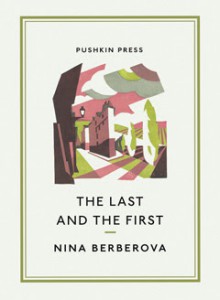
Readers already familiar with Nina Berberova’s fiction in collections such as Billancourt TalesThe Tattered Cloak and The Ladies from St. Petersburg will find her first novel—translated by Marian Schwartz—a surprising divergence in style from the lightness of touch and sparse but pungent details in her stories about small casts of characters grappling with challenges in their everyday lives. Written in 1928-29, The Last and the First (Pushkin Press, 2021) is a drama on a broader canvas about Russian émigrés in France struggling to decide whether to return to the Soviet Union or to throw all their energies into establishing a meaningful life in France, specifically whether to join Ilya, the messianic central character, toiling on the land in Provence. It is driven by a complex plot in which the true identities and motives of some characters are initially hidden, and stylistically has more in common with novels of the nineteenth century, Dostoevsky being the writer who springs most to mind for the intense and knotted emotional relationships between the main characters, their striving for some kind of salvation, as well as in the vivid and grimy descriptions of the backstreets of Paris.

—Janet Phillips, Assistant Managing Editor (Issue Production)

unnamed (1)

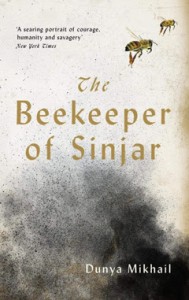
A tale of two lives, that of a poetess living in the USA and of a Yazidi who saves the women of Sinjar, unfolds through a series of phone calls and a single face-to-face visit. In her pensive The Beekeeper of Sinjar (New Directions, 2018), masterfully translated from the Arabic by Max Weiss, the Iraqi-born Dunya Mikhail recalls her conversations with Abdullah, an ordinary man turned local hero, who has chosen to devote his days and nights to rescuing the innocent girls kidnapped by the militant group Daesh. Simultaneously a meditation on absurdity and a truthful account of real-life experiences, the book offers its readers a path to understanding the shifting values of a region long tormented by its past. The unimaginable loss and heartbreak that pour from every page are curiously accompanied by an almost inhuman ability to forgive, while the deceptively simple descriptions of misery bring home the scale of the disaster. Despite the traumatic events, however, the locals have managed to retain their purity and, what is more, to find time for the poetry of existence. As we all should.

Andriana Hamas, Editor-at-Large for Bulgaria READ MORE…

Weekly Dispatches from the Front Lines of World Literature

Stay up to date with the literary world from Hong Kong to Palestine to India!

This week, allow our editors-at-large to take you around the world to find out about the most exciting literary news. From Hong Kong, the highly anticipated 21st Hong Kong International Literary Festival has announced its first slate of writers. New lyric dispatches allow us to hear from a variety of voices from Palestine. Finally, fellowships and festivals from India are worth your attention. Read on to learn more! 

Jacqueline Leung, Editor-at-Large, reporting from Hong Kong:

After a two-year-long hiatus with its main website, Cha, Hong Kong’s popular English literary journal, is open for submissions again from July for their Auditory Cortex 2021 special feature. Co-edited by Lian-Hee Wee and Tammy Lai-Ming Ho, the issue accepts poetry written in various Englishes, acknowledging the diversity of the language across multiple territories. The auditory cortex is the first point in the brain reacting to sound, and as such the publication is looking to document the acoustics of lesser known varieties through a series of recordings accompanying the texts. Cha is also calling for abstracts for the Backreading Hong Kong’s 2021 academic symposium, “Translating Hong Kong,” with Hong Kong Baptist University and The University of Toronto Scarborough this December. In addition to new insights into translation practice, the symposium hopes to explore the cultural and linguistic implications of interpreting works about Hong Kong, whether translation reiterates the colonial dominance of English and how it feeds into the city’s culture.

Back for its 21st year, the Hong Kong International Literary Festival just announced its initial line-up of writers and speakers. Held between November 5 to 15, this year’s festival is entitled the Rebound Edition and will focus on themes of resilience, recovery, and mental health. It has so far confirmed the appearance of Amor Towles, Paula Hawkins, Damon Galgut, and Mary Jean Chan, as well as local emerging writers Alice Chan, Virginia Ng, and Angus Lee, with more details to be announced in late September.

Beyond the page—and my usual reportage of Chinese-English translation happenings—Asia Society Hong Kong Center is hosting a series of six screenings and talks of Korean films with English subtitles between now and December. Titled “Beyond K-pop: Korean Families in Films,” the program features new and classic hits including Bong Joon-ho’s Parasite (2019), Ode to My Father (2014), and Minari (2021) which won the BAFTA Award for Best Film Not in the English Language. The films offer portrayals of Korean families in different eras and social contexts, addressing issues of historical strife, separation, and immigration. READ MORE…

Translation Tuesday: An Excerpt from The Letters of Hiragy al-Qot by Abdel Rahman El-Abnudi

If this letter were a boat, / I would sail down the Nile to reach you.

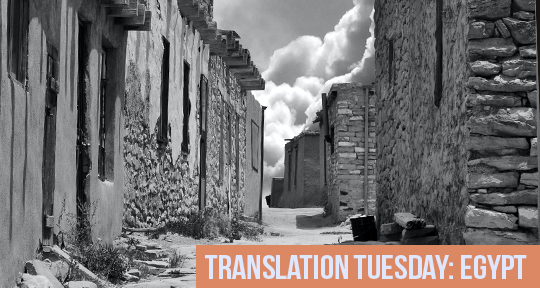
When Nasser commissioned the construction of the Aswan High Dam—a project pivotal to his legacy of modernising Egypt—most of the migrant builders who came from Upper Egypt were farmers who were unfamiliar with industrial machinery and faced hazardous work conditions. This week’s Translation Tuesday features a set of epistolary poems that relate the story of this historic project through the correspondences of a migrant worker Hiragy and his wife Fatma. These poems, drawn from the start of Abdel Rahman El-Abnudi’s The Letters of Hiragy al-Qot, were written when the poet lived amongst the labourers in Aswan who came from his village of Abnoud. One of the Arab world’s most respected vernacular writers—a true poet of the people—El-Abnudi’s works are social documents that chronicle the history of Egypt. In Mariam Moustafa’s translation, the emerging language of technological modernity is conjured with sensitivity, and the various registers of labour and longing are given emotional resonance. We are thrilled also to feature an audio clip of El-Abnudi himself reading the first two letters in Arabic—for our readers to appreciate why he too is known as “the sound of Egypt.”

“Abdel Rahman El-Abnudi always emphasized that his poems were meant to be listened to, not just read, and recorded most of his poems. I grew up listening to El-Abnudi reciting The Letters of Hiragy al-Qot, and was unsure how to convey the profound emotions that I hear in his voice to an English-speaking audience. A translator can communicate the meaning of sentences, expressions, and even untranslatable words to their target audience, but how can the emotions heard through the heart and soul be translated? In translating and revising this piece, I wanted English readers to feel and hear his voice, and asked constantly: “If El-Abnudi wrote these poems in English, what would they sound like?” This translation is my way of expressing gratitude to the poet, whose voice attracted me as a kid, enlightened me as a teenager, and kept me connected to my roots as a young woman.” 

— Mariam Moustafa

Letter 1

The addressee, the most precious diamond,
The marvelous pearl,
My wife, Fatma Ahmed Abdel Ghafar.
The address, our village of Gabalyat El Far.

This is my first letter to you, my love,
Sent from Aswan where I now work.
If I’d surrendered to the shame of being late,
I wouldn’t have written this letter.
Forgive me, Fatma, for the long wait.
I am sorry, I am ashamed, I am abashed.

It has been two months since you shed your tears.
I still remember how they burned my calming hand.
I promised you then, “Before my train reaches Aswan,
My letter will be in your hands.”
You didn’t believe me, you said:
“You’re such a liar. I know you’ll forget.”

I wish that moment could have lasted longer,
But my friends pulled me inside the train.
Their pull troubled my heart.
A fire raged in my soul as I left you, and our kids, Aziza and Eid.
The train began to move,
My heart plummeted.
I ran to the window and screamed,
“Fatma, take care of Aziza and Eid.”
The train screamed too,
Screeching off as if escaping a fire.
I heard your voice next to me, far away.
“My heart and soul follow you to Aswan, habiby.”
I threw myself inside the train, into the crowd,
And I cried aloud.
Our large village, where we could walk around for a whole day,
Was gone in the blink of an eye.

Forgive me, my love, for being late.
If this letter were a boat,
I would sail down the Nile to reach you.

Finally,
I send to you, to my village, and to my children,
A thousand greetings and salams.

Your husband,
Hiragy.

READ MORE…

A Thousand Lives: Staff Reads from Around the World

Here to help you diversify your bookshelf, a selection of staff reads from Asymptote’s Fortnightly Airmail

If, as the adage goes, readers experience a thousand lives before they die, then readers of translated literature experience a thousand cultures without ever leaving their armchair. Set in Canada, India, Finland, Italy, and Jordan, here is a selection of international reads recommended by our staff for the newsletter. Get ready to be transported!

unnamed-4

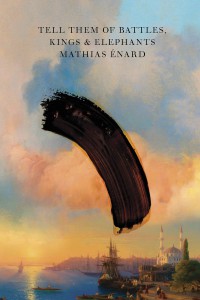
The year is 1506. The great artist Michelangelo is furious at his stingy patron the Pope, “the bellicose pontiff who had thrown him out like a beggar.” But as one door closes, another opens in the form of an invitation from the Sultan of Constantinople to come to his city and design a bridge to cross the Golden Horn. Tell Them of Battles, Kings & Elephants, written by Mathias Énard and translated by Charlotte Mandell, is a feat of richly-imagined historical fiction that tells the tale of this sculptor’s journey. Michelangelo is abstemious and driven, consumed by his art and ego. But he soon succumbs to the charms of cosmopolitan Constantinople, its sounds and smells, its poets and performers. Yet dark forces conspire to thwart the artist from completing his designs. Intrigue. Assassins. Daggers in the night. Will Michelangelo complete his bridge and join cultures and continents? What will be the legacy of his journey? You’ll have to read it to find out.

—Kent Kosack, Director of Educational Arm

unnamed-6

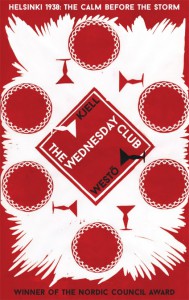
Kjell Westö’s novel The Wednesday Club, translated from the Swedish by Neil Smith, takes us to Helsinki in 1938–ten years after the Finnish Civil War. The Second World War has not yet started, but Hitler and his policies are already a recurring discussion topic far beyond Nazi Germany. Lawyer and recent divorcee Claes Thune wants to keep the gentleman’s club with his three friends amicable but not only the world around them but also the past keeps intruding. As some of the friends start drifting apart, Thune finds a friend in his new secretary Matilda Wiik. But why is she so secretive about her background? Westö is one of the most highly praised Swedish-language writers in Finland. Although he writes poetry and short stories as well, it’s with his novels set in twentieth century Helsinki that he has truly established himself as a writer. Readers of the engaging and intriguing The Wednesday Club understand why.

—Eva Wissting, Editor-at-Large for Sweden

unnamed-8

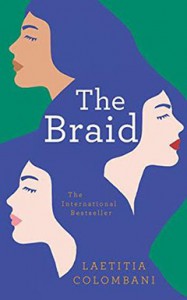
Smita sends her daughter to the village school in Badlapur for the first time, an action that sets a daring journey in motion. Guila works in her family’s wig workshop, the House of Lanfredi in Palermo, but soon receives news that changes the course of their business forever. In Montreal, a successful lawyer, mother of two, and woman who has it all, Sarah’s priorities are about to shift dramatically. Laetitia Colombani’s The Braid, published by Picador in 2019, interlaces the stories of Smita, Guila, and Sarah—each on the precipice of change. Cinematic in scope and expertly translated from French by Louise Rogers Lalaurie, it is ideal for binge reading. Set in the present day, the alternating perspectives flow seamlessly and are further linked through a poem. Colombani creates a deeply personal tale of women building new paths upon generations of faith, culture, and tradition, while revealing unexpected ways in which our modern lives intersect.

Mary Hillis, Educational Arm Assistant READ MORE…

How to Start Women in Translation Month Off Right

Stock up this August with some of our favourite presses and titles!

The impetus to read women is very similar to the desire to read the world; one does not necessarily do it out of a purely social cause—though that can hardly be argued against—but because the profound, intelligent curiosity that sustains the act of reading can only be validated by reading variously, probingly, and with an awareness of life as it is being lived now. Even as the world of letters is slowly ridding itself of entrenched biases and definitions, it remains an indisputable truth that the idea of being a woman in this world continues to throb with chaos and fragility, and increasing globalist awareness only reinforces the fact that womanhood remains replete with mystery, inquiry, and greatly variegating methods of approach.

To find the language that does justice to this experience of living—whether or not womanhood is the subject—requires a persevering intellect and originality that one finds in the greatest of minds. A reader does not pick up a work of translated literature to learn how being a woman is done in that part of the world, but to be allowed entrance into a vast, ridiculously under-explored, realm of humanity, whose inner workings often prove to be—as a result of challenges that must be overcome—intellectually complex, stylistically thrilling, and revolutionary in their uncoverings of human nature.

That is why I, for one, am grateful for the existence of causes like Women in Translation Month, which celebrates the excellent work produced by women around the world and also urges towards an increased conscientiousness about our reading choices. In solidarity with our fellow comrades who support global literature, below are some incredible opportunities you can take advantage of this August.

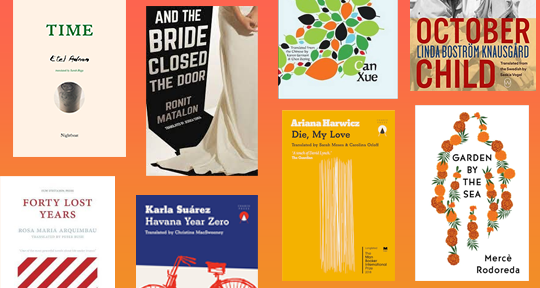
Many presses are currently offering promotions for the duration of WIT Month. One of our favourites, Open Letter Books, is offering a generous discount for the women-written and women-translated books in their lineup. Some recommendations I can make confidently include Mercè Rodoreda’s Garden by the Sea, a gorgeously lyrical fiction of 1920s Barcelona; Marguerite Duras’ The Sailor from Gibraltar, of that terrific Durassian ardor and intimate poetry; and Can Xue’s Frontier, masterfully multilayered and graceful in its surrealism. Fum D’Estampa, a press specialising in Catalan literature, is also offering discounts on all their titles, with Rosa Maria Arquimbau’s brilliant melding of the personal and the political, Forty Lost Years among them.

The wonderful Charco Press, which time and time again has brought out exceptional Latin American works, has put together special bundles of their textsthree carefully curated sets of three books each. “Revolutions” includes Karla Suárez’s Havana Year Zero, a sharp and attentive novel about unexpected connections during Cuba’s economic crisis; “Interior Journeys” features the subversive, cerebral work of Ariana Harwicz; and lastly, “Stories of Survival” gathers narratives of persistence against violence and trauma, with Selva Almada’s incredibly powerful Dead Girls among them.

World Editions is another publisher getting it right, partnering with Bookshop to provide a list of highlighted titles. Included is Linda Boström Knausgård’s October Child, a poetic and elegant autofiction about the escaping borders of reality in her experiences with mental illness and memory loss. The Last Days of Ellis Island, the award-winning novel by Gaëlle Josse that centres around the painful tenets of migration, is also up for grabs. READ MORE…

Radical Reading: Sara Salem Interviewed by MK Harb

I’ve increasingly thought more about what generous, kind, and vulnerable reading might look like instead.

At the height of the pandemic, I—like so many of us—looked for new sources of intrigue and intellectual pleasure. This manifested in finding Sara Salem’s research and reading practice, Radical Reading, which was a discovery of sheer joy; Salem views books and authors as companions, each with their own offerings of certain wisdom or radical thought. When she shares these authors, she carries a genuine enthusiasm that they might come with some revelation.  

I interviewed Salem as she sat in her cozy apartment in London wrapping up a semester of teaching at the London School of Economics. We discussed our lockdown anxieties and our experiences with gloomy weather until we arrived at the perennial topic: the art of reading. The interview continued through a series of emails and transformed into a beautiful constellation of authors, novelists, and activists. In what follows, Salem walks us through the many acts of reading—from discussing Angela Davis in Egypt to radicalizing publications in her own work, in addition to recommending her own selections of radical literature from the Arab world.

MK Harb (MKH): Reading is political, pleasurable, and daring. Inevitably, reading is engaged in meaning-making. How did you arrive at Radical Reading as a practice?

Sara Salem (SS): Some of my most vivid childhood memories are of spending long afternoons at home reading novels, and when I think back to those novels, I find it striking that so many of them were English literature classics. I especially remember spending so much time reading about the English countryside—to the extent that today, when I am there, or passing it on a train, I get the uncanny feeling that it’s a place I know intimately. Later, when I read Edward Said’s writing on Jane Austen and English literature more broadly—its elision, erasure, and at times open support of empire—it struck me that we can often read in ways that are completely disconnected from the lives we live. This tension was what first opened up entire new areas of reading that completely changed my life, among which was the history of empire across Africa; at the time I was living in Zambia, where I grew up, and often visited Egypt. Critical history books were probably my first introduction to what you call the practice of radical reading, of unsettling everything you know and have been taught in ways that begin to build an entirely different world.

I like that you say reading is engaged in meaning-making, because it has always been the primary way in which I try to make sense of something. Even more recently, as I’ve struggled with anxiety, reading above all became my way of grappling with what I was experiencing: what was the history of anxiety, how have different people understood it, and how have people lived with it? I realise, of course, that not everything can be learned from a book, but so far, I’ve found that what reading does provide is a window into the lives of people who might be experiencing something you are, making you feel less alone.

MKH: How do you reconcile reading for pleasure versus reading for academic and political insights? Do they intersect? Being idle has its own spatial practice of radicality at times, and I’m curious on how you navigate those constellations.

SS: This question really made me think! In my own life, I have always made the distinction of fiction as pleasure and non-fiction as academic/work-related. So, if I need to relax, or want to take some time off, I will instinctively reach for fiction, and if I want to start a new project, I think of which academic texts would be helpful. However, this began to change about five or six years ago, when I began to think more carefully about how fiction speaks to academic writing and research, as well as how non-fiction—unrelated to my own work—can be a great source of pleasure and relaxation. This has meant that they have begun to intersect much more, and it has enriched both my academic work and my leisure time. READ MORE…

To Learn the Wider World: The Summer 2021 Educator’s Guide

Stories set in other places and cultures, written in different languages, widen the world; I try to bring that feeling into the classroom.

Since its inception in 2016, the Educational Arm has developed instructional materials to accompany select pieces from the nonfiction, fiction, poetry, drama, and visual sections of each issue of Asymptote. Now with twenty Educator’s Guides in our archive, and over one hundred lesson plans based on translations from over fifty different languages, teachers can truly experience the world with their students. We encourage educators to explore the myriad of ways Asymptote content can be adapted and used in their curriculums; most lessons can be readily applied in literature courses at the high school or university level, but are also flexible enough to be adapted for a variety of humanities classes such as English, creative writing, cultural studies, and modern languages. They can also be easily applied to engage lifelong learners at community centers or arts organizations.

The Summer 2021 Educator’s Guide features lesson plans based on a diverse array of texts from the latest issue of Asymptote, including nonfiction translated from Czech and Spanish, poetry from Brazil and Iceland, and visual art inspired by China and the U.S. In these lessons, students are invited to observe urban life through the lens of psychogeography; explore the multifaceted relationship between art, memory, and cultural identity; research poets and critically examine the concept of literary canon; and delve into the translation process while reflecting on their own experiences reading works in translation. We hope that the Educator’s Guide will serve as a springboard for the use of world literature in your own classroom.

In this following roundtable, four members of the Educational Arm—representing a variety of teaching contexts—sit down for a discussion about the Educator’s Guide. Anna Rumsby (English language teaching, U.K./Germany), Mary Hillis (English language teaching, Japan), Kent Kosack (creative writing, U.S.), and Kasia Bartoszynska (literature, U.S.) discuss their favorite lessons from previous Educator’s Guides—why they chose the pieces in question, how they adapted them, with additional discourse on teaching through the pandemic and the importance of reading world literature.

Mary Hillis (MH): How does translated literature fit into your teaching practice? Have you taught any lessons from the Educator’s Guide, or do you have any favorite lessons from previous guides?

Anna Rumsby (AR): I teach English to German speakers; most of my lessons revolve around the German school system, and therefore involve rather more pedestrian areas such as grammar and traditional style essays. As a relatively new addition to the Education Arm, I was deeply impressed and invigorated by the creative freedoms we enjoy in producing the incredibly unique material at hand, working from some incredibly talented authors and translators. It definitely highlighted what had sometimes been lacking for me in my other work. I suppose that, in a way, working on the Educator’s Guide means I can design lessons which I would love to teach, rather than those I teach day to day.

In the Fall 2020 Educator’s Guide, I was particularly struck by the lesson plan called “Writing About What is Lost,” on “Living Trees and Dying Trees” by Itō Hiromi, translated by Jon L. Pitt. I am a great lover of both folklore and the botanical world; my MA dissertation involves a lot of Black Forest folklore, and my partner is a gardener, so the exercise on the importance and meaning of trees in Japanese culture really struck me. It reminded me of strolling through botanical gardens in the pre-COVID age, being told the Latin names and significance of all the trees I pointed at. I love how the lesson plan uses Itō Hiromi’s work as a springboard for further research, which in turn explores specific topics in more depth.

Kent Kosack (KK): I’m glad you mentioned “Writing about What is Lost.” It’s a great example of what teaching world literature and literary translation can do—letting the students explore a different place, a culture or sensibility, and using it to learn more about the wider world. By the end of the lesson, they’re making connections to their own lives and—in this case—reflecting on what’s been lost. It’s difficult work, but especially during this pandemic, necessary and potentially cathartic.  READ MORE…

Section Editors’ Highlights: Summer 2021

Our Section Editors pick their favorite pieces from the Summer 2021 issue!

The brand-new Summer 2021 edition of Asymptote is barely ten days old and we are still enjoying the diverse offerings from thirty-five countries gathered therein. Last week, blog editors Xiao Yue Shan, Allison Braden, and Shawn Hoo shared their favorites. Today, section editors Lee Yew Leong, Bassam Sidiki, and Caridad Svich distill their highlights for us:

From Lee Yew Leong, Fiction, Poetry, Special Features, and Interview Editor:

Why do so few men read fiction by women? lamented MA Sieghart as recently as seventeen days ago in The Guardian. With female authors taking five out of six slots, the Summer fiction lineup, published just in time for #WomeninTranslation month, offers parochial-minded readers a taste of what they are missing out on. These stories are also deeply centered on the female experience: Gabriel Payares and Maša Kolanović deliver unsettling takes on pregnancy and new motherhood, while the aging protagonists of Kathrin Schmidt’s and Can Xue’s stories go on mushroom-fueled head trips that seem to set the universe right again. A third set explores the corrosive effects of work on identity (in particular, Joanna Chen’s superb translation of mechanical engineer Tehila Hakimi’s Company recalled for me Amelie Nothomb’s masterpiece Fear and Trembling).

When you don’t go by a Judeo-Christian name, the constant bracing against mispronunciation can result in estrangement from your own identity, as Xiao Yue Shan explored in her recent essay on linguistic exile. I can relate. That’s why I found the ending of Abdushukur Muhammet’s “My Name” deeply moving. Translator Munawwar Abdulla not only does an excellent job nailing Muhammet’s melancholic voice, but also provides much needed contextualization in her translator’s note that imbues the poem with a sharp political layer. READ MORE…

What’s New in Translation: July 2021

New texts from Italy, Brazil, Korea, Morocco, and Spain!

In this month’s selection of excellent literature in translation, there’s something for everyone. From a dreamy and architecturally expressive graphic novel that speaks to fates and futures, to a collection of strange and visceral short stories delineating the network between bodies and their definitions. And if science fiction or unsettling tales aren’t your thing, there’s also the powerful narrative on a prodigal son who returns to navigate the pathos-filled landscape of past tragedies, loneliness, and isolation; the masterfully told history of Catalonia as it plays out through the life of a woman embroiled in the tumult of her time; or a cunning satire of contemporary Morocco that traverses territory of both physical and virtual landscapes. Read on for reviews on each of these remarkable works; hope you enjoy the trip!

celestia

Celestia by Manuele Fior, translated from the Italian by Jamie Richards, Fantagraphics, 2021

Review by Thuy Dinh, Editor-at-Large for the Vietnamese Diaspora

“. . . from above, this island is in the shape of two hands intertwined.”

                                                           —Dr. Vivaldi, from Manuele Fior’s Celestia

Such is how Dr. Vivaldi alludes to Venice—curved strips of land yearning to touch and engulf each other in blue space. Ambitiously realized by Manuele Fior and eloquently translated by Jamie Richards, Celestia—Venice’s oneiric double—is a visual poem and modernist dance in graphic novel form, encompassing diaphanous terrains and gothic undertow, exuberantly tumescent with allusions to literature, art, and architecture.

Born in 1975 in Cesena, Italy, Fior currently lives in Paris, France. Drawing from his studies at Venice’s University of Architecture (Istituto Universitario di Architettura di Venezia, or IUAV), he has, over time, developed a dynamic visual language with narrative elements drawn from both Western and Eastern aesthetic traditions. Several of his acclaimed graphic novels have been translated into English and published by U.S.-based Fantagraphics, and Celestia marks his fifth collaboration with Richards—a scholar and translator of Italian literature.

Deeply influenced by John Ruskin’s The Stones of Venice, Joseph Brodsky’s Watermark, and Pier Paolo Pasolini’s poem “Profezia” (“Prophecy”)—Fior depicts Celestia as a fusion of dualities that exist both in the history of Venice as well as in the fictional universe of his work: Gothic and Renaissance, spiritual and secular, traditional and modern, rational and organic, freedom and oppression, community and exile. While in Fior’s earlier work—such as The Interview—telepathy is depicted as an extraterrestial gift, in Celestia this ability has existed from time immemorial among certain people, possibly as an evolutionary process. When the story opens, the island of Celestia is home to a group of telepathic refugees, who long ago fled from a horrific invasion that had devastated the mainland. One of them, Pierrot—cloaked in his commedia dell’arte persona—now wishes to renounce his telepathic power, which he perceives as a tragic link to his childhood. After delivering vigilante justice to a member of the demonic syndicate that controls the island’s murky depths, Pierrot escapes Celestia with Dora—a seer also burdened by her gift, as well as the oppressive intimacy enforced by her mind-melding circle of elites, led by Dr. Vivaldi.

Beset by this innate ability that has become a form of enslavement, Pierrot and Dora set off—hoping their journey would both resolve the past and guide them toward a new future. The couple’s subsequent arrival on the mainland brings them into contact with an omniscient child, or Child—who embodies both the future of mankind and its messiah. READ MORE…

Weekly Dispatches From the Front Lines of World Literature

The latest literary news from Poland, the UK, and Palestine!

This week, our intrepid team members report from around the globe as Poland honors one of the country’s greatest poets, UK independent publishers reckon with new tax regulations, and a Palestinian podcast kicks off with a special video presentation, which also serves as an introduction to some of the brightest lights in Arabic poetry. Dive in!

Julia Sherwood, Editor-at-Large, reporting from Poland

Long snubbed by Polish literary critics as popular literature, the satirical novel The Career of Nicodemus Dyzma (1932), about the accidental rise of an opportunistic swindler, by the political journalist Tadeusz Dołęga-Mostowicz (1898–1939) remained inaccessible to English-language readers until 2020, when Northwestern University Press brought it out in a translation by Ewa Małachowska-Pasek and Megan Thomas. Their commitment and excellent rendering of the book’s universality made the translator duo worthy recipients of the 2021 Found in Translation Award. Explaining the book’s importance and enduring relevance, Ursula Phillips notes in her #Riveting Review that its “resonance extends well beyond the Poland of 1932: in our age of misinformation, post-truth, fake news, the discrediting of expert knowledge and widespread conspiracy theories, it is not hard to recognise other Dyzmas.”

Modern Poetry in Translation has teamed up with the Polish Book Institute to mark the two hundredth birthday of Cyprian Kamil Norwid (1821–1883). Now recognized as one of Poland’s greatest poets, the visionary romantic spent most of his life in exile and died virtually unpublished, deaf and destitute, in Paris. Hoping to “ignite the gentle curiosity of the imagination of the viewer towards the legacy that this man left in writing and in art that was simply never validated in his lifetime,” animation supremos Brothers Quay have created Vade Mecum, a short visual tribute taking its title from Norwid’s poetry collection. On 21 June MPT released a special digital issue featuring Adam Czerniawski’s translation of Norwid’s last play, Pure Love at Sea-Side Bathing. Set by the French seaside, the play “anticipates Maurice Maetelinck’s Pelléas et Mélisande and Henry James’s late novels,” says Czerniawski, introducing this work by a “master of the implied, the half-said, the unsaid.” And the journal’s summer 2021 issue will present new commissions from poets Wayne Holloway Smith and Malika Booker, writing in response to Norwid. Back in Poland, as the Cyprian Norwid Prize celebrates its own twentieth birthday, Józef Hen, author of over thirty books, many film scripts and plays, as well as four TV series, has been named winner of the “Award for Lifetime Achievement”. Prizes in the remaining categories—literature, music, visual art and drama—will be announced in September.

READ MORE…

Translation Tuesday: “The Leaf” by Azza Maghur

I feared if I touched the leaf, it would either sting me, or its light would run through my body and melt me instantly

Can the story of a life be told through a single moment? What would it mean to, in William Blake’s words, “see a World in a Grain of Sand”? In Azza Maghur’s story, a single luminous leaf from a man’s childhood comes to define his entire life. Maghur’s prose is spare and understated; it is given a lovely cadence in Dr. Safa Elnaili’s translation, which lures the reader into a moment of beauty that is given a telescopic significance in the narrator’s reminiscence. Published in Arabic at the start of this year, this quiet piece received much praise for its resonances with reader’s experiences of the pandemic—its sensitivity to the tactile world, for instance, when a world was reckoning with the potency of touch.

All the rays of sunlight that day filtered through the trees onto a single leaf.

I swore to Mother that the sun rested on one leaf. I witnessed it shine as brightly as day against the dimness of its mother tree.

Mother was standing in front of the kitchen sink. She pulled her wet hands from under the running faucet, wiped them on the sides of her dress, and then smiled. She told me I was a little boy with a wild imagination. I had no idea whether I should give rein to my imagination or let it take me away on its wings.

I tell you this story because that leaf and my soul have become inseparable since that day. I searched for it my entire life. It was the size of my hand or slightly bigger, dark green, and so thick that even light couldn’t pass through it. Water droplets could rest on it undisturbed.

My only recollection of the tree was that its aura was dim, almost black. I learned as I grew up It must’ve been an emerald green tree, but I only remember the one particular leaf that soaked in the sun and captured all its strings of light as if it were planning to make something out of them. I reckon it’s the reason the tree was so dim.

I’ve roamed this earth; I’ve visited cities, villages, farmlands, and forests in search of the leaf but never found or seen anything that resembled it.

The sun’s light is boundless. It shines on earth with a fair and steady rotation, inflames the edges of leaves and homes, and draws shapes on sidewalks and rooftops. Its light and warmth sneak into concrete buildings and even shine through the tiniest holes in shirts or carvings on the soles of shoes. It stretches into the entrance of a dark cave but never dares to travel beyond it. Its light wrestles shadows. When it’s time to set, it departs leisurely, and its rays shine over the horizon. It yawns with heavy eyes and then sleeps until dawn to rise again.

I drove my car, parked it in the shade under a tree, and hopelessly looked for the leaf. I walked into forests and farms and searched for it among trees and bushes and even between the leaves of fruits but could never find it. READ MORE…

One’s Own Desire: Arab Women Writers Speak for Themselves in We Wrote in Symbols

This anthology provides a glimpse into a world that has been constantly made invisible or policed within systems of domestication and abuse.

We Wrote in Symbols: Love and Lust by Arab Women Writers, edited by Selma Dabbagh, Saqi Books, 2021

As an Egyptian, Arab, and Muslim woman, love and lust have largely occupied two separate worlds in my life. While I yearned for the elusive idea of love in my youth and pursued it in relationships, I had also deeply internalized that it had to end in heartbreak; I believed that love, like many ideas, could never be fully comprehended. But lust was different. Lust was an action—an action to avoid and repress, because it leads to sex, and sex is dangerous. When I started reading We Wrote in Symbols: Love and Lust by Arab Women Writers, I thought of my upbringing, of the two separate worlds I have built for love and lust, and the difficulties of reconciling them in my adult life. This anthology, edited by the British-Palestinian writer Selma Dabbagh and published by Saqi books, includes one hundred and one pieces by seventy-five different women from the Middle East and North Africa region, as well as from the diaspora. Most of the pieces are translated from Arabic, many are originally written in English, and the minority are translated from French.

In the book’s introduction, Dabbagh explains that translating works about love and lust is difficult, though we do not learn about the ways in which the various translations could have impacted the anthology. This is especially pertinent in the cases of translations from Arabic to English, which represent the majority of the works in the text; Arabic can be seen as a unifying language, but the subtleties and differences between the dialects dictate different cultural specificities and reflect a stark diversity in both place and community. In other words, unless the place of origin is clear, the readers lose a sense of place with the absence of dialect, and different geographies and contexts start feeling neutral.

In the introduction, Dabbagh contextualizes the largely overlooked history of erotic female writers in Arabic literature. Although names of ancient goddesses of love and fertility in the Arab region—such as Isis and Ishtar—are well known, the topic of female Arab sexuality still comes as a novelty for many. Similarly, despite the fame of certain Abbasid poets such as Abu Nawas, female poets in elite Abbasid literary salons are not famous, if known at all. This lack of awareness is further complicated by the total disappearance of women erotic writings during the fall of Andalusia in 1492; Dabbagh clarifies that women writing on love and lust faced a blackout for almost half a millennia, reappearing only in the late nineteenth century. By then, authors and novelists—like Zaynab Fawwaz—began challenging common misogynistic practices such as arranged marriages, and therein paved the way for many women Arab writers to discuss sexuality in various literary forms today. Ranging over three millennia, the long span this anthology covers is indicative of the two interests of my review: what lies beyond the celebratory—especially in relation to difficult and/or painful lust—and the limitations of the narrative linking love and lust as two sides of the same coin.  READ MORE…

Weekly Dispatches From the Front Lines of World Literature

Catch up on the latest literary news from Palestine, Sweden, and Hong Kong!

This week, Gaza’s reading community reels from the devastating loss of a beloved bookstore, and Sweden debates a new library to promote freedom of expression. In Hong Kong, leading literary voices pay homage on the anniversary of the 1989 Tiananmen Square protest, even as the annual Victoria Park vigil was canceled due to coronavirus concerns. Tour the literary world without leaving home; Asymptote‘s editors-at-large will punch your passport.

Carol Khoury, Editor-at-Large, reporting from Palestine

When his mobile phone rang at 6 a.m. on Tuesday, May 18, Samir Mansour was not asleep anyway, as the bombardment of Gaza was still on. The caller, the Israeli military, was asking if Mansour was inside his bookshop and publishing house, as they “didn’t want to hurt” him. They hung up, and shortly after, their shells reduced what was once “happy and loving memories” to a pile of rubble.

The beloved local bookshop, which stood on the ground floor of a larger building, was one of the two blockaded Gaza Strip’s largest sellers of books. The other bookshop, owned by Shaban Aslim, was also destroyed by an airstrike the same week. Mr. Aslim spoke of the work he put into creating his store in an interview, saying “this was my dream that cost me so much.”

To Palestinians living in Gaza, the two bookstores played a key role as a center of intellectual ‎life, and their destruction represents the wider loss of culture in Gaza.‎ Mansour’s bookshop, located near several universities, ‎was also the unofficial home of several English-‎language book clubs, and printed and published works by local authors for the past twenty-one years. “Books are my life,” said Mansour, who would like to rebuild his store one day. Hopes are high that the bookstore will be rebuilt with donations after an online fundraiser was set up and managed by human rights lawyers.

A post to the bookshop’s Instagram page laments the loss of the sense of ‎community the store offered to people in Gaza. But not all stories are lost! Tareq Hajjaj’s piece in Middle East Eye gives a glimpse of fear and loathing in Gaza from before the latest war. The Palestine Book Award, now celebrating its tenth year, is publishing Writing Palestine, with Arabic and English texts, which “uniquely brings together revered names.” The Award’s list of winners honors and endorses the best written in English on Palestine. And do not miss M. Lynx Qualey’s list of seventeen new books by Palestinian writers worth reading. READ MORE…

Translation Tuesday: An Excerpt from Yassin Adnan’s Hot Maroc

“When the poor population gets a mobile phone and surfs the kingdoms of electrons, they forget all about their misery.”

With an infectious blend of humor, satire, and biting social commentary, Yassin Adnan’s novel Hot Maroc gives readers a portrait of contemporary Morocco—and the city of Marrakech—told through the eyes of the hapless Rahhal Laâouina, a.k.a. the Squirrel. Painfully shy, not that bright, and not all that popular, Rahhal somehow imagines himself a hero. With a useless degree in ancient Arabic poetry, he finds his calling in the online world, where he discovers email, YouTube, Facebook, and the news site Hot Maroc. Enamored of the internet and the thrill of anonymity it allows, Rahhal opens the Atlas Cubs Cybercafe, where patrons mingle virtually with politicians, journalists, hackers, and trolls. However, Rahhal soon finds himself mired in the dark side of the online world—one of corruption, scandal, and deception. Longlisted for the International Prize for Arabic Fiction in 2017, Hot Maroc is a vital portrait of the challenges Moroccans, young and old, face today. Where press freedoms are tightly controlled by government authorities, where the police spy on, intimidate, and detain citizens with impunity, and where adherence to traditional cultural icons both anchors and stifles creative production, the online world provides an alternative for the young and voiceless. We are thrilled to partner with Syracuse University Press to present an excerpt of its debut in English.

The Atlas Cubs Cybercafe

The autumn winds blow over Marrakech’s gardens, parks, and trees as September draws to an end. The entrance exam period has passed and those of Rahhal’s and Hassaniya’s friends who passed the exams have enrolled in training schools for primary and secondary school teachers, while those who flunked have gone back to throw themselves into the embrace of a deadly emptiness. Students went on with their university lives, embarking upon another semester of lectures, discussion circles, and endless cafeteria fights, whereas those who failed were deprived even of the routine of attending classes. Hung out to dry like clothes on the line, blowing in the wind, a sense of worthlessness gnawing away at them. As for Rahhal, he found himself face-to-face with what Hassaniya had suggested. He had no other option. And he couldn’t have hoped for a better solution himself.

He stood ill at ease and submissive at the door of the principal’s office, and after Hassaniya asked if he could enter, Emad Qatifa himself rushed forward to welcome him.

“Please . . . please . . . Mr. . . . Mr. . . . Rahhal, right?”

“. . .”

“Please, come in.”

In a show of gratitude, Rahhal just nodded. He was nervous and flustered, unable to raise his eyes up to those of Emad, who seemed nice, while Hiyam, the actual principal of the school, remained sitting at her desk. She was totally indifferent. She didn’t stir in her chair at all. She was silently watching the scene with an expression that moved between severity and detachment.

The meeting ended quickly, quicker than Rahhal expected, and without him having said a single word. He found himself in the courtyard of the house that had been turned into a school, having gotten the job right then and there, but not yet understanding exactly what his job was, or what exactly the position entailed. The school had a teaching staff whose names, along with the details of the subjects they taught, were posted on an educational chart hanging to the right of the principal’s office, and Rahhal’s picture was not among them. The school had a doorman, who stood at the gate washing Hiyam’s car, watching over Hassaniya’s motorbike and the teachers’ bicycles, and selling single cigarettes to passers-by, so even this position was not available. What was left, then? It was clear that Rahhal would remain leaning up in the corner of the courtyard like a bench player on a soccer team. He would remain until things became clear. Watching the students come and go, making himself available to everyone: Emad Qatifa, the owner of the whole thing; his wife, Hiyam, the principal of the school; and her vice principal and private secretary, Hassaniya Bin Mymoune. READ MORE…