Weekly Dispatches from the Front Lines of World Literature

Central America, France, and Peru—our writers bring you this week's latest news from around the globe.

This week, our reporters bring you news of the release of unpublished Proust short stories in France, literary award winners in Guatemala and Panama, and the Lima International Book Fair in Peru.

José García Escobar, Editor-at-Large, reporting from Central America

It’s award season in Central America!

In early October, the committee of the Miguel Angel Asturias National Prize in Literature (Guatemala) announced that this year’s winner was the poet, fiction writer, critic, and translator Luis Eduardo Rivera. Luis began his career in the seventies, alongside other great Guatemalan writers like Marco Antonio Flores, Ana María Rodas, and Luis de Lión. He’s the author of close to twenty books, and he currently lives in France where he teaches Spanish and Literature. Famed writer Eduardo Halfon received this prize last year.

Guatemalan readers and book lovers also saw the opening of a new bookstore called Kitapenas Books & Bistro, and Editorial Catafixia, one of Central America’s most important indie presses, celebrated its tenth anniversary a few days ago. Catafixia has published the likes of Vania Vargas, Wingston González, Sabino Esteban, Jacinta Escudos, and Alfredo Trejos. READ MORE…
Resurrecting the Dead: Translator Will Firth on Unearthing Balkan Classics

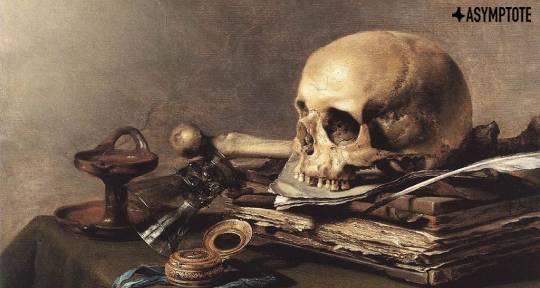
In a world dominated by a handful of powers, "minor" literatures help us think outside the box.

In our current globalized state, translated literatures are at the forefront of creating cross-cultural dialogues and paving the path for a richer and more diverse literary landscape. There remain, however, distinct inconsistencies in the publication, marketing, and distribution between national literatures that enjoy moderate international renown, and those that are sadly compartmentalized and neglected. In this impassioned and forceful essay by translator Will Firth, who specializes in Balkan literature, a much-needed spotlight is shone upon the overlooked classics of the Macedonian and Serbo-Croatian canon, additionally turning our attentions to the failures of a literature market that privileges predictable profits over unfamiliar brilliance.

Few regions are as fraught with historical rifts and discontinuities as the Balkans, and, given their degree of cultural and linguistic “otherness” compared to the English-speaking world, it is no wonder that the reception of literature from the Balkans is patchy. The francophone world performs somewhat better in this regard, and some countries (e.g. Poland, Hungary, and Turkey) have been remarkably consistent in accompanying Balkan literatures through translation. READ MORE…

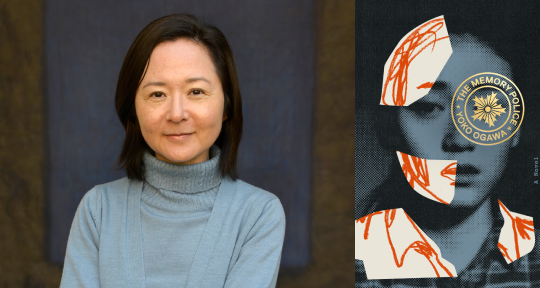
A Paltry Little Scrap of the Past: Yoko Ogawa’s The Memory Police

Scrappy as memory may be . . . Ogawa emphasizes the importance of bearing witness to the past all the same.

The Memory Police by Yoko Ogawa, translated from the Japanese by Stephen Snyder, Pantheon, 2019

It is easy to read Yoko Ogawa’s The Memory Police as a political allegory, along the lines of Milan Kundera’s oft-quoted proclamation in The Book of Laughter and Forgetting: “the struggle of man against power is the struggle of memory against forgetting.” Upon The Memory Police’s release in English this summer, publishing presses label the novel “Orwellian;” critics have similarly gravitated toward the timely themes of state surveillance and totalitarianism that form the novel’s backdrop, to which I relate in some way.

At the time of writing this essay, Hong Kong, the city where I was born, has been entrenched in protest for three months against the institutional violence committed by the government and the police force. With a crowdfunded campaign to place protest ads on international newspapers, a post on the August 19, 2019 edition of The New York Times asked readers to “[b]ear witness to Hongkongers’ fight for freedom. Tell our story—especially if we can no longer do it ourselves.” A month after, when two shafts of light went up in New York City to commemorate the eighteenth anniversary of 9/11, news headlines and Twitter posts abounded with the slogan “Never Forget,” used year after year to show the resilience of memory against trauma. Never have we been more well-equipped to record and share our experiences, but we are also more afraid than ever of not retaining control over our narratives, or of going unheard amidst the overflow of calamities documented around the world.

READ MORE…

Translation Tuesday: “The Viola Couple” by Gyrðir Elíasson

I am alone (apart from the cat), and only those who have endured being alone for an extended period of time can understand the effect.

This week’s Translation Tuesday features microfiction by Gyrðir Elíasson. “The Viola Couple,” translated into a familiar monologue style by Mark Ioli, renders a melancholic protagonist in the throes of loss and ennui. What begins as a mindset typical of a sort of modernist masculinity slowly morphs as the character’s observations reverberate through the prose, changing the concerns from a self-conscious banalness into a metaphoric repose. The change in mood is expertly reflected by the expanding sentence length and conceptual language that increases in complexity. The story seems to suggest that what we focus on can help to shape thought and that singular problems appear different depending on the objects that we hold close to our psyches.

Dedicated to ÓJS

My cat isn’t dead, but he is on a hunger strike. It’s taking a toll on him. I bought him this premium food that was insanely expensive, but he wants nothing to do with it and demands his generic Bónus food back. It’s been several days, and we’re both locked in a battle of wills. No resolution is in sight. The cat mainly lies around inside on the couch, casting accusatory glances at me if I walk past him.

These have been trying times for me, both on account of the cat and various other things. I am alone (apart from the cat), and only those who have endured being alone for an extended period of time can understand the effect it has on your psyche.

READ MORE…

Blog Editors’ Highlights: Fall 2019

Our blog editors pick their favorite pieces from the Fall 2019 issue!

Another issue, another record broken: Asymptote’s Fall 2019 issue features work from an unprecedented thirty-six countries. Looking for a point of entry? Consider our blog editors your guides. Their selections here, which range from Korean poetry to Russian drama, will set you off on the right foot. 

“Why do I think October is beautiful? / It is not, is not beautiful.” So goes a poem by the late Bill Berkson. It is not—as we know when the grey settles and looks to stay—a particularly delightful month, but if all the poems featuring October attests to something, it is that this time, its late and sedate arrival, is one that enamors poets. So it is that a vein of poetics runs through our Fall 2019 issue, and the poetry section itself is one of tremendous artistry and vitality. From the stoic and enduring lines of Osip Mandelstam to a brilliant translation of Sun Tzu-Ping’s strikingly visual language, Asymptote has once again gathered the great poets from far reaches. 

READ MORE…

Weekly Dispatches from the Front Lines of World Literature

Literary awards and festivals abound in this week's news from Argentina, Sweden, and the UK.

This week our reporters bring you news of Sweden’s reaction to last week’s Nobel Prize in Literature announcement by the Swedish Academy, the FILBA international festival in Buenos Aires, as well as the surprise of the Booker Prize winner(s!) in the UK.

Eva Wissting, Editor-at-Large, reporting from Sweden

Since the announcement of the 2018 and 2019 Laureates of the Nobel Prize in Literature last week, the subsequent debate shows no sign of receding. Before the announcement, literary Nobel Prize discussions within Sweden focused on whether awarding a 2018 prize was good for the world of literature or bad because it would smooth over the Swedish Academy’s connection to misconducts.

After the announcement of Polish Olga Tokarczuk (“Flights”) and Austrian Peter Handke as the two most recent literary Nobel Prize Laureates, however, the pros and cons of announcing a 2018 laureate has waned in the shadow of the controversial choice of Handke. The disagreement in Sweden centers on whether Handke’s political standpoint is misunderstood—if he has simply been naive and used by others, if he is an apologist of war crimes—or if awarding Handke is correct on solely literary merits and that disregarding politics is possible. READ MORE…

Our Fall 2019 Issue Is Here!

Featuring Radka Denemarková, Sylvia Molloy, Monchoachi, and a Spotlight on International Microfiction

Welcome to our spectacular Fall 2019 edition gathering never-before-published work from a record-breaking 36 countries, including, for the first time, Azerbaijan via our spotlight on International Microfiction. Uncontained, this issue’s theme, may refer to escape either from literal prisons—the setting of some of these pieces—or from other acts of containment: A pair of texts by Czech author Radka Denemarková and Hong Kong essayist Stuart Lee tackle the timely subject of Chinese authoritarianism. In “The Container,” Thomas Boberg performs the literary equivalent of “unboxing” so popular on YouTube these days, itemizing a list of things in a container shipped from Denmark to the Gambia—all in a withering critique of global capitalism.

The container lends itself to several metaphors but none as poignant or as on point as—you guessed it, dear Asymptote reader—the container of language itself, as suggested by London-based photographer Elizabeth Gabrielle Lee’s brilliant cover highlighting the symbolism of the humble rice grain. This commodity has, like language, been exported, exchanged, enhanced, and expressed in various forms from its various origins across the planet. Even when a state attempts to erase language, resistance remains possible, as poet Fabián Severo—the only Uruguayan writing in Portunhol, the language of the country’s frontier with Brazil—demonstrates: “This language of mine sticks out its tongue at the / dictionary,” he sings, “dances a cumbia on top of the maps / and from the school tunic and bow tie / makes a kite / that flies / loose and free through the sky.” In one of Argentine writer Sylvia Molloy’s many profound riffs on the bilingual condition, Molloy claims that “one must always be bilingual from one language, the heimlich one, if only for a moment, since heim or home can change.” READ MORE…

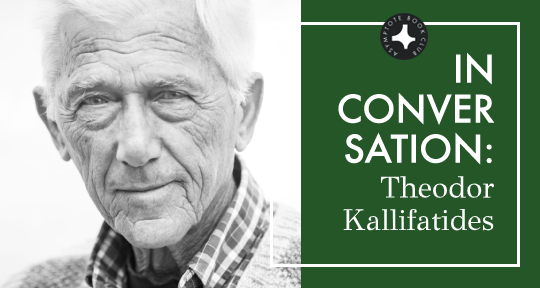
Words Containing Multitudes: Theodor Kallifatides on Writing The Siege of Troy

A basic human need is also to remember and be remembered. That is why we put one stone on top of another, we paint, we sing, we write.

In September, we were honored to present Theodor Kallifatides’s The Siege of Troy as our monthly Book Club feature. This poignant, multilayered novel intertwines a modern coming-of-age wartime story with a psychologically profound retelling of the classic Iliad. In the following interview, Assistant Managing Editor Josefina Massot speaks with the author on overcoming writer’s block, writing about Greece in a foreign land and tongue, and humanizing ancient heroes.

Josefina Massot (JM): You had an unexpected bout of writer’s block at age seventy-seven, back in 2015, after almost fifty years of uninterrupted literary output. The Siege of Troy was, I believe, the first novel you wrote once you overcame it. Did your writing process change at all as a result? What was it like, rediscovering your narrative voice in novel form?

Theodor Kallifatides (TK): Yes, it affected me and my writing greatly. I felt free from all expectations, from all demands from the publisher, the public, and myself, and my writing got wings it never had before. I did not care about anything except doing justice to my deepest feelings and ideas. I got back both my eyes. Before it, I always had—as most writers do, I dare say—an eye on what people would think about my work. Suddenly, I simply did not care. I was free. READ MORE…

Translation Tuesday: “Don’t Cry” by Mohamed M. Farrag

“Men don’t cry, whatever happens.” And then he wiped my tears.

This week’s Translation Tuesday features the work of Mohamed M. Farrag. The prose is short, succinct, and hits like a hammer—much like the vision of masculinity embodied in the story. Enigmatic messages, the codes that construct subjects along certain lines, flow freely between a boy and his grandfather. These messages transport generational models of masculine repression as they are passed down; in just a few lines, Farrag aptly demonstrates the ways in which the social codes that dictate behavior are transferred. However, the end of the story leaves us with a question: can the script of behavior be broken by reflection and release? Or is this too a planned movement, derived from what came before? Regardless, the emotions captured here are delivered with an uncanny availability: the rhythms that the translator pulls from the original present an ordinary scene that makes one feel as if the answer to some pressing, universal question is close at hand. But the true answer is only a choice: to show or to hide.

He sat beside his dying grandfather; a man known for his cruel heart. He’d never seen him cry. ‎Gently, the grandfather caught his grandson’s hand. “Do you know, son, what my father ‎told me when he saw me crying on the day of my mother’s death?”‎

“No.” The young boy shrugged.

He said, “Men don’t cry, whatever happens.” And then he wiped my tears. “When my wife died your ‎mother was still young. Her death stung me, but I didn’t cry in front of her. I didn’t want her to fall apart. I ‎kept my tears inside.” READ MORE…

What’s New in Translation: October 2019

October's new translations, selected by the Asymptote staff to shed light on the best recent offerings of world literature.

A new month brings an abundance of fresh translations, and our writers have chosen three of the most engaging, important works: a Japanese novella recounting the monotony of modern working life as the three narrators begin employment in a factory, the memoir of a Russian political prisoner and filmmaker, as well as the first comprehensive English translation of Giorgio de Chirico’s Italian poems. Read on to find out more!

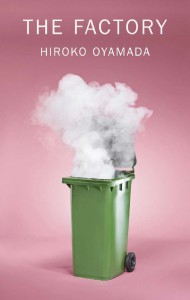
the factory cover

The Factory by Hiroko Oyamada, translated from the Japanese by David Boyd, New Directions, 2019

Review by Andreea Scridon, Assistant Editor

Drawn from the author’s own experience as a temporary worker in Japan, The Factory strikes one as being a laconic metaphor for the psychologically brutalizing nature of the modern workplace. There is more than meets the eye in this seemingly mundane narrative of three characters who find work at a huge factory (reticent Yoshiko as a shredder, dissatisfied Ushiyama as a proofreader, and disoriented Furufue as a researcher), as they become increasingly absorbed and eventually almost consumed by its all-encompassing and panoptic nature. Coincidentally wandering into a job for the city’s biggest industry, or finding themselves driven there—against their instincts—by necessity, the three alternating narrators chronicle the various aspects of their working experience and the deeply bizarre undertones that lie beneath the banal surface. READ MORE…

Weekly Dispatches from the Front Lines of World Literature

On Terezín, censorship in Iran, thrilling new Uzbek titles, and the long-awaited Nobel Prize for Literature announcement.

This week is an exciting one in the world of literature, and our editors are bringing you dispatches from the ground. Xiao Yue Shan discusses the winners of the 2018 and 2019 Nobel Prize in Literature. Julia Sherwood reports on a march from Prague to Terezín, a concentration camp established by the Nazis during their occupation of the Czech Republic. Poupeh Missaghi gives an account of literary podcasts in Iran, as well as the government’s role in quality control and censorship. Filip Noubel brings us an introduction of several new titles from the established authors of Uzbekistan. 

Xiao Yue Shan, Assistant Blog Editor, reporting on the Nobel Prize for Literature

The long-awaited Nobel Prize in Literature announcement of 2019 was prefaced by the usual barrage of news and predictionssome cynical, some vaguely hopeful, and most of which hedged their bets on women writers and/or authors who did not write predominantly in English. After the controversy of last year’s award (or the lack thereof), it followed a natural trajectory that our current politics lead us to search for brilliant literary representation that breaches the limits of our accepted canon of well-celebrated white men, and the Swedish Academy had seemed eager to prove themselves to be advocates for social progress, as they once again took on the role of alighting the flames of literary luminaries that will forever be enshrined as embodiments of success in the world of letters.

In a case of half-fulfillment, the 2018 Nobel Prize in Literature went to Asymptote contributor Olga Tokarczuk, and the 2019 Prize was awarded to the prolific Austrian writer Peter Handke. The latter aroused quite the maelstrom of negative responses, even with most still acknowledging his significant contributions and his fearlessly bold oeuvre, while the former is being hailed as a well-deserving, original, feminist voice, standing in the exact spot of where the spotlight should be shone.

READ MORE…

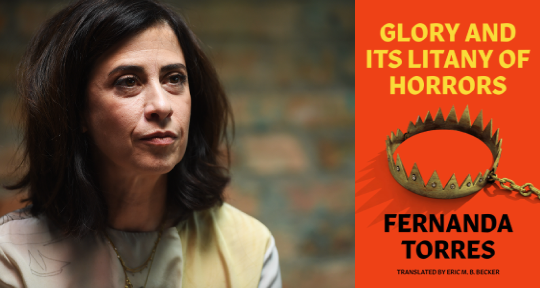
Where Theater Starts and Reality Ends: A Review of Fernanda Torres’s Glory and Its Litany of Horrors

When does fiction stop and reality begin? What is theater’s role in the production and perception of reality?

Glory and Its Litany of Horrors, by Fernanda Torres, translated from the Portuguese by Eric M. B. Becker, Restless Books, 2019

“When we are born, we cry that we are come to this great stage of fools.”
William Shakespeare, King Lear

You just sat down, opened up your internet browser—Chrome, because any other browser is just subpar—went to asymptotejournal.com, and finally stumbled across this review of Glory and Its Litany of Horrors by Fernanda Torres. Before reading, you had decided to go for a run, five miles through the woods behind your house that looked similar to the Brazilian backlands. As you ran, you saw a group of soldiers dressed in camouflage about to fire at each other. Without knowing it, you were running through a paintball match; but, thinking it was real, you hit the deck and waited to see what fate would bring you, allowing you to identify with Mario as he struggles through the theater, his acting career, and own reality.

For some of you, this story could be completely true—all details being events that may have occurred throughout your day; for some, bits and pieces were true, while for others, only the act of reading this review is true. These levels of the “you” in reality and the fictional “you” in the above story are the same levels that exist throughout Mario Cardoso’s life in Torres’s work. Published by Restless Books in 2019 (originally published in 2017), Eric M. B. Becker renders Torres’s blurred lines of the protagonist’s fiction and reality (narrated in the first person) in a prose that flows like the action and lines of a play, drawing the reader even further into the scene.

READ MORE…

“Guatemala has always produced great writers”: An Interview with Guatemalan Poet and Feminist Ana María Rodas

One day, poetry simply came out of me. One day, I was filled with poetry.

Wearing a thin sweater, a colorful scarf, and a dazzling smile, Ana María welcomed us to her house in Zone 15, Guatemala City. Outside it was pouring, much like when she presented her famed Poemas de la izquierda erótica (Poems from the Erotic Left), forty-six years ago. She offered us tea—“To fight back the cold,” she said, still smiling—and told us we had to do the interview in the living room, not upstairs, because, “There are books scattered everywhere; imagine, a lifetime spent collecting books.” And, yes, one can only imagine.

Ana María Rodas, born in 1937, is a veteran Guatemalan poet, journalist, and teacher. Her career spans more than sixty years. She has released close to twenty books, and her work has been translated into English, German, and Italian. In 1990, she simultaneously won the poetry and short story categories of the Juegos Florales de México, Centroamérica y el Caribe. In 2000, she won the prestigious Miguel Ángel Asturias National Prize in Literature for her life’s work. She is also one of the leading figures of Guatemalan and Central American feminism. She has lived her whole life in Guatemala. And one cannot say this lightly. She grew up during the Jorge Ubico dictatorship (1931–1944), admired how the Guatemalan Revolution toppled Ubico in 1944, thrived during the so-called Ten Years of Spring, lamented the 1954 CIA-backed coup that removed the democratically elected, progressive president Jacobo Árbenz, and witnessed the atrocities of the Civil War (1960–1996). Many of her friends and colleagues were killed during that time. Alaíde Foppa, Irma Flaquer, and her dear friend, Luis de Lión, author of El tiempo principia en Xibalbá—considered one of the cornerstones of contemporary Central American literature. Even if she never picked up a rifle or joined the militarized resistance, her feminist struggle and intellectual defiance have influenced many generations.   

She’s not a cynic, though. Or bitter. She’s hopeful. “Even though we have a brute for president,” she says, “I believe in resisting.” And resisting, Ana María has done.

But as much as Ana María is grandmotherly and warm, as much as she’s a jokester and amicable, she is also analytical, astute, and disarmingly agile. She’s a force of nature, a rising tide, and an unmovable object. Her poetry is sensitive, electric, and subversive.

READ MORE…

Translation Tuesday: “Hedgehog” by Anastasia Afanas’eva

About the dead, we cannot speak / for they are completed.

For this week’s Translation Tuesday, Anastasia Afanas’eva constructs a world of shapes, shadows, and sensations that thematize dread and longing. The poem raises up images from the page in a maelstroma deluge of realizations that impress themselves on the reader like a flood. But the images’ actions are unreal; they are strung together in uncanny ways. In this poem, language acts absurdly, mirroring the unmistakable confusion of loss and of reckoning. The Hedgehog and its shadow are central, and show, in verse, how the most innocuous of things can become sutured with the weight of the universe.

READ MORE…