What’s New in Translation: November 2025

New work from India, Serbia, France, Colombia, Mexico, Puerto Rico, Iran, Spain, Lithuania, Palestine, and the Vietnamese diaspora!

This month, we’re bringing reviews of eleven different titles from eleven different regions, from a trilingual text of experimental fiction that veers between Vietnamese and English, a visceral and psychically frenetic portrait of a marriage gone wrong, a rich collection from a master Iranian poet that gestures towards his remarkable life, and the latest metafiction from a Spanish literary giant. 
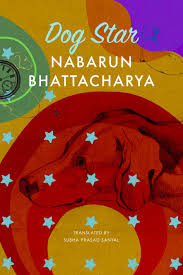
dog

Dog Star by Nabarun Bhattacharya, translated from the Bengali by Subha Prasad Sanyal, Seagull Books, 2025

Review by Jason Gordy Walker

Something’s rotten in the city of Kolkata. A corrupt managerial class—within which mad scientists and war-mongers play a major role—has conspired with local authorities to capture, confine, and starve as many canines as possible. While the city’s “dead serf-servants and healthful, cellphone-carrying ever-connected mummies and balloons” stagger through their dystopia, the dogs have disappeared from the urban bustle, and no one cares. Animal rights groups have been eliminated, and in the way of Nazi death camps, the system targets even newborn pups. What’s a dog to do in these last dog days? “Bark! Bark!” replies the snappy refrain of Dog Star, the lyrical, subversive, and highly re-readable novella by Bengali writer and poet Nabarun Bhattacharya, delivered in a kinetic English by Subha Prasad Sanyal, who has doubtlessly advanced this innovative author’s reputation in world literature.

A self-proclaimed fable, Dog Star leads the reader through dark alleys where street dogs—“nerikuttas”—hide from “pincers,” form alliances, trade information about current dangers, and strategize escape plans, looking to the constellation “Lubdhok, aka Dogstar, aka Sirius aka Alpha Canis Majoris” for liberation. These survivors, along with their unlikely feline allies, are anthropomorphized in their emotions and dialogues, and their plight, although set in West Bengal, is familiar enough to seem representative of any place under political (dis)order. The Netanyahu regime’s genocide against Gaza comes to mind, for example, as do the active “detention centers” in the US: “They’ll yank and drag you by your neck with the pincers to the caged car. Then throw you in.” Bhattacharya does not avoid visceral descriptions of animal torture, but he balances its brutality with astute irony, giving the murderers absurd lines like: “We must pay heed that there aren’t ridiculous expenses.” READ MORE…
Weekly Dispatches From the Frontlines of World Literature

The latest literary news from China and India!

This week, our editors at large report from a panel bringing together French and Chinese writers working on similar themes and explore prize-winning reporting on climate change. From the ethics of life writing to an upcoming literary festival featuring everyone from beloved authors to Bollywood stars, read on to find out more!

Hongyu Jasmine Zhu, Editor-at-Large, reporting from China

On the evening of October 23, the “Tandem 无独有偶” literary dialogue series hosted by Beijing’s French Cultural Center welcomed Édouard Louis and Hu Anyan 胡安焉—one from an impoverished French family, the other a veteran of 19 grassroots jobs in China. In a conversation moderated by Sarah Briand 白夏荷 of the French embassy, they explored a fundamental question: why do some feel compelled to write so urgently about their own pain?

Édouard Louis began by tracing his writing to childhood violence. “As a gay boy of ten or eleven, I was beaten and bullied at school. The moment a fist struck my face, I vowed to one day put it all on paper.” To him, writing is not a pastime but “redemption,” even an “antidote”—a way to distill a vaccine from the virus of experience. His autobiographical novel En finir avec Eddy Bellegueule—with Michael Lucey’s English translation The End of Eddy reviewed by former Editor-at-Large Madeline Jones—exposed his family’s poverty and violence, becoming a French sensation that also provoked fury at home: his brother once arrived from Paris with a baseball bat, threatening to kill him. READ MORE…

Baptism by Fire: An Interview with Mayada Ibrahim on Arabophone Africa in Translation

I’m interested in Black subjectivity, in works that challenge and problematise the hegemony of Arabic. . .

The translations of Mayada Ibrahim are essential acts of cultural mediation. Moving between Arabic and English, she brings a nuanced, discerning sensitivity to champion voices from Arabophone Africa, from co-translating award-winning novels like Abdelaziz Baraka Sakin’s Samahani (Foundry Editions, 2024) to inaugurating the Anglophone debut of Najlaa Eltom. Rooted in her Sudanese heritage and diasporic experience, Ibrahim’s work has consistently centred Black subjectivity. In doing so, she has contributed to expanding the range of Arabic writings available in the Anglosphere, illustrating a resolute commitment to bringing the philosophical and political heft of voices like Eltom, Sakin, and Stella Gaitano to the forefront.

Ibrahim sees translation not as a duty to educate, but as a creative responsibility to honour the original text and its culture. ‘I try to resist the notion that educating the reader is my responsibility, as it’s harmful to treat readers as passive, disengaged consumers hungry for entertainment dressed up as instruction,’ she confesses. Thus, she navigates through difficult ethical terrains, from interpreting the Sufism in Eltom’s work for a Western gaze, to maintaining the sharp wit in Sakin’s narratives of enslavement. 

In this interview, I spoke with Ibrahim on her corpus as translator, the ethical tightrope of rendering politically charged texts for an Anglophone audience, and what she envisions for an Arabophone African literary canon.

Alton Melvar M Dapanas (AMMD): Trace Press is set to publish your book-length translation of prose and poetry by Sudanese translator and poet Najlaa Eltom. Could you tell us a little of how this book came to be? Is this selected from her earlier Arabic-language collections – منزلة الرمق (The Doctrine of Thinness, 2007), الجريمة الخالدة ذات الأقراط (The Immortal Felony with Earrings, 2019), and ألحان السرعة (Melodies of Speed, 2021)—or does it feature entirely new material?

Mayada Ibrahim (MI): In 2023, I took a free workshop offered by Trace Press, to which I brought one of Najlaa’s poems. The workshop later culminated in the anthology Arabic, between Love and War, published earlier this year, and in the process, I was fortunate enough to meet the publisher Nuzhat Abbas, who showed interest in Najlaa’s work. Later we decided to collaborate on Najlaa’s collection, her first into English, which will be the first part of an ‘active archive’ on Sudan. READ MORE…

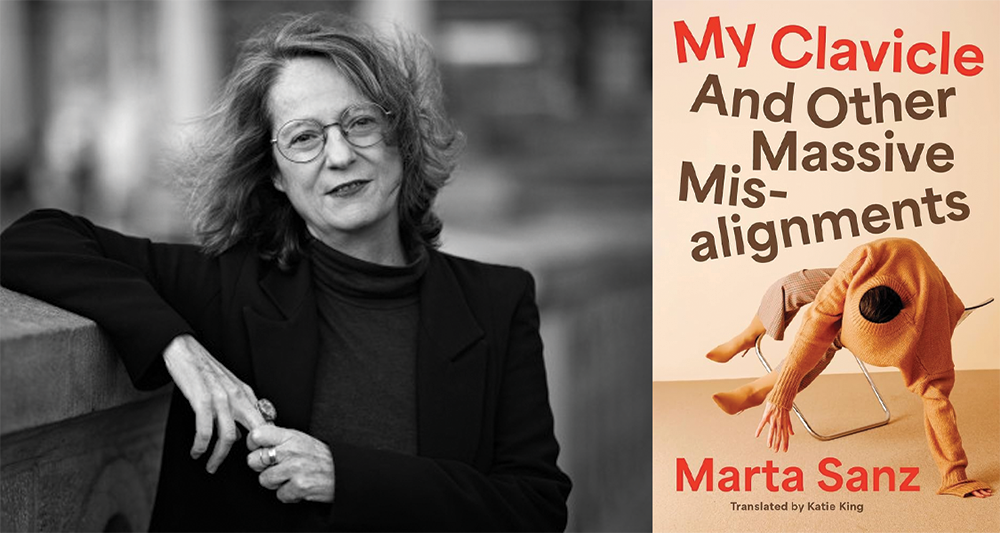
Clinical Time in the Age of Late Capitalism: A Review of My Clavicle and Other Massive Misalignments by Marta Sanz

Ultimately, Sanz’s work is a litmus test to understand how women, their bodies, and their experiences are trivialised.

My Clavicle: And Other Massive Misalignments by Marta Sanz, translated from the Spanish by Katie King, Unnamed Press, 2025

In  2020,  I  was  a  postgraduate  student amidst the COVID pandemic, writing my term-end assignment on Julia Kristeva and her concept of women’s time. Unwittingly, my professor had made a small typo in his materials; instead of ‘cyclical time’, he referred to the concept as ‘clinical time’. The term mystified us, and the entire class was held in a collective confusion in attempting to associate it with Kristeva. The error was later rectified, but not without arousing my interest; I was already thinking about the accidental ‘clinical time’, its importance magnified by the medicalised rhythm of the ongoing pandemic.

If Kristeva’s cyclical time is an indication of repetition and return, clinical time to me indicates a similar ebb and flow of a body in pain. Pain shapes time to be clinical; there is a surge and then a slump, affording the passing moments to be monitored and tracked and traded. In retrospect, the professorial mistake was actually a serendipitous slip that had already begun to align with my understanding of the physical world, an elucidation that was magnified when I encountered Marta Sanz’s My Clavicle: And Other Massive Misalignments. It was as if the error had already prepared me to read her work with a newer focus: to think of pain as a symptom as well as a diagnosis of misalignment, both physical and societal. READ MORE…

Translation Tuesday: “A Scorpion in February” by Guillermo Fadanelli

Further knocking ensues, irritable and unseemly. I’ve been tempted to answer with barks, but I’m no good at imitating animals.

Who’s waiting on the other side of the door? In this week’s Translation Tuesday offering, a darkly comic short story by Mexican author Guillermo Fadanelli, the anxiety of being seen overwhelms our narrator—even when there’s no one else around. It’s for that reason that the threshold, the thin barrier between inside and outside, becomes a sacred space, protecting his tranquil sanctum. From a safe distance, he surveys his surroundings with a mixture of fear and curiosity. But when a neighbor comes calling, he must cross that boundary and confront the bewildering, savage world outside. Translated from the Spanish by Helena Dunsmoor, this story examines what it costs to exist alongside others.

When some person comes to my house and knocks on the door with their knuckles, my heart suffers a strange tremor. Suddenly paralyzed, I can’t move at all or answer out loud that yes, I’m in here hearing your knocking. Then I start thinking about the possibility of opening the door to find out who’s on the other side waiting for a reply, at least. I’d love to own a dog whose bark would let intruders know that things aren’t so easy in here. But the gaze of dogs is unbearable, and it would be hard getting used to looking him in the eye every day. So many times in my life I’ve had to call something off just because a damned animal is watching me.

Yesterday, while I was writing a letter to the director of a charity, three blows—flat, dry, free of reverberations—slammed against my apartment door. I tensed up right away. My spine lost its usual curvature and my fingers curled like seashells. I always nurse the hope it will be a mistake. The individual standing just feet away, separated from my person by nothing more than a thin wall, looks up to confirm the error. The metal figure on the door is quite clearly the number 5. It could look like an S, but I truly doubt anyone would come into this building looking for an S. Things never go that way. Instead, further knocking ensues, irritable and unseemly. I’ve been tempted to answer with barks, but I’m no good at imitating animals. When I was a boy I could moo like a cow, bleat and even trumpet, but those days are gone.

READ MORE…

Fall 2025: Highlights from the Team

Find out what our very own team members have to say about our bountiful Fall issue!

I found that Nay Thit’s “The Language I Don’t Speak,” translated from the Burmese by Thiri Zune, was the perfect way to begin exploring the new edition. Like it, the rest of the poetry section is provocative and urgently alive—especially Olivia Elias’s verse about Gaza in Jérémy Victor Robert’s translation from the French. Moving from her work to that of Faruk Šehić, translated from the Bosnian by Ena Selimović, in “Who Came Back,” takes us from the action of war to the scars of postwar life. Then on to prison, with Başak Çandar and David Gramling’s translation from the Turkish of Kemal Varol’s “Dark Mist.” I found this piece unexpectedly amusing. Jen Calleja’s interview (conducted by Sarah Gear), is a delight, full of thought-provoking reflections on what we do as translators. There are so many other translations shining in this issue—I wish I could list them all.

—Ellen Elias-Bursac, Contributing Editor

Pablo Palacio’s “The Cannibal” (tr. José Darío Martínez from the Spanish) is my favorite piece from the new issue—fast-paced, vividly written, and replete with gruesome physical detail and haunting character psychology. As someone who likes to write about cannibalism, I found it both a wonderful point of reference and an object lesson in how obscene desire can be rendered in literature.

In “Vassal of the Sun” (tr. Tobias Ryan from the French), I was overjoyed by Patrick Autréaux’s descriptions of the natural world and his evident love for Melville.

Faruk Šehić’s “Who Came Back” (tr. Ena Selimović from the Bosnian) demonstrates how repetition, properly employed, can become a devastating poetic device. The scarcely varied refrain of “came back” hammers the losses of the Yugoslav Wars into the reader’s mind, while the sparse yet vivid language—“dandelions-cum-parachutes,” “white bark of birch saplings in living rooms”—emphasizes what war takes away, even from those who escape its bullets. It is essential reading for a world drunk on fantasies of righteous violence.

Palacio returns in “The Double and the Singular Woman” (tr. Thomas Taylor from the Spanish), a story that most cheap “twin horror” tales wish they were—though it’s not a horror story at all. Instead, it’s a superbly eerie study of difference and intimacy: how intricately a writer can render lives utterly unlike their own, and how such acts of imagination approach the question of what it means to write across unbridgeable experience. Using the extreme example of twins conjoined for their entire lives, Palacio transforms “monstrosity” into empathy. What a relief, in a world that so often wields that word against the oppressed, to encounter a story that refuses to dehumanize.

Finally, Johanna Drucker’s “Attention as Predation” remains, to my mind, the best framework for thinking about the phenomenon of Trump and other authoritarian figures turned cult icons. It is supremely bleak, but in an era when the democratic counteroffensive has so spectacularly failed, we need such correctives to naïve optimism. Reading Drucker’s essay, I felt a kind of cruel joy—the shock of recognition that comes when one is reminded of the essential brokenness of human beings, their eagerness to become both recipients and agents of predatory attention.

—Julia Maria, Digital Editor

READ MORE…

Weekly Dispatches From the Frontlines of World Literature

The latest from Nigeria, Palestine, and Italy!

In this week’s round-up of global literary news, our editors cover a progressive writing workshop in Milan, an honouring of a major Palestinian poet, and a celebration of African writing in Lagos. Read on to find out more!

Veronica Gisondi, Editor-at-Large, reporting from Italy

When engaging with texts and their authors’ experiences, distance often becomes the instrument through which meaning is managed and subjective responses modulated—whether in reading, writing, criticism, or translation. Through the conflation of the personal with the private (and the classification of the latter as a “non-political” domain), the innermost truths of human experience have largely been excluded from public discourse. Lea Melandri’s scrittura di esperienza (experiential writing) offers a radical alternative to this logic—which stems from the same matrix that historically split mind and body, reason and emotion—by reuniting personal life and social language.

In a one-day workshop hosted by Milan’s Collettivo ZAM (Zona Autonoma Milano), Melandri—a leading Italian feminist thinker, journalist, and writer—introduced a small group of participants to a method born out of her involvement with non-authoritarian pedagogy and feminist movements in the late 1960s and 1970s. In the wake of feminism’s autocoscienza, which first revealed the systemic origins of individual struggle, Melandri treats “the self” as an archive containing “millennia of history,” acknowledging that most of it lies beyond our awareness. “The self has been reduced to the particular experience of an individual,” noted Melandri as she briefed us on the day ahead. “Feminism has taught us that personal lives aren’t history’s waste, but constitute its core.” READ MORE…

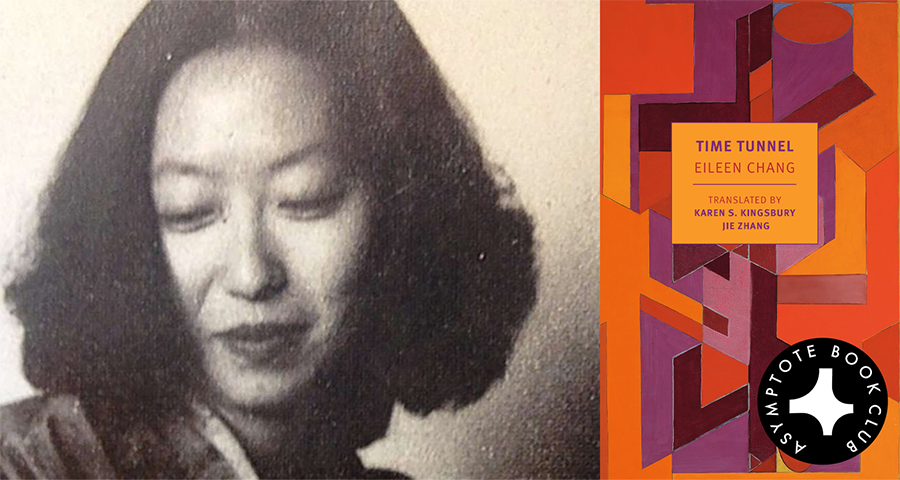
Announcing Our October Book Club Selection: Time Tunnel by Eileen Chang

This collection is a map of the footsteps left inside . . . the subtle, often painful geographies of that in-between state.

It is impossible to think of Chinese modernist writing without the contributions of Eileen Chang, the Shanghai-born chronicler of twentieth-century social tumult, migrancy, urban dynamism, womanhood, and love. Across genres and languages, Chang’s work searches and breaches the intrinsic divides of society and culture to construct complex emotional architectures that are no less universal for their specificity, culminating in a body of work that coheres her various continents with perspicacity instead of generalization, centralizing the vital contemporaneous themes of fate, agency, and change. The collection Time Tunnel, a gathering of both stories and essays, illuminates the writer’s singular capacity to find the tenuous human threads that anchor down a restless era, evincing that nothing holds time together as much as living through it.

The Asymptote Book Club aspires to bring the best in translated fiction every month to readers around the world. You can sign up to receive next month’s selection on our website for as little as USD20 per book; once you’re a member, join our Facebook group for exclusive book club discussions and receive invitations to our members-only Zoom interviews with the author or the translator of each title. 

Time Tunnel by Eileen Chang, translated from the Chinese by Karen S. Kingsbury and Jie Zhang, New York Review Books, 2025

Eileen Chang’s lifelong literary project was, in essence, an extended act of self-translation and a continuous rewriting of identity—not only between languages, but across the seams of time and space. This ethos is threaded throughout the collection Time Tunnel, which takes its title and central metaphor from the story “Blossoms Afloat, Flowers Adrift” 浮花浪蕊:

… 时间旅行的圆筒形隧道,脚下滑溜溜的不好走,走着有些脚软。

. . . time travel’s round tunnel, slick underfoot and hard to walk on, feet went a little wobbly there.

The image gives shape to the collection and its stories and essays from across Chang’s career—including a hitherto unpublished manuscript from her husband’s papers, pieces translated from Chinese, as well as ones composed directly in English, mapping a landscape of displacement. As such, this tunnel is not a futuristic passage, but—as the translators Karen S. Kingsbury and Jie Zhang point out—“can only run backward,” pulling the characters and narrators into a precarious suspension between the author’s native Shanghai and an adopted America, between memory in the mother tongue and expression in another, between a haunted, bygone past and an un-belonging, unmoored present. This collection is a map of the footsteps left inside that tunnel: the subtle, often painful geographies of that in-between state. READ MORE…

The End Is Here: A Review of Into the Sun by C. F. Ramuz

Ramuz is less concerned with the mechanics of catastrophe than with the psychological and communal refusal to accept it.

Into the Sun by C. F. Ramuz, translated from the French by Olivia Baes and Emma Ramadan, New Directions, 2025

Originally published in 1922, C. F. Ramuz’s Into the Sun is a quietly devastating depiction of the climate crisis, centring its narrative around the predicted outcome of the sun eventually engulfing the Earth. Catastrophe narratives can lean into the dramatic, but among Into the Sun’s distinctive qualities is the resistance of hyperbolic description and genre conventions; instead, Ramuz’s novel is filled with clarifying depictions of manifold human reactions—particularly silence, denial, and the stubborn persistence of everyday life. The structure of the novel, too, defies expectation, being composed of a series of vignettes that do not necessarily follow a narrative thread. Rather, the discrete elements resemble individual short stories that share the same backdrop and quiet, elliptical narrative. The result of these stylistic combinations work to create a text that feels distinctly contemporary, given the current global concern for climate change and its repercussions.

Ramuz’s discreet, almost detached tone is evident from the novel’s early chapters: ‘Because of an accident within the gravitational system, the Earth is rapidly plunging into the sun.’ In presenting the facts with a clinical eye, the arrival of the central revelation is underplayed, only previously intimated via subtle mentions of rising temperatures. As the news then spreads globally, the small lakeside town in which the novel is set (unnamed, but clearly Swiss in its cultural references) carries on as if nothing has changed. The villagers hear the warning, but they do not believe it. According to the psychologist Matthew Adams, eco-anxiety can manifest in a variety of ways, including denial, and this tension between knowledge and enforced oblivion forms the emotional core of Into the Sun: Ramuz is less concerned with the mechanics of catastrophe than with the psychological and communal refusal to accept it. READ MORE…

Translation Tuesday: “The Mountain Hut” by Dragana Kršenković Brković

"Who approached you in Paris?” he asked again, his tone flat, not giving anything away. “You met up with someone. Who?”

For this week’s Translation Tuesday, we bring you a timely tale of intrigue, political paranoia, and mortality from Montenegrin writer Dragana Kršenković Brković, deftly translated by Andrew Hodges and Paula Gordon. In the hills just outside Titograd (now Podgorica), a doctor, Dušan, is held captive by three members of Yugoslavia’s secret police—three men who refuse to believe his relationship with a Czechoslovakian woman, Janika, is merely an innocent love affair. What follows is a story by turns fantastically surreal and punishingly spare; relief may await Dušan in his dreams, but in the real world the mindless, brittle cruelty of the state returns his every truth with a blow. Writes Andrew Hodges, “Brković’s style is literary and fantastical, mixing surreal scenes full of abstract, dreamlike imagery with everyday encounters. This imagery, which here draws on contrasts between peaceful forest scenes and a violent human (political) encounter, is woven in alongside reflections and emotions that point to the futility and alienating power of politics. “The Mountain Hut” blends dreamlike imagery with Slavic mythological themes and enduring cultural motifs, all viewed through the prism of a specific political moment—the fallout from socialist Yugoslavia’s split with the Stalinist block.” Read on!

Forest on a mountain outside of Titograd. October 1948: Three months after the Tito-Stalin Split.

The weak light of the battery lamp moved through the dark, in sync with the short man’s heavy, uneven strides. Occasionally the light reflected off the glassy surface of the October snowdrifts, which had arrived earlier than usual, and sometimes it penetrated the thick needles of pine and fir, their snow-covered crowns drooping. The feeble beam sank into the depths of the wood, creating a trembling play of slender, spindly, dark blue-black shadows.

The frost tightened its grip.

READ MORE…

Blog Editors’ Highlights: Fall 2025

Thoughts and inspirations from our latest issue!

Our latest—and fifty-seventh—issue draws together work from thirty-one countries and twenty-one languages, from antiquity to the boldly contemporary, the comedic to the compassionate, the historic to the experimental. To help you navigate this compendium, our blog editors offer up their favourites.

In one of the many street art pieces embroidering the surfaces of Athens, a black sign reads: ‘A memory of a memory that we are all left with.’ Greece’s capital is bound in all directions: to the bodies that live within its confines, the oblique and omnipresent archive, the dynamism of recollection, the strategies of function, the desperation of loss, the translucency of power, reality’s elasticity and its collapse. To be within it, then, is to acknowledge that no space is neutral—that the collective illusion of fixed borders, fixed pasts, and fixed stratagems of everyday life are gossamer comforts. There is nothing stable in the city. The condition of its existence is nothing less than a mass hypnosis.

‘When my parents told me we lived in Athens, I believed them.’ Amanda Michalopoulou writes in ‘Desert‘, translated with great emotional heft by Joanna Eleftheriou and Natalie Bakopoulos. Through a combination of confession and elucidation, the piece seeks to delineate the living morphology of present-day Athens from its manipulated dreams of cohesion and glory, earmarking the ‘transcendent’ objectives of the ancient city as a catalyst for its current fragility, the very definition of transcendence gesturing at an inoperable unreality, a beyond that persists only in attempts and potentialities. ‘A city that would invent cities and governments, language and liberty,’ so Athens grew with immovable conjectures of goodness and intelligence, until: ‘Step by step, they created a society that matched their insatiable vision of absolute power and control.’ The converge of experience and concept is chaotic, and space does not hesitate to dislocate itself from our comprehension. Thus, as Michalopoulou describes her ‘investigations,’ the city can perhaps be only understood via the fragmented origins of our most ancient texts, in those long-gone years where our present certainties had been amended, invented, reconstituted, and dismembered ceaselessly. The instability of today’s Athens resents the wonders and heights of its own birth, yet this shakiness is also evidence of another strength, for it is as David Graeber said: ‘The ultimate hidden truth of the world is that it is something we make and could just as easily make differently.’  READ MORE…

Weekly Dispatches From the Frontlines of World Literature

Literary updates from the Philippines, Bulgaria, and Hong Kong!

This week, our Editors-at-Large take us around the world for the latest in literary news. From the efforts of Filipino literati for Palestine, to Bulgaria’s reckoning with the swiftly changing modern world and insightful essays and reviews on Hong Kong literature in translation, read on to learn more!

Alton Melvar M Dapanas, Editor-at-Large, Reporting from the Philippines

On 9 October, 2025, the feminist Filipino indie publisher Gantala Press debuted another monumental anthology at the Fine Arts Gallery of the University of the Philippines Diliman. The book, titled ‘Pagkat Tayo Man ay May Sampaga: New Philippine Writing and Translation for a Free Palestine, unites a vast range of voices in solidarity with Palestinian liberation.

The anthology was released by Gantala Press’s imprint, Publikasyong Iglap, which specialises in publishing timely literary works that address pressing ethnopolitical issues. It was co-edited by the press’ founder, Faye Cura, with Joi Barrios of the University of California Berkeley and UP Diliman professors, essayist Sarah Raymundo and fictionist-critic Rolando B. Tolentino.

‘Pagkat Tayo Man ay May Sampaga includes original writings from Filipino authors, including Luisa Igloria, the former Poet Laureate of Virginia, and Filipino-language translations of works by Palestinian writers such as the late Refaat Alareer and Fady Joudah. Alongside these new writings and translations, the anthology spans in-depth essays examining socially engaged writing, translation, and the anti-imperialist movement, supplemented by a practical teaching guide. READ MORE…

Our Fall 2025 Issue Is Here!

Featuring Nay Thit, Jen Calleja, Patrick Autréaux, and Johanna Drucker in our Special Feature on Attention

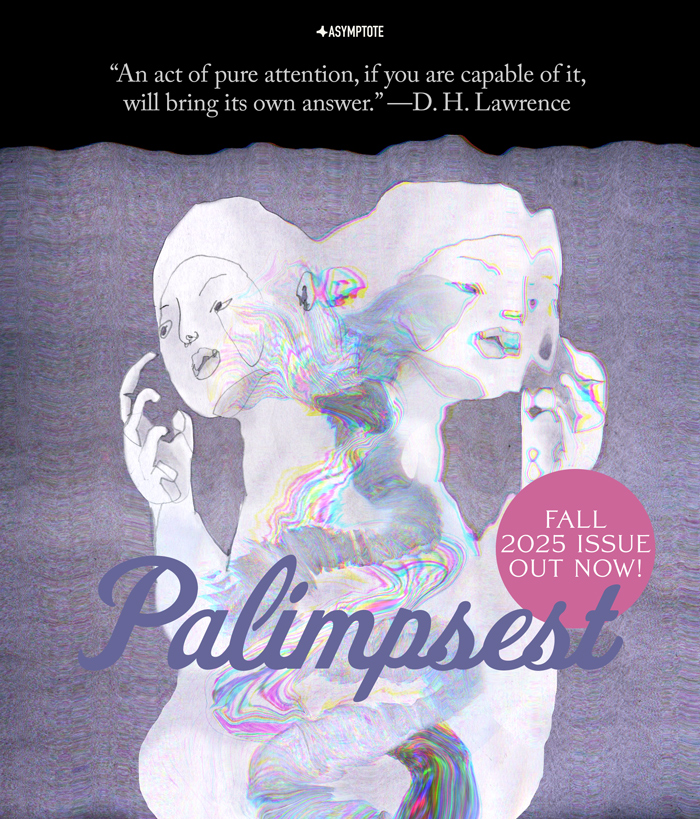
The world rewrites itself daily, unable to leave the past alone. As Trump’s relentless theatre once more monopolizes our gaze—proof, perhaps, of what Johanna Drucker, in her timely essay “Attention as Predation,” diagnoses as a civilization that is consumed even as it consumes—the question becomes what still endures beneath the smudged text of the present. Palimpsest, our Fall 2025 issue illustrated hauntingly by UK-based visual artist Jayoon Choi, turns to those deeper inscriptions: the faint, resistant traces that refuse to fade, the ghosts of meaning that survive the next rewrite.

In Amanda Michalopoulou’s “Desert,” Athens emerges as a manuscript of light and stone, its ruins glowing like marginalia of time. Carla Mühlhaus overlays the Black Dahlia murder and Andersen’s mermaid over Venice’s 2019 acqua alta, letting myth and crime shimmer beneath the rising waterline. Likewise, Barbara Köhler gives Homer’s Penelope her overdue monologue—both weaver and mermaid surfacing from the sediment of male authorship to reclaim their narratives. From Kazakhstan, Marat Uali laments the vanishing of minority tongues, an anxiety echoed in Tim Brookes’s interview on his Endangered Alphabets Project, where each carved script becomes an act of remembrance. In William Heath’s sparkling update, Herodas gives us drama composed on papyri—reminding us that even the most fragile art can defy oblivion.

blog-full
This issue’s wildcard Special Feature, “On Attention,” brings together thinkers and storytellers who resist the culture of erasure. Monika Vrečar asks whether poetry can still exist amid the static while Farah Ahamed, in an astute piece of film criticism on the Bollywood classic “Lagaan,” notes that the monsoon is also a season in the body. Elsewhere, Korean artists Koi and Hyungmee Shin—hailing from opposite sides of the 38th parallel—make masterful use of fabric to create radiant topographies of encounter, while Ecuadorian master Pablo Palacio’s “The Double and Singular Woman” (tr. Thomas Taylor) anatomizes the fractured identity of a pair of conjoined twins with a proto-modernist precision that feels radical in our own fragmented age. To read these works together is to experience literature’s own layered materiality.

If this issue has a thesis, it is that world literature does not replace; it accrues. Help us write the next layer: submit to the second installment of our “On Attention” Special Feature (as well as to our regular categories) and apply to join the team (deadline: November 1st)—we especially welcome applicants to the Assistant Editor (Fiction) role. A final note for the record: László Krasznahorkai, this year’s Nobel laureate in literature, appeared in our pages twice—long before Stockholm called. If this kind of early, global advocacy matters to you, please become a sustaining or masthead member today—the vital margin note that keeps this palimpsest legible, and gloriously alive.

READ THE ISSUE

HELP US BRING YOU MORE ISSUES IN 2026

Stone that Treads on Stone: An Interview with Irizelma Robles and Roque Raquel Salas Rivera on Poetry as Alchemy

Myths give us some rituals, some explanations for life, ways of acting in this life.

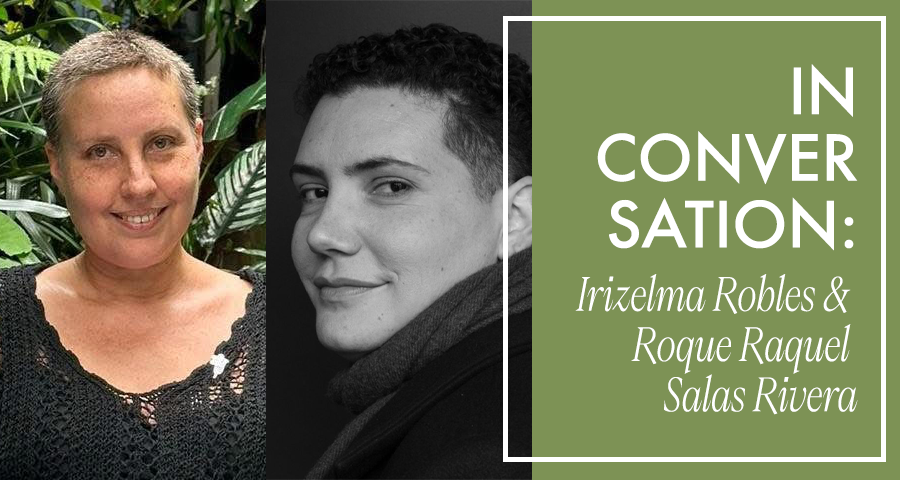
Awarded the Pedro Lastra International Poetry Prize by the State University of New York at Stony Brook in 2019, Puerto Rican poet and essayist Irizelma Robles percolates ritualist practise, alchemy, and the occult into her scholarship and poetry. Her fourth poetry collection, El libro de los conjuros (Editorial Folium, 2018), embodies this fusion. The text has been translated into English by Puerto Rican poet and translator Roque Raquel Salas Rivera as The Book of Conjurations and was published by Sundial House last June 2024. In this spell book, Dr Robles writes about how “water will make way for the earth / that will listen” and “pieces of language / erased like mist,” summoning skies, substance, soul, and source. In his translator’s note, Dr Salas frames poetry as alchemy: “transmutation through words . . . transform[ing] poet, reader, and language.”

In this interview, I spoke with Dr Robles (in New York) and Dr Salas (in Puerto Rico), on El libro de los conjuros / The Book of Conjurations and the mutability of poetry through the lens of alchemy.

Alton Melvar M Dapanas (AMMD): Irizelma, your remarkable poetry collection from 2018, El libro de los conjuros, is now out in Roque Raquel Salas Rivera’s translation as The Book of Conjurations. Taking us back to that period and before, what were the creative impulses and poetic foundations that shaped this work?

Irizelma Robles (IR): Ten years before it was El libro de los conjuros, its title was La tabla periódica (The Periodic Table) and when I began writing it in 2016, it was titled El libro de la Santa Muerte (The Book of the Santa Muerte). I did fieldwork in the Huaxteca region of Veracruz and Hidalgo during my student years under the direction of my anthropology professor, Ana Bella Pérez Castro. It was during that period that I came across El libro de la Santa Muerte, a book of conjurations and spells. Later, in conversation with Eugenio Ballou, my friend and editor, we discovered that its true title was El libro de los conjuros.

READ MORE…