Weekly Dispatches from the Front Lines of World Literature

New books, events, and publishing houses from the Philippines, Hong Kong, and Sweden!

This week, our editors from around the world report on new acclaimed translations from the Philippines, Hong Kong writers discussing art-marking during political restrictions on their freedom of expression, and a new publishing house in Sweden focused on investigative journalism and books translated from Swedish. Read on to find out more!

Alton Melvar M Dapanas, Editor-at-Large, reporting from the Philippines

Literary translation in the Philippines is more alive than ever. Asymptote contributor Bernard Capinpin won the 2022 PEN America’s Heim Grant for his translation of the late Edel Garcellano’s sci-fi novel Maikling Imbestigasyon ng Isang Mahabang Pangungulila (Kalikasan Press, 1990) [A Brief Investigation to a Long Melancholia]. Also, obstetrician and travel writer Alice Sun Cua’s landmark project with Sto. Niño de Cebu Publishing House “ferried” post-Spanish Civil War novelist Carmen Laforet’s Nada into Hiligaynon language.

Aimed at enhancing the Filipino “diasporic cultural footprint around the world,” the country’s National Book Development Board offers translation grants to authors and publishers of children’s literature, classical and contemporary prose, graphic literature, as well as historico-cultural works written in Philippine languages (Ilocano, Cebuano, Waray, Hiligaynon, Meranaw, Tausug, and Kinaray-a) and foreign languages (German, Spanish, French, Arabic, Japanese, and Chinese). This year, the National Commission for Culture and the Arts also conferred the Rolando S. Tinio Translator’s Prize to SEAWrite awardee Roberto T. Añonuevo for his translation of the late National Artist for Literature Cirilo F. Bautista’s phenomenological study Words and Battlefields: A Theoria on the Poem (De La Salle University Publishing House, 1998) [Mga Salita at Larangan: Isang Pagninilay sa Tula] from English.

READ MORE…

One for Another: A Conversation on Translation from the Chinese

It seems to me that the world is a better place to live in simply because we translators are eternally making contributions to the Tower of Babel.

In Antena’s “Manifesto for Ultratranslation,” it is stated: “The politics of translation make us ultraskeptical and ultracommitted.” As such, the discourse and dialectics surrounding this artform are in an ever-evolving state of being challenged, argued, and explained. In the following conversation, Blog Editor Xiao Yue Shan discusses her work in editing Chinese language translations with fellow translator Zuo Fei, touching on their separate values, priorities, and approaches.

Xiao Yue Shan: Translation is an intensely personal experience—perhaps the most transparent reflection of what occurs when idea is transmuted through the individual mind’s various channels. This is why we, as translators, are continually struck by our work’s mutating forms, its evolving methods, and continue to conversate with such intensity about our own logic; when one speaks of translation, one speaks of a way of seeing the world. When we were editing translations together, you wrote me a letter in response to some edits I sent on a final draft of some poems; in it, you stated that you believe in literal translation, in seeming opposition to my approach of preserving the ineffable by creating anew.

It’s interesting because we are both poets, and I’ve always assumed—presumptuously—that poets are all apart of the same passionate investigation, in which consciousness touches something and brings it to life, shaped in a precise and resolved concentration of words. In translation, there is no transposition of this consciousness, which is a singular encounter between the poet, their knowledge, and all that it reaches and contacts. So, the translator must take the place of the poet, and—with intelligence but without egoism—give the original poem something it can live with.

Essentially, there is a distinction between a poem’s components and its poetics. It seems to be a corrupt exchange should a text be translated word-for-word, when one acknowledges the multiple roles that words play in literature; they do not simply transmit meaning, but also voice, history, and music. Could you tell me why you work from a more literal approach?

Zuo Fei: I prefer literal translation to free translation simply because, in the time of science and technology, people believe translators should strictly follow the original text. By literal translation, I don’t mean word-for-word, which does not work for poetry in many cases; my intention is that we should adhere to the original work as much as we can, and put it into a target language according to our desires. That is to say, if translation is an impossible job, we try to increase the odds of it being possible. READ MORE…

Today Only: Take Part in our Book Club Giveaway Contest!

Our giveaway ends 7pm EST, today, so seize the day!

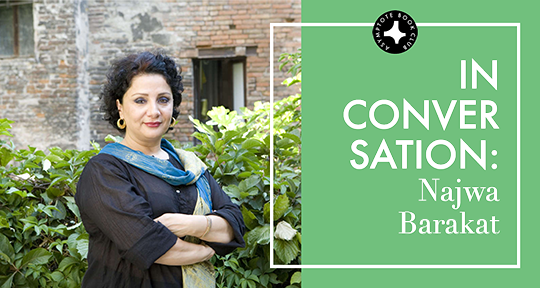
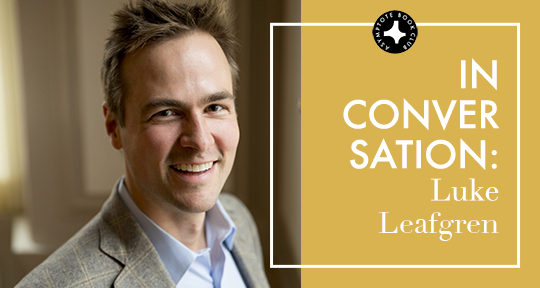
This month, we’ve teamed up with our friends at And Other Stories and are pleased to host a giveaway of our Book Club’s May 2022 title, Mister N. by Najwa Barakat, translated from the Arabic by Luke Leafgren.

Mister N. takes place in modern-day Beirut, where Mister N. has checked himself into a hotel to get his writing–and his thoughts–in order.

To enter:

  • Follow the Instagram Pages of Asymptote Book Club and And Other Stories
  • Like this post
  • Tag 2 bookish friends in the comments
  • Share this post in your stories (don’t forget to tag us!)
  • Competition closes at 7pm EST on 15th June 2022. Entrants must be based in the USA. Winners will be selected at random and announced the next day. Must be 18 years old or have parents’ permission to enter. The giveaway is not affiliated with Instagram.

Good luck to everyone who enters!

Translation Tuesday: “CABO ROUGE / Kabiosile” by Soleida Ríos

I scrawl / lacerate / squeeze / twist / hammer

This Translation Tuesday, enter the oneiric geography of acclaimed Cuban poet Soleida Ríos in a hybridised work that is her own fluid and inventive relationship to genre and tradition. The airport—with all its connotations of citizenship, mobility, and border-making—is given a surreal makeover when the speaker at every unexpected turn is confronted with the presences of Chagall to Sarduy, from an Arching-Eyebrow Woman to (Normal-Brow) woman. Accompanying Kristin Dykstra’s energetic translation is an illuminating tour of Ríos artistic and political inheritances that allows us to see the poet’s workings, but which renders her poem no less strange and powerful.

“Soleida Ríos often explores dreams, as well as realities refracted through dreamlike states. An elusive quality characterizes her work, the spirit of creative cimarronaje. This term refers to the ethos of the fugitive slave, which Ríos has invoked in some descriptions of her writing. Her book Estrías (Grooves) intertwines that spirit with a more recent strand of Cuban history: the internal migration of rural citizens (many of them Afro-descendent), who like Ríos moved from their origins in eastern Cuba to the western capitol, Havana, in the decades after 1959. In the city, finding and keeping a home can be a struggle. 

“CABO ROUGE / Kabiosile” depicts psychological navigations of national space and legal language in search of one’s own place. Along the way the narrator registers artistic legacies of Severo Sarduy, Marc Chagall, René Magritte, and Yoruba traditions in Cuba. Here too are figures from local bureaucracy, which might well be described as a culture in its own right. The agent at an airport counter initially seems responsible for enforcing travel regulations, then transforms into a subject struggling to create a place that state officialdom would interpret, legally speaking, as her house. Settings shift, contributing to the sensation of unreality. Perhaps we have fallen into a Chagall painting. But the woman’s refrain foregrounds practical acts of migration: “I left MY COMMUNITY and I moved on to THE COUNTRYSIDE … From the countryside I came HERE.” Other recurrent elements invoke attributes of the orisha Changó, who is associated with the color red and explosive percussion in ritual music. The kabiosile of the title is a verbal salutation to Changó.”

—Kristin Dykstra 

CABO ROUGE / Kabiosile

… I’m not reproducing …
I scrawl, lacerate, squeeze, twist,
hammer.
A number.
A smudge.

In the airport (one example), my head filled with such disorder that I’ve forgotten to retrieve my suitcases. Eighteen suitcases.

But since I also forgot to set aside my essential documents, namely: TICKET, BOARDING PASS, BAGGAGE CLAIM stub, among others of subtle distinction, which I can’t remember now … I’m thinking about how I can maneuver, to present myself in transit and request my entirely disproportionate and (I guess) extremely suspicious baggage.

So now I’m at the counter saying, with all the composure of (borrowed voice) I-Came-On-The-Flight-From-Paris….

Arching-Eyebrow Woman looks at me doubtfully …, she turns back to the heap of papers … So I confirm, “The-11:39-From-Paris.” 

And immediately I remember, horrified, “the PERMIT, I forgot the PERMIT …”

Nothing subtle about that.

And my wings drop away from me.

Arching-Eyebrow Woman, still doubtful?, asks me, “Your last name is Vives ….?!” READ MORE…

What’s New in Translation: June 2022

New work from China, Tibet, and Slovenia!

In this month of highlights from the world of translated literature, we’re spotlighting three singular, wide-ranging, and immersive texts. From the Chinese, Shawn Hoo discusses the philosophical and journeying collection from celebrated poet Xi Chuan. From the Tibetan, Suhasini Patni reviews a dark, compassionate novel of womanhood and urbanity from Tsering Yangkyi. And from the Slovenian master Drago Jančar, Eva Wissting gives a look into his latest novel, on how personhood and identity survive the ravages of war.

Screen Shot 2022-06-13 at 5.38.43 AM

Bloom and Other Poems by Xi Chuan, translated from the Chinese by Lucas Klein, New Directions, 2022

Review by Shawn Hoo, Assistant Editor

In the title and opening poem of Xi Chuan’s (西川) Bloom and Other Poems, a simple verb like “bloom” begins lyrically and unsuspectingly enough—

if you’re going to bloom then bloom to my rhythm
close your eyes for one second breathe for two be silent for three then bloom

—but in the course of its exuberant and exacting repetitions across six pages, the action soon blossoms into a sophisticated geometry. At times, the verb seems to indicate an instructive concern for those new to the world (“bloom a pear blossom in case the nape of your neck is cold”). Other times, we hear the speaker issuing something of an injunction or a dare: “bloom / unleash a deep underground spring with your rhizome.” In a poem structured around insistence (to borrow Gertrude Stein’s understanding of how repetition works), Lucas Klein—who also curated and translated Xi Chuan’s Notes on the Mosquito—constructs a resonant architecture, allowing the echoes to bounce off the pages’ acoustics, often to rhapsodic effect: “bloom barbaric blossoms bloom unbearable blossoms / bloom the deviant the unreasonable the illogical” and later: “bloom three thousand boundless universes / and string up and beat any beast that refuses to bloom.”

In English, though not in Mandarin, bloom sits uncomfortably close to blood; in this titular poem, this simple word—across both languages—operates with an undertone of violence, belying its vivacious exhortations until the end, ending up as a verb that has swelled beyond its initial premise. The poems that come after “Bloom” all seem to share this restless inflation of the poetic image and line, each taking the verse to its various geometric limits, upon where it strains to meet other worlds. READ MORE…

Weekly Dispatches from the Front Lines of World Literature

Dispatches from Argentina, India, and Bulgaria!

Literary calendars over the last week have been packed with festivals, prize announcements, and new publications. In Argentina, FILBA and the Feria del Libra de la Plata present a full roster of events; in India, Geetanjali Shree’s fresh Booker win continues to drive hopes for the country’s writings; and from Bulgaria, an award-winning work by Georgi Gospodinov is released to the Anglophone.

Josefina Massot, Editor-at-Large, reporting from Argentina

If you thought a record-smashing, three-week-long book fair could just about sate Argentines after years of pandemic famine, you’ve sorely downplayed their literary appetite: just days after the Feria Internacional del Libro de Buenos Aires came to a close, not one but two other major events followed suit.

From May 26 to May 28, the beach town of Mar del Plata hosted the eleventh FILBA, a literary festival featuring workshops, panels, and shows. Bestselling authors Guillermo Martínez and Tamara Tenenbaum talked about the complicated ties between happiness and fiction. Authors—and close friends—Hernán Ronsino and Ricardo Romero discussed other literary friendships, from Alfonsina Storni and Horacio Quiroga to Victoria Ocampo and Gabriela Mistral or Jorge Luis Borges and Adolfo Bioy Casares. A group of authors led a tour of Villa Ocampo, Victoria Ocampo’s summer home in Mar del Plata and one of the city’s most iconic landmarks.

Meanwhile, on June 3, the Feria del Libro de la Plata officially kicked off; it will be held through Sunday in the eponymous city, a cultural center in its own right. The fair features over two hundred and fifty publishing houses distributed across some one hudnred stands; among them are Planeta, Random House Penguin, De las Luces, Dos editores, Maipue, Blason, Libertador, Siglo XXI, Grupo Editorial Sur, and Del Naranjo. hundred stands; among them are Planeta, Random House Penguin, De las Luces, Dos editores, Maipue, Blason, Libertador, Siglo XXI, Grupo Editorial Sur, and Del Naranjo.  READ MORE…

Translators on a Train: Translation Workshops at the O, Miami Poetry Festival

In the end, the translator must be the best reader of the text to bring it into a new language and context, but they can always have help.

The O, Miami Poetry Festival is a month-long celebration of verse in Florida’s capital, with the mission of establishing a series of events, performances, and public exhibitions, so that “every single person in Miami-Dade County [can] encounter a poem.” The festival’s programming included a translation workshop held by Layla Benitez-James and Jorge Vessel, consisting of two intensive sessions dedicated to studying, discussing, and building upon the complex art of poetry translation. In the following dispatch, Benitez-James gives us a behind-the-scenes look at the going-ons of the workshop, and presents the fruits of the translators’ labour: a poem by Colombian poet María Gómez Lara.

At the end of April, across two continents and various time zones, a group of translators met virtually to discuss, translate, and workshop the poem “palabras piel” by Colombian poet María Gómez Lara. Organized by O, Miami in partnership with the Unamuno Author Series (UAS), the creative task was set as part of a translation workshop lead by two members of the UAS team: award-winning Venezuelan writer, translator, and engineer, Jorge Vessel (pseudonym for Jorge Garcia) and myself, a writer and recent winner of an NEA in translation. Over two sessions in consecutive weekends, we discussed translation theory, inspiration, and collaborated on a wonderfully challenging poem.

The translation workshop was hosted by O, Miami Poetry Festival Founder and Executive & Artistic Director P. Scott Cunningham, who took part in the inaugural Unamuno Poetry Festival in Madrid—the city’s very first anglophone literary festival (Scott’s poem “Miami” from his collection Ya Te Veo was translated into Spanish by Jorge for The Unamuno Author Series Festival Anthology). While the aim of the O, Miami festival is to help each and every person in Miami encounter a poem throughout the month of April, our personal goal in 2019 was to introduce over eighty poets and academics to Madrid’s literary community; as such, translation between Spanish and English has become an important part of both organizations.

Our objective for the workshop was to inspire and embolden participants to take up a translation project of their own, as well as to broaden their ideas of what those projects might entail. While we would open up a discussion about basic elements of translation, we also wanted to expand upon how these writers and translators thought about the overlaps and symbiosis of their creative processes—how the act of translation itself can be the spark or jumping-off point for inspiration. READ MORE…

When the Cannons Are Firing: Q&A with Sergey Katran

It’s a constant struggle that I face as an artist: the futility of my efforts and, on the other hand, the wish to speak up, refusing to be silenced

Connections between meaning and visual representation can be puzzling, just like the multiple negotiations that occur between science and art, between natural phenomena and human attempts to grasp, control and even reinvent them through craft. Puzzles of this kind intrigue Sergey Katran. The art critic Vitaly Patsukov has defined the artist as the inventor of intricate “mechanisms” because of the complex ways in which he develops ideas integral to our modern civilization. A former graduate in chemistry and biology, Katran likes to experiment with Science Art and Bio Art in a variety of media, such as installation, sculpture, performance, and video. On the occasion of his most recent exhibition in the UK, currently on display in Wolfson College at the University of Oxford until October 2022, Caterina Domeneghini spoke with the artist and his interpreter, Irene Kukota, about the war in Ukraine, Katran’s country of origin. Their conversation also focused on his current situation, the stance of artists in times of war, and the ways in which his work has captured the growing tensions between two countries he has lived in and loved over the past twenty years.

Sergey, let’s start from where you are right now and what you are doing at this critical moment in our history.

I am currently in Moscow. For forty days I couldn’t do anything, the whole situation came as an overwhelming blow. What is happening to me is precisely what you have been describing, almost a split identity . . . I mean, that’s exactly how I feel, split. I’m in this slightly schizophrenic situation where my heart and all these worries that I experience are in Ukraine and at the same time I physically remain in Russia. And this situation continues, because for various reasons it has to remain like this.

 I decided to resume my artistic work after a while, even though I might not be feeling entirely up to it. Many artists are leaving the country. I decided I am not going to leave for now. Instead, I am planning to make an artistic project at an independent art platform, dedicated to the current situation. Rather than fearing it, I want to still be able to express what I feel, though I cannot tell you much more for now.

You said that many Russian artists are leaving the country. Many artists, too, have withdrawn their participation from important international events, like the Venice Biennale. Does art still have reasons to exist in times like this?

You know, when the whole thing started, I was talking to some good artists, quite well known, and many of them were expressing different sentiments, emotions, thoughts. Some of them were saying, “What have we done wrong? How could we not prevent this from happening?” A couple of them were saying they didn’t want to be artists anymore.

It’s the usual thing, as clichéd as it may sound: art works with rather fine substances or fine energies, if you like this expression. It works with a certain germination of thought. Do you know the phrase “When the cannons are firing, the Muses are silent?” Art seems irrelevant in situations like this. Artists feel that their voices are not going to be heard, because there are other, more pressing issues of survival on people’s minds. Perhaps art should be using other media in times like these. It might need to be more performative, more poster-like, as it’s closer to action and speaks more directly about the current situation. READ MORE…

Translation Tuesday: Two Poems by Katrine von Hutten

gladly would I write two three / sentences that look like you

This Translation Tuesday, we bring to you two poems by the German writer Katrine von Hutten, including her poem “Description”, which won the Leonce and Lena Prize in 1969. In an elegant and plain style rendered by translator Cristina M. Burack, these two poems convey the simplicity and mystery of approaching another person through one’s private vocabulary. 

Description

gladly would I write two three
sentences that look like you
that are as you are
at best I can describe you

you are a wolf
in wolf’s clothing
and a sheep
in sheep’s clothing
but you know that

the circles under my eyes look like you too
when you jump through I have to laugh
you often say whoopsie
even when you don’t say it
better to say: you mean it

it is only half past six
but already wholly dark
you’re like that too

READ MORE…

A Thousand Lives: Staff Reads from Around the World

This month’s edition takes us to India and Mexico!

With Geetanjali Shree’s Tomb of Sand in frequent contributor Daisy Rockwell’s English translation taking the International Booker Prize recently, Indian literature is having its moment. Editor-at-Large Suhasini Patni’s contribution to this edition of A Thousand Lives could not be more timely then, spotlighting as it does another pioneering female Punjabi author. Sign up for our newsletter to get these recommendations delivered right to your inbox.

t2

Amrita Pritam, the first female poet to win the Sahitya Akademi Award, is one of the most prominent feminist figures in Indian literary history. Not only did she take a public stance against marriage, she also openly wrote about female sex and desire, and questioned gender-enforced roles. According to writer and translator Khushwant Singh, her poems about the plight of refugees made her “immortal.” Written in 1950, the book’s title, Pinjar, means ‘skeleton’ in Punjabi. In this radical novel, a Hindu girl, Puro, is abducted by a Muslim man, Rashid, as an act of revenge against her community. She’s given a new name, Hamida, and her life from before is erased. When she tries to go back to her parents, she is seen as tainted and turned away. Forced to return to Rashid and settle into a new life, she eventually has a child with him. During the fraught years of partition, women had to become skeletons, “with neither a face, nor mind, nor a will, nor identity.” Hamida is enraged at the condition of women like herself: “Some had been forced into marriage, some murdered, some stripped and paraded naked in the streets.” The book details unexpected brutality, acts of desperation, and highlights the struggles faced particularly by women in 1947. It was adapted into a successful Hindi-language film in 2002.

—Suhasini Patni, Editor-at-Large for India


t1

Yuri Herrera’s Signs Preceding the End of the World (2015), and its unsettling opening paragraph, which would doubtlessly throw the reader into a vertigo-like state, is a captivating read bound to make you question (if you haven’t done so already) the significance of borders, their concrete reality, and multiple figurative dimensions. Makina, a switchboard operator, is sent on a mission to find her older brother, who, lured by the empty promises of a substantial inheritance, had chosen to undergo a dangerous water crossing in order to reach the neighboring country—an almost mythical land to which his fellowmen flee in search of the so-called “better life.” The Mexican author’s use of symbolism and his timely focus on the issues of migration, immigration and war reveal the fragility of one’s identity and the various traps that await the self. As for the language of the book, I would simply like to mention translator Lisa Dillman’s note, which informs us that the Spanish original “is nothing short of stunning, and translating it is both fulfilling and daunting.”

—Andriana Hamas, Editor-at-Large for Bulgaria 

*****

Read more on the Asymptote blog:

Weekly Dispatches from the Front Lines of World Literature

Book fairs, award shows, and passings from Hong Kong, Spain, and Iraq.

This week, our editors from around the globe report on recent literary awards in Hong Kong, examine the links between the literary scenes in Spain and Romania, and reflect on the passing of a revolutionary Iraqi poet. Read on to find out more!

Charlie Ng, editor-at-large, reporting from Hong Kong

The awards ceremony of the 16th Hong Kong Arts Development Awards was conducted online on 22 May. Renowned Hong Kong writer Xi Xi (the pen name of Cheng Yin) was honored with the Life Achievement Award for her tremendous contribution to Hong Kong literature. Moreover, essayist Tung Chiao won the Award for Outstanding Contribution in Arts, and fiction writer Dorothy Tse Hiu-hung was awarded Artist of the Year for the literary arts category. While two works by Tse, Snow and Shadow and The Door, are available in the English language, Tung Chiao’s works have yet to be translated, despite the fact that he is already a highly acclaimed author in Chinese literary circles.

READ MORE…

The Work of Feminism: On Elena Medel’s The Wonders

Alicia and María constantly think about the other women missing from their lives.

What makes us who we are, what shapes and defines us? Is it the country that we come from or the language we speak? Is it our sex or sexual orientation? The generation or political system into which we were born? Is it our job, the class we belong to, or the education that we are privileged with or denied? Is it our family, and, if so, as one character from Elena Medel’s The Wonders puts it, “What if genes determine your character, not just your eye colour or the shape of your mouth?” And in all this, how much is pre-ordained, what role is there for choice and free will?

Medel’s debut novel,  translated from the Spanish by Lizzie Davis and Thomas Bunstead, does not presume to offer a single, clear-cut answer to these questions, but one thing is obvious right from the start through the Philip Larkin quotation she has chosen as an epigraph: “Clearly money has something to do with life.” Weaving together the stories of three generations of women from a single family over the course of half a century, from the ’50s to the death of Franco in 1975 to the 2018 Spanish Women’s Strike, the novel seems to suggest that gender clearly has something to do with it, too.

As the novel opens, Alicia (the third generation in the family), finding herself without “so much as a used tissue,” feels uncomfortable from the sense of material limbo. Even at the age of thirteen, she understands that “money tempers [mediocrity], helps to conceal it.” Although she defines her life through money, or the lack thereof, her experience has also been shaped by another great absence that is inextricably linked to financial ruin: that of her father, who feigned the life of a successful businessman while getting increasingly into debt and committed suicide after a bungled attempt at life insurance fraud. From thereon out, Alicia is denied the expensive school and new apartment she’d expected and must move back to the suburbs of Córdoba, eventually moving to Madrid and a mundane life of insecure work and an unsatisfying relationship of convenience punctuated by anonymous casual sex with men who she can approach cynically as “safe bets.”

READ MORE…

The Blurriness of Intimacy: On Caio Fernando Abreu’s Moldy Strawberries

Abreu has the ability to narrate big emotions while undercutting them with a self-consciousness that means these moments never feel trite.

Moldy Strawberries by Caio Fernando Abreu, translated from the Portuguese by Bruna Dantas Lobato, Archipelago Books, 2022

Moldy strawberries: just past the point of ripeness, bursting with life until they exude decay. Sweet yet bitter, delicious yet spoilt, nourishing yet rotten. It is this dichotomy that sustains Caio Fernando Abreu’s Moldy Strawberries, tenderly translated from the Portuguese by Bruna Dantas Lobato: a collection of short prose pieces and stories that brims with life even as its flesh bruises.

Abreu (1948-1996) came of age in a turbulent time in Brazilian political history. In 1968, the Department for Political and Social Order put him on the watch list they used to target their ideological opponents, and Abreu subsequently spent time in exile across Europe—in Spain, Sweden, the Netherlands, England, and France. While his writing was heavily censored by the Brazilian authorities, he nonetheless became one of the country’s most beloved queer writers, winning the prestigious Jabuti Prize for Fiction three times for his luminous work.

Moldy Strawberries is considered by many to be his magnum opus. Published in 1982, its vivid depictions of queer communities amidst the perils of the military dictatorship, rising homophobia, and the looming AIDS crisis serve to affirm life even when the threat of death feels ever-present. In eighteen prose pieces, which range from dialogues and vignettes to fully developed stories, Abreu’s writing bears witness to humanity in all its fragile glory. His prose affirms the possibility of love, desire, and connection—or at least indulges that dream. READ MORE…

Translation Tuesday: “Flowerie Dream” by Hàn Mặc Tử

I beg, please empty out words and let yourself be present

This Translation Tuesday, treat yourself to a poem by the poet Hàn Mặc Tử, a celebrated figure of the New Poetry Movement in colonial Vietnam. Translator Phương Anh—whose interview with Vietnamese writer Thuận we recently featured—brings to us this poem with its modernist and mist-like qualities. “Flowerie Dream” is a meditation on the quality of presence from the early twentieth century that refracts the influence of French symbolism. 

“Hàn Mặc Tử’s poetry, with his surreal and ambiguous imagery, has often been considered untranslatable. It doesn’t help that, with each printing, there have been tweaks in punctuations and even words. In my opinion, his poems invite multiple translations, with mine being one of the possibilities, based on the version found in the bilingual edition Le Hameau des Roseaux by Hélène Péras and Vũ Thị Bích. My approach for this poem was mainly to bring out that meditative and quality of mystique in the Vietnamese, and to take liberties in changing the structure, particularly in the first stanza. In Vietnamese you can often create a double action in a very short space, but when translating into English (or French), in unpacking all actions, sometimes the line becomes too long, taking away that succinctness from the Vietnamese. Therefore, I decided to move a few words around—but only when it fits the effect. For example, instead of directly translating the word ‘không gian’ (space), I left the line hanging on ‘staining.’ Partly because I felt the line was getting too long, but also because I wanted to bring out the idea of the staining movement of the smoke by having it intrude onto the next line. This adds to the mystical quality of the ‘khói trầm’ (smoke) which also can refer to the agarwoods sometimes present in spiritual practices. Similarly, I moved the verb ‘daring’ up a line, and placed it at the enjambement to underscore both the speaker’s confidence and hesitation.” 

Phương Anh

Flowerie Dream

Low-hum smoke gently ripples across, staining
Bluish time spills into golden dream
This evening’s dress is too formal—daring
To kiss chrysanthemum soul’s in the dew

Can you water the flowers with your warm tears?
Count a petal for each loving time
Can you bury the pieces of withered spring?
And please, bury them in the depths of the heart. READ MORE…