Posts by Dan Shurley

What’s New in Translation: December 2025

The latest from Japan, Peru, Germany, Austria, Czechia, South Korea, Brazil, and Hungary!

In our final round-up of the year, we present a thrilling novel capturing the margins of Germany as the nation begins to veer into fascism, a collection gathering the voices of powerful Hungarian women poets, a Brazilian novel testifying to the colonial erasure of indigenous language and being, a series of essays considering the act of reading as an oppositional force against capitalism, and more!

kappa

Kappa by Ryonosuke Akutagawa, translated from the Japanese by Geoffrey Bownas, Pushkin Press, 2025

Review by Kaelie Giffel

Even if one is unfamiliar with his work, English readers will recognize the name Ryonosuke Akutagawa from the prestigious Japanese literary prize, named after him posthumously by a friend. Kappa is a novella published in the final year of the author’s life. Pushkin Press’s reissue of Geoffrey Bownas’s 1970 translation comes on the heels of a 2023 retranslation by Lisa Hofmann-Kuroda and Allison Markin Powell, published by New Directions in 2023. Multiple, competing translations indicate the continued importance of Akutagawa’s work, which has a renewed urgency in our time.

Kappa is a philosophical meditation on whether difference can be encountered without violence and how we might meet others in the strange in-between spaces. Structured as a frame narrative, its inciting incident is the testimony of a patient in an unnamed mental institution. The patient speaks about meeting strange creatures with tummy pouches called Kappas. The Kappas have their own cultural, historical, and philosophical institutions and orientations to life, and the narrator lives among them for a while, alternately admiring, baffled, or repulsed as he learns more about their existence. They oppose birth control for silly reasons; sacrifice workers who have been laid off by literally eating them; prohibit artistic performance because they believe the general public to be hopelessly stupid; and are generally misogynist—female Kappas are cast as libidinous huntresses that oppress male Kappas. The narrator is bewildered by the similarities and differences between himself (Japanese) and the Kappanese. Hence, the mental institution.  READ MORE…

What’s New In Translation: April 2025

New titles from Brazil, Portugal, Switzerland, Colombia, Norway, Italy, Palestine, Cuba, Peru, Japan, Afghanistan, and Germany!

The brevity of a transcendent ecopoetics, a fierce diagnosis of the contemporary art world, the psychological torture of a toxic relationship, a gathering of formidable Afro-Brazilian voices. . . This month, we are delighted to introduce fifteen new works from around the world, from the intimate to the twisted, the reverent to the radical, of healing and breaking, of what goes on within us and between us.

images

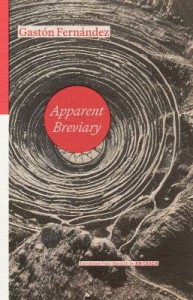
 Apparent Breviary by Gastón Fernández, translated from the Spanish by KM Cascia, World Poetry Books, 2025

Review by Xiao Yue Shan

Rhythm in poetry, Yeats told us, serves to “prolong the moment of contemplation—the moment when we are both asleep and awake” by balancing a monotonous formula of language with the surprise of new images, ideas. In his metered perfection, he reminded us that we are innately rhythmic creatures, alive by the steady pace of breath and heartbeat, habit-forming and fond of repetition, and every interruption to this enduring pattern is a miniature shock, a fracture, a revival.

The hundred poems in Gastón Fernández’s Apparent Breviary are full of interruptions: huge, gasping chasms of silence throwing poetic rhythm into some archaic past. A few pages in, I understood why their translator, KM Cascia, had admitted that the poems made them “squirm.” They unsettled me too. With no guiding cadence to the words, no comfort of the steady pulse, with language disorientating in its skeleton arrangement, there is a sense of learning how to read again, examining each word set firmly on its own—rare stars in the page’s matte sky. Max Picard had once brought up the idea that language is too self-conscious: “each word comes more from the preceding word than from the silence and moves on more to the next word in front than to the silence.” In Fernández, this isn’t so; here, language is conscious of its origin and reverent of its silent surroundings, and as soon as one acknowledges this fact, the vacancy of the negative spaces on the page begin to seem inviting. Instead of being read as simply text, there is something of Apparent Breviary that demands to be interpreted as score, in which the nothingness is full of measures, divisions, momentum. The poet demands we notice that the emptiness is alive: it breathes. READ MORE…