
Place: Brazil

Translation Tuesday: “The Waters of the World” by Clarice Lispector

And that was what she’d been missing: the sea inside her like the thick liquid of a man. Now she’s entirely equal to herself.

There it is, the sea, the most unintelligible of non-human existences. And here is the woman, standing on the beach, the most unintelligible of living beings. As a human being she once posed a question about herself, becoming the most unintelligible of living beings. She and the sea.

Their mysteries could only meet if one surrendered to the other: the surrender of two unknowable worlds made with the trust by which two understandings would surrender to each other.

She looks at the sea, that’s what she can do. It is only cut off for her by the line of the horizon, that is, by her human incapacity to see the Earth’s curvature. READ MORE…
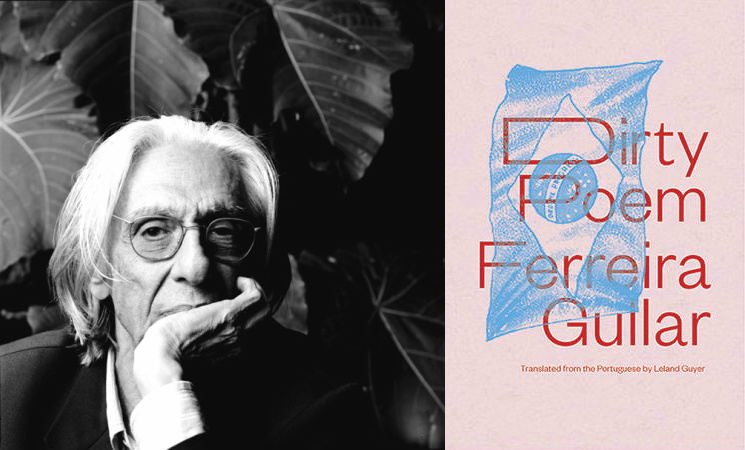
Thirst is the Force of Gravity: Ferreira Gullar’s “Dirty Poem” in Review

"The poem’s necessity makes me bitter."

Much has already been said about exile. Losing a country or losing a home is “like death but without death’s ultimate mercy,” “a kind of ripping apart,” “a condition of terminal loss.” Ferreira Gullar wrote Dirty Poem (newly translated by Leland Guyer for New Directions) in 1975 in Buenos Aires, while in political exile from the Brazilian dictatorship. Like the author himself, the speaker of Dirty Poem imagines his return home, an attempt to recover the São Luís do Maranhão of his childhood.

The opening stanzas of this 80-page poem are filled with gaiety and fond memories of youth in the northeast region of Brazil. But just a few pages later, the speaker “preaches subversion of political order” and is banished to Argentina. In a fine translation from the Portuguese, Leland Guyer captures the richness of language of Gullar’s poetry—from local idioms to the language of displacement. The book culminates in saudade, alienation, and decay. READ MORE…

“Delicacy,” by Maria Rita Kehl

Translated by Julia Sanches

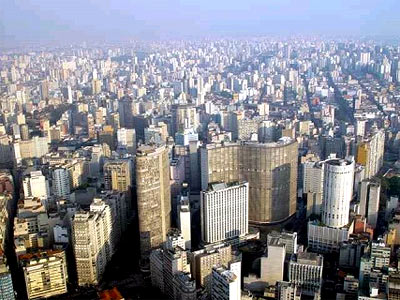
If I were God and I existed, I would execute an act of administrative intervention on São Paulo. I would raze the whole city to the ground throughout the next decade: it stays just the way it is. Nothing else will be knocked down, nothing more will be built. Try to work on the city as it exists: monstrous, imbalanced, poorly planned and poorly maintained. If it’s a matter of moving money, invest in public spaces: in roads, squares, gardens, sidewalks, lighting, leisure centers, flood prevention—anything and everything that makes of what would otherwise be nothing but a heap of housing, something alike to that impressive human invention we call a city. Investing in urbanity also gives financial return. READ MORE…

Weekly news round-up, 20th October 2013: Nobel Prize and awards-season special

The first of our weekly columns on literary news from around the world.

The big news of the week (naturally) was the launch of Asymptote‘s new Fall 2013 issue, and, alongside it, that of a new blog, which we very much hope you’re enjoying. For those of the Asymptote team who’ve worked on the quarterly journal, one of the more exciting things about the blog is the new-found ability to comment on events almost straight away. You’re reading the first of our weekly news round-ups, and the idea is to bring together (and perhaps even hold forth on) the most interesting literary news of the past week.

Stockholm. The problem with launching just over a week after the major literary news of the year – the announcement of the Nobel Prize for Literature – is that we feel compelled to report on it, even though, given the internet’s voracious 24-hour-news appetite, it’s really all a bit old-hat by now. Oh well. We hope your own appetites will stretch to a more international view on proceedings than you might have seen elsewhere. READ MORE…