Posts filed under 'authoritarianism'

Milton Hatoum’s The Brothers and the Politics of Forgetting

Oppression builds insidiously, explodes in all its terror, and then slips quietly back under the surface.

I stand in my basement facing stacks of cardboard boxes, the remnants of my last cross-country move out to Boulder, CO. If you were to take a cross-section of each box, you would see the sediments of everyday objects: a top layer of clothes; the occasional sweater enveloping a ceramic mug; a layer of miscellaneous household necessities (clothes hangers, desk supplies, etc.); and finally, a thick deposit of books.

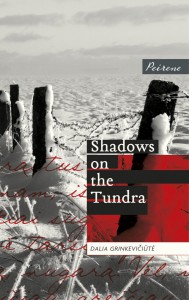
At the bottom of one of these boxes I found a thin book, barely visible between the thick spines of a heavily annotated copy of Bolaño’s The Savage Detectives and a fat collection of Pushkin short stories. I pulled out the paperback, which turned out to be a Brazilian novel, The Brothers, written by Milton Hatoum and translated into English by John Gledson. I couldn’t be sure if I had actually read the book before rediscovering it in the crevice of a cardboard box.

I flipped to the copyright information. The original was published in 2000, with the English translation released two years later. Milton Hatoum is a Brazilian author of Lebanese descent, born in 1952 in Manaus, a city in the Amazon. I flipped to the blurb, which promised the story of a Lebanese immigrant family, focusing on the rivalry between two twins, Yaqub and Omar, who live in Manaus in the latter half of the 20th century.

It’s an intriguing premise, one that draws on the age-old trope of brotherly rivalry, harkening back to Cain and Abel, to The Brothers Karamazov, and to Machado de Assis’s Esaú e Jacó. The novel promised to capture the author’s own experience as a man of Middle Eastern descent from a peripheral region of Brazil. I couldn’t remember how it went from my bookshelf to being snugly packed, which made me curious to investigate further. I left my final box unopened, sat down on the pillows and blankets I had piled on the floor, and began reading. The novel opens with an epigraph, a quote from a Carlos Drummond de Andrade poem:


   “The house was sold with all its memories

            all its furniture all its nightmares

            all the sins committed, or just about to be;

            the house was sold with the sound of its doors banging

            with its windy corridors its view of the world

                        its imponderables.”


The narrative then begins with Yaqub’s homecoming to Manaus from Lebanon, where he had spent some years of his youth, and the reuniting of the two twins under a single roof. Hatoum unveils ever-mounting tensions amongst members of the family through their domestic alliances and conflicts, and the touching and torrid backstories that define those relationships; rich descriptions of setting provide a fascinating portrait of Manaus, albeit one that is devoid of exoticization; and the complex exploration of character in simple, quotidian situations calls upon the wide-ranging tradition of the family saga in literature.

READ MORE…

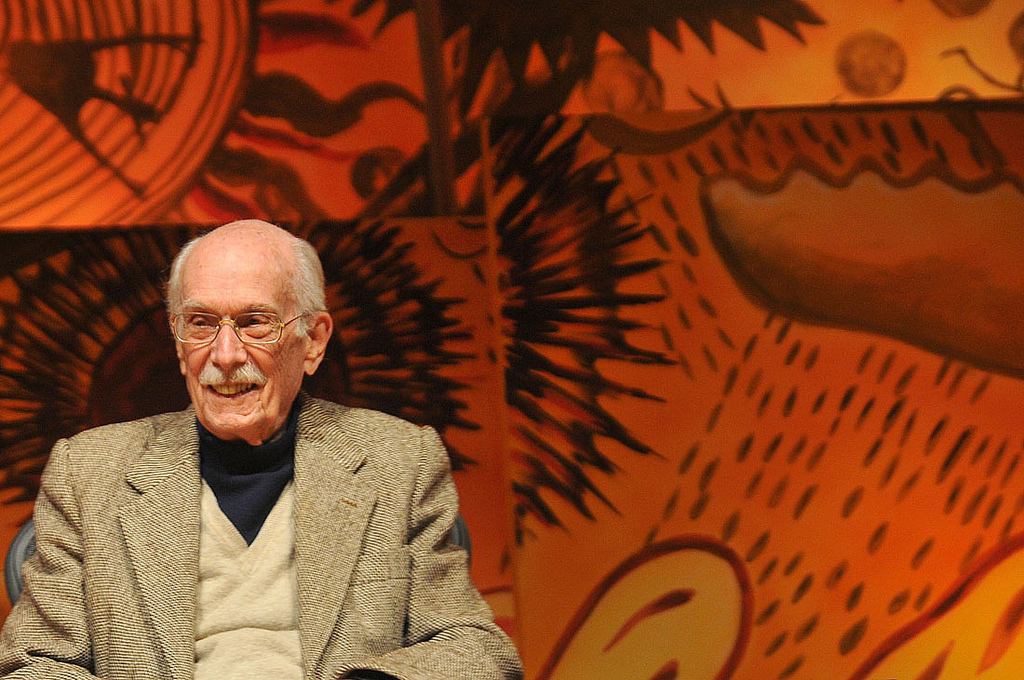
Brazilian Academic Raquel Parrine Remembers Antonio Candido, 1918-2017

Candido’s death has engendered a crisis of heritage and legacy.

Antonio Candido, born in 1918 in Rio de Janeiro, passed away last week on May 12 in São Paulo. A writer, editor, critic and academic, he remains one of the best known and most influential literary figures in Brazil. Candido joined the Brazilian Socialist Party in the 1940s and was an active member of the resistance under the dictatorship of Getúlio Dornelles Vargas. He reviewed the earliest work of Brazilian greats like João Cabral de Melo Neto and Clarice Lispector and went on to teach for many years at the University of São Paulo. He received the Alfonso Reyes International Prize for lifetime achievement—the first Brazilian to be so recognized—among many other awards and honors. Here, Raquel Parrine writes of his legacy and the empty space that a new generation of political thinkers and writers will need to fill. 

It is hard for me to write about Antonio Candido. The more I think about it, the more overwhelmed I feel by the impact he had on literary scholarship in Brazil, and on the country itself. Professor Candido was a moral compass, a political trailblazer, and a dearly beloved human being. It is hard to talk about him without resorting to grandiloquent terms, which would reduce his very significant impact on his familiars and on Brazilian society.

I don’t think there is any doubt that Professor Candido was Brazil’s most important literary critic. He belongs to a generation of sociologists and economists who took it upon themselves to inaugurate a properly Brazilian scholarship, but also, and perhaps more importantly, to own the political discourse about our culture, and our exceptionality.

READ MORE…

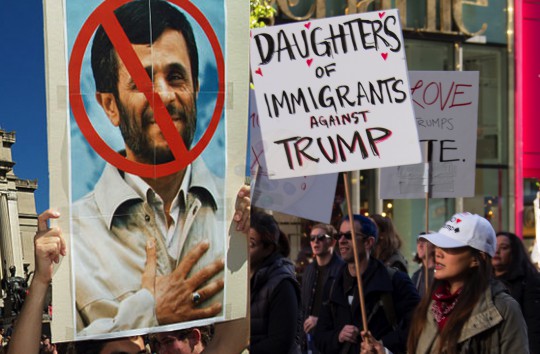
Postmarked from Iran: An Open Letter to the American People

It was only after President Ahmadinejad that we became grateful for what we had, like, for example, ice water.

Dear Americans,

Hi guys. How are you? Accept my condolences on the ending of President Obama’s presidency. I’m sorry that I must also send my condolences that it’s the beginning of President Trump’s era. It’s as if spring has immediately been replaced by winter. Or as if you’re in the passenger seat of a Ferrari, the driver suddenly falls asleep, the car goes crashing in a valley; then you are brought out of the Ferrari, escorted to a horse-drawn carriage whose coachman is one who has just gotten his license. But don’t worry. I totally feel for you. My country’s president during the Eight Years Reform era was a Ferrari driver and we had so much fun. Then, well, for the eight years after him, we rode in a carriage and I really need to thank the president who rode in that carriage, because at the end of his term, he turned the rules of physics upside down and set new Guinness World Records.

You ask how? This is how: he rode the carriage forward but we kept going backward. If Einstein were alive, he would probably die of a stroke trying to solve that problem.

Anyway, don’t be too worried. This President Trump of yours will make you want to emigrate. This will be very good for you, because until now you have always seen immigrants but never been immigrants yourselves. We Iranians have widely emigrated to the U.S. ourselves. So you are more than welcome here; if you have it too hard, move here. Whatever the conditions are here, they are better than being known with Trump after Obama. Think about it: so far, we Iranians have imagined American life to be like the film The Matrix; it is truly a pity to see it as American Pie now, or something even stupider than that.

Can you believe it? Under President Ahmadinejad, we sympathized with Japan when the atomic bomb dropped on Hiroshima. Since the inauguration of President Trump, perhaps you have been sympathizing with the universe during the Big Bang.

But be glad, because Mr. Trump is going to make you all grateful later. It was only after President Ahmadinejad that we became grateful for what we had, like, for example, ice water. No pill is going to cure your headache when you are furious about your president’s speeches; you’d do better to take an ice-cold shower and try to forget.

Believe me, there is no reason to panic. These days the medical field has improved a lot, and it can cure any cancerous tumor, even President Trump.

That said, one needs to be fair. President Trump might have a thousand and one vices, but he will have one great virtue. Rest assured that no matter how bad President Trump’s time in office is for everyone, it is going to be amazing for your satirists. They will have so much material they’ll be able to export half of it outside the U.S.

But President Trump has another virtue, as well: You will become so anxious that you will stop gaining weight. The Iranian people were each sixty-three kilos overweight, on average, before President Ahmadinejad. You won’t believe it, but by the day he left office, not only had we lost the extra weight, we almost disappeared. And if you get really lucky, your country will lose its extra weight, too. Our country was, for example, several thousand billions of rials and dollars thinner, and a few oil towers and gold bullion and foreign currency trailers lighter. The nation even lost millions of tons of its weight as a result of the decimation of buildings, forests, and lakes.

By the way, President Trump’s slogans are similar to President Ahmadinejad’s in that he keeps making promises to workers. I suggest that, no matter what your job, always hide a thousand dollars under your pillow, because these politicians, whenever they say they want to do a good job and benefit us, the first thing they do is take our jobs from us.

Truth is, if I were you, I would exchange all my dollars to rials. Why? Because if President Trump does to your economy what President Ahmadinejad did to ours, you will suddenly find yourselves able to buy only one can of Pepsi with one thousand dollars.

Also, why are you so troubled by President Trump’s anti-women talk? You should not forget President Clinton, who cheated on his wife and, of course, on you, while in the White House. Psychologists believe that people who appear to be nice are more likely to do bad things in their own homes and in the White House. Let’s hope that President Trump is all talk and no action. If President Clinton, who did not talk of such things at all, carried such acts, imagine what President Trump, who already talks of them, could do; if he is to act, you need to worry about the White House’s female cats and birds.

Anyway, as Americans would say, God bless you.

And, as Iranians would say, God bestow upon you real patience.

Yours truly,
Pouria Alami

Translated from the Persian by Poupeh Missaghi. This piece was originally published in Persian in two installments in Shargh newspaper on January 22nd and 23rd, 2017

Pouria Alami is a thirty-five-year-old satirist, journalist, and writer, based in Tehran, Iran. He has a daily sociopolitical satire column in Shargh newspaper, the largest independent newspaper in the country. He is the author of eleven books and teaches journalism, satire, and creative writing, as extracurricular classes in various universities. His work has also appeared in English in World Literature Today.

*****

Read More Translations:

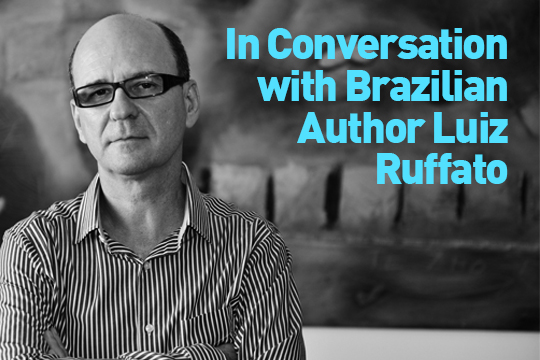
Urban Protest in Brazil: the City and the Politics of Luiz Ruffato

What annoys me sometimes in literature is when you try to show me a world which is only a violent, terrible world. I know this already.

‘Our political history is a succession of dictatorships.’

                                                                                            —Luiz Ruffato                                                        

The fiction of Luiz Ruffato tackles the grave injustices found in Brazilian society: the deep chasm between rich and poor, the endemic corruption, the cheapness of life in the sprawling poverty-stricken peripheries of the major cities. He is the kind of outspoken writer that tumultuous Brazil needs right now. The country is in crisis following recession, a massive corruption scandal and the impeachment process of its President Dilma Rousseff.

It is the poor who will suffer most from this debacle. After just a week in power the administration of acting President Michel Temer began scaling back social policies that the left-wing Workers’ Party had put in place over many years. The Guardian reports that ‘moves are under way to soften the definition of slavery, roll back the demarcation of indigenous land, trim house-building programs’[1].’

Ruffato gave presage to all this in his 2013 speech to Frankfurt Book Fair, presenting Brazil not as an up-and-coming economic success story, but a country in which the shackles of slavery had not been shaken off, describing the abject state of the majority of the population as ‘invisible…deprived of the basic rights of citizenship: housing, transportation, leisure, education, and healthcare…a disposable piece of the machinery driving the economy.’

Ruffato is in a position to talk of these matters. The son of an illiterate washerwoman and a popcorn seller, he slept rough for a month in a bus station when he first moved to Sao Paulo, making his subsequent literary success all the more remarkable. His most famous novel, There Were Many Horses, published in English in 2013, has been hailed as a defining novel in the history of Brazilian literature, winning both the Brazilian APCA Award for best novel and the Brazilian National Library’s Machado de Assis Award. In 2016 Ruffato won the International Herman Hesse Prize for Literature in Translation.

Set in São Paulo, a metropolis of over 20 million people, There Were Many Horses roams across the cityscape and its underbelly, investigating the lives of the homeless, the broken, the lonely, the corrupt and the evil. It is an important book for its political and social statements but also a rare example of a novel which engages completely with the concept of the developing world megacity: in characters, imagery, and structure. A series of 69 vignettes which happen over the course of a night in São Paulo, it began as an experiment, an attempt to capture the sprawling city in a way which Ruffato felt traditional novels had not done. Ruffato argues that the book’s experimental form mirrors the splintered infrastructure of São Paulo and the fragmented lives of Paulistas more effectively.

This interview was conducted in two parts. The first meeting happened in Sao Paulo, at the home of Ruffato. The author lives in an old-fashioned apartment block on the quiet crest of one of the city’s steep hills, in the upper middle-class neighbourhood of Perdizes. The narrow marble corridor that leads to his apartment, filled with potted plants and hanging ferns. Inside, the apartment is neat, with few ornaments. Opposite to a shelf of novels and books on art, a sofa sits by a window looking out across the city. The streaming lines of cars, the expanse of blue sky, the poor peripheral sprawl that goes on and on, blurring into the horizon: all of this made a fitting setting to talk about São Paulo itself, the genesis of There Were Many Horses, the challenges of writing about Brazil and developing world cities. 

The second part of the interview happened over the internet, after the recent suspension of the President Dilma Rousseff. This time, the author focused on politics and on uncertain future of Brazil. The bold red typeface in which he answered questions was perhaps an indication of the fear he feels for the dangerous position Brazil finds itself in today.

Kathleen McCaul (KM): Tell me how you came to write There Were Many Horses?

Luiz Ruffato (LR): There Were Many Horses, started first of all, like a stylistic exercise. I was thinking the following; for me, to write about São Paulo, or any other megacity, is almost impossible. The idea of a novel is closed, it’s a closed structure, and with a closed structure, you need to make choices, you need to make edits. I thought that these edits were precarious. I was wondering in what way I could get the city in the way that we (Paulistas) get it. I stayed thinking about these questions. The two basic units/concepts of a novel is time and space and I was thinking how does time and space work in a megacity? It’s not the same in a small city—space and time are different there. And space and time in São Paulo and London are different, for example. These two questions were the first things I was thinking and then I started to think how to put these things into São Paulo, how to create a novel, thinking about time and space, set in São Paulo. READ MORE…