Posts filed under 'nationalism'

In Review: Secondhand Time by Svetlana Alexievich

Secondhand Time’s arrival in English serves as a timely antidote to reports in the Western press about Russian nationalism

Secondhand Time is one of the four books shortlisted for the Baillie Gifford Prize, UK’s most prestigious prize for nonfiction, the winner of which will be announced tomorrow. 

Russian thinkers in the nineteenth century began referring to the Russian soul (Russkaya dusha) as a way to crystalize a national identity around the idea that Russia and its people possess a singular, exceptional destiny. Be it Dostoevsky’s high-strung and philosophical protagonists, Goncharov’s ambitionless, sensitive Oblomov, or Tolstoy’s nature-inspired, contemplative heroes, Russia’s iconic authors portrayed their countrymen as uninterested in replicating Europe’s then burgeoning industrial capitalism and its protestant work ethic; rather, these characters’ thoughts and actions sprang from a loftier, more spiritual sensibility.

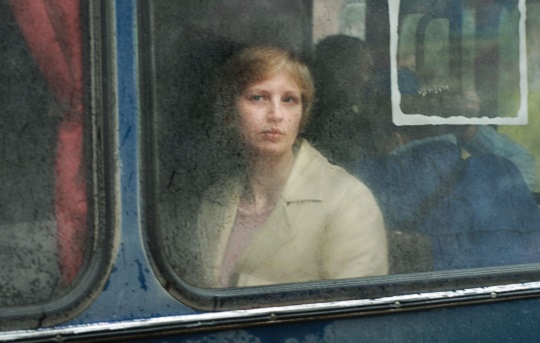
Today, Russians’ views of their country’s tumultuous history and uncertain, post-Soviet future are shaped, in no small part, by whether or not they believe in Russian exceptionalism, and this question frames Belarussian author Svetlana Alexievich’s latest book to be published in English, Secondhand Time. As she did earlier with Voices from Chernobyl (1997), the work that precipitated her winning the 2015 Nobel Prize in Literature, in Secondhand Time, originally published in 2013, Ms. Alexievich gives readers history “in miniature,” by presenting the reflections of ordinary Russians as told in their own voices. For this latest book Ms. Alexievich collected Russians’ thoughts about their post-World War II history that she recorded between 1991 and 2012. She writes that she specially sought to interview “sovaks,” a term that Russians use pejoratively to describe those who remain stuck in Soviet attitudes and behaviors.

Secondhand Time’s arrival in English (Random House, 2016) serves as a timely antidote to reports in the Western press about Russian nationalism. It is a necessary rejoinder not because the reports are false; rather, too little attention has been given to the complicated reasons behind the nationalistic sentiment.

Ironically, most Soviets felt a sense of security under the old system, despite the government’s repression and cruelty. Without the dual rudders of government control over everyday life and the ideology that justified it, those who came of age under the Soviet system now feel uncomfortably adrift. There remains nothing to replace the old ideals that grounded their lives except empty consumerism:

“No one can convince me that we were given life just to eat and sleep to our hearts’ content.  That a hero is someone who buys something one place and sells it down the road for three kopecks more.”

READ MORE…

This Monster, the Volk

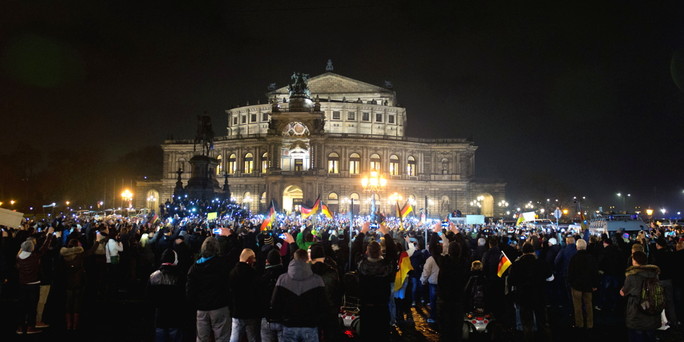
At the Pegida demonstrations, the soul of Dresden has been revealed: reckoning with the mentality of my native city

Monika Cassel translates Durs Grünbein’s op-ed, which appeared on the front page of Die Zeit’s weekly magazine on February 12, 2015, the day before the 70th anniversary of Dresden’s bombing. 

Every year, the city I was born in falls again. On the one hand this is a ritual (of commemoration), and on the other hand it is a reality (of history). All over the world, people know what happened to Dresden in February 1945, just before the great turning point in history when Germany was given the opportunity to better itself. The city lost nearly everything that had once made her charming and was from then on condemned to live on, severely handicapped, hideously deformed, and humiliated. Where once courtly splendor and stone-hewed bourgeois pride had delighted the eye, now desolate wastelands unfolded as I wandered through my city as a child. It is hard to imagine that this was where Casanova contracted a venereal disease and Frederick the Great, when he was still the crown prince, lost his virginity. According to legend, one of the delectable ladies-in-waiting pulled him through a concealed door and initiated him into the Saxon mysteries of love. I still remember imagining the Marquis de Sade visiting the city on the Elbe. In one thing, at least, historians are in agreement: what was supposedly once the most beautiful Italian city north of the Alps was a paradise on earth for all of the libertines of aristocratic Europe.

But it all turned out differently. Lately I have seen a monster in Dresden—it calls itself das Volk (the People) and thinks it has justice on its side. “We are the Volk,” it yells, shamelessly, and it cuts anyone off mid-sentence who dares disagree. It presumes to know who belongs and who does not. It intimidates those from foreign lands because—in the extremity of their plight—they have nowhere else to go, those who come in search of a better life. I can identify with these asylum-seekers. I was once a person who felt trapped in his country, in his native city. Who wanted to escape from a closed society—precisely the kind some wish we could return to again. Was I an economic refugee, driven by political dissent against the system that had planned my whole life for me, was it a yearning for foreign cultures, or all of these? Who can say?

READ MORE…