
Posts filed under 'Milkweed Editions'

What’s New in Translation: January 2026

New titles from China, France, Peru, Italy, Romania, Brazil, South Korea, Mexico, Sweden, and Japan!

Looks like 2026 isn’t coming in slow. Despite the chaos, we’re looking forward to another year of illuminating the best of what world literature has to share—and we’re starting off with plenty to go around, with thirteen titles from ten countries. Find in the mix a new translation of one of the Peruvian canon’s most dazzling and convulsive works; a novel depicting the delicate indigenous customs of a region between Siberia and northeast China; a shocking, propulsive novella from a Japanese cult writer; a story of transformative grief from an enthralling Romanian voice, and so much more.
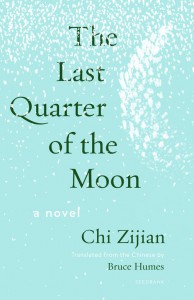
The Last Quarter of the Moon by Chi Zijian, translated from the Chinese by Bruce Humes, Milkweed Editions, 2026

Review by Mandy-Suzanne Wong

The opening lines of Chi Zijian’s wondrous novel, The Last Quarter of the Moon, set a carefully measured tone for this enchanted story of Evenki nomads: “A long-time confidante of the rain and snow, I am ninety years old. The rain and snow have weathered me, and I too have weathered them.” t6his rich and essential passage gently, and with deference, opens a window into a world where humans confide in rain. Chi and translator Bruce Humes indulge the word weather in at least three of its meanings, conveying the narrator’s resilience and hinting at her costly intimacy with other-than-human energies.

A word exchanging its meaning for other meanings—as if adopting different bodies to slide between existential contexts—invokes the dynamism of the shamanic Evenki cosmos, wherein earth and sky, humans and nonhumans, the embodied and the disembodied, dance together in precarious balance and tender reciprocity. Everything is alive in the Evenki’s animist multiverse, every entity ensouled, each Earthling an embodiment of the Spirits, and every human owes a debt to the Spirits for the lives of nonhumans killed for food. In turn, when a human child goes missing, in danger of freezing to death, a reindeer child must go “to the dark realm on [the human’s] behalf,” in a mimetic exchange.

READ MORE…

Translating Humberto Ak’abal: An Interview with Michael Bazzett

[Humberto Ak’abal’s] poetry lives in the silences around the work, in the emptiness of the page, like the hollow of a bell.

In January 2019, Maya K’iche’ poet Humberto Ak’abal passed away, thus transcending into the eternal silence—perhaps the same silence inhabited by his seismic poems. He was sixty-six.

In life, Humberto published more than thirty books, and his work has been translated into more than twenty languages—including English, French, German, Italian, Portuguese, and Arabic. He remains a towering figure for indigenous and Maya literature, as well as one of Latin America’s most beloved and inventive poets. Humberto wrote extensively about family, time, colonialism, men’s relationship with animals and nature, indigeneity, the plight of the indigenous people in Guatemala, and the Guatemalan genocide. He used onomatopoeia and cacophony to describe his surroundings, and his poems are imbued with devastating political commentary and subtle humor. Carlos Montemayor and Antonio Gamoneda admitted to being fans of Humberto’s poetry, and in 2006, he became a Guggenheim fellow.

One cannot overstate the importance, quality, originality, and poetic sensibility of Humberto Ak’abal. Though his work has been previously translated into English, a new translation shines a new light on Humberto’s devastating poems. This June, Milkweed Editions will publish If Today Were Tomorrow, a book of poems written by Humberto Ak’abal and translated by Michael Bazzett, the author of The Echo Chamber. If Today Were Tomorrow is a beautifully crafted, comprehensive, and faithful approximation and representation of Humberto’s work. I had the opportunity to interview Michael Bazzett on Humberto’s legacy, the experience working between K’iche’, Spanish, and English, and the translation of silence.

José García Escobar (JGE): In 2018, you famously put out your translation of the Maya’s creation myth, The Popol Vuh. Naturally, we find many references and similarities between The Popol Vuh and the poetry of Humberto Ak’abal. Can you describe how translating The Popol Vuh prepared you or helped you translate Humberto’s poetry? Or maybe it was the other way around. I know you’ve worked on If Today Were Tomorrow for many years.

Michael Bazzett (MB): In the opening of The Popol Vuh, when it came time for the gods to create the world, “it only took a word. / To make earth they said, ‘Earth’ / and there it was: sudden / as a cloud or mist unfolds / from the face of a mountain, / so earth was there.”

I’ve always sensed an entire theory of language swirling inside this moment—one that continues, of course, throughout the entirety of the myth—where words are energy, tethered intrinsically to what they call forth. As such, they are not imposed by humans upon the landscape, like labels or sticky notes, but instead uncovered through careful listening and observation of the world around us. If Humberto’s work is built on anything, it is careful listening and observation. One learns very quickly by reading his poems. For instance, in K’iche’, the call of a bird is synonymous with its name, including the little orange & brown plumed bird, “Ch’ik,” who hops “happily / among the fresh shoots”:

Ch’ik is her song,
Ch’ik is her name.

READ MORE…