Language: English

Reviewing “Red Monsoon,” Interviewing Eelum Dixit

"I think that Nepali cinema is at a point now where if people at the top work together, we can really create a proper industry. "

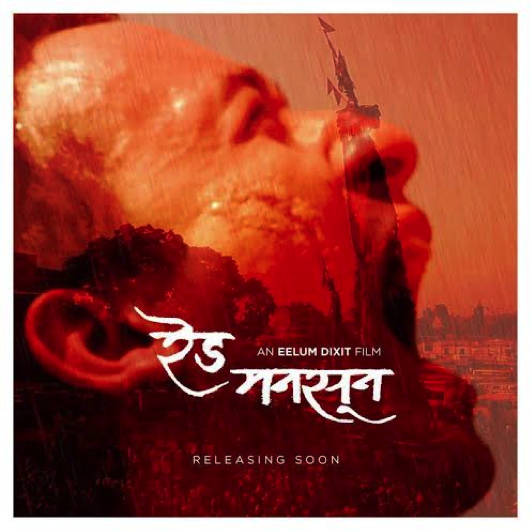
Red Monsoon, a Nepali-language feature film directed by young Nepali filmmaker Eelum Dixit, will open in Kathmandu multiplexes in May. A select crowd of Lalitpur intelligentsia, myself included (I say this with my tongue firmly in cheek!) were invited to preview the film last week in the more intimate atmosphere of the refurbished 1920s-era Yalamaya Kendra complex.

South Asian film is perhaps too often synonymous with Bollywood. The overwhelming image is of the colourful, sequined song-and-dance routine, melodrama, three-hour-plus duration, as well as big-budget, cartel-backed production.

But Red Monsoon contains only one of these characteristics. The low-budget film (starring several members of Eelum’s family) opens with footage of one of Kathmandu’s many crowd-pulling religious festivals, yet riot police are beating back revelers. In the next scene, a group of young men discuss migration to the Gulf. “Good luck with your new life in Dubai,” says one friend. READ MORE…

Weekly News Roundup, 28th March 2014: Pretty literary pennies, Prison reading

This week's literary highlights from across the world

Writing is a notoriously penny-pinching métier, unless you’re Canadian Nobel winner Alice Munro—whom the Canadian government has graced with a $5 commemorative coin of her very own. Don’t count on making literary purchases with the coin any time soon, though: the coin costs $69.95, which—granted, we aren’t mathematicians here at Asymptote—seems like a not-so-smart investment. READ MORE…

On the first Malay-Language Translations of Stephen King and Neil Gaiman

Amir Muhammad, founder of Buku Fixi [Fixi Books], talks with Asymptote

Buku Fixi, established in 2011, is a Petaling Jaya, Malaysia-based publisher of Malay-language novels with a focus on contemporary urban themes. Buku Fixi includes three other imprints: “Fixi Novo,” which publishes English-language books, “Fixi Retro,” which publishes out-of-print Malay titles, and “Fixi Verso,” highlighting bestsellers in translation. Buku Fixi’s founder, Amir Muhammad, also founded Matahari Books in 2007, publishes non-fiction titles in English and Malay, and is an active writer and filmmaker.

Just this month, Fixi published the first Malay translations of a Stephen King novel, JOYLAND, and a Neil Gaiman novel, THE OCEAN AT THE END OF THE LANE (translated as LAUTAN DI HUJUNG LORONG). Why do you think it’s taken so long for these bestselling authors to be translated into Malay? READ MORE…

On Wilma Stockenström’s “Expedition to the Baobab Tree”

On slaveholding and language

In Wilma Stockenström’s novel, Expedition to the Baobab Tree, we meet a woman who has no language of her own. Captured as a young girl and sold into slavery, she can identify neither with the fractured “worker’s language” of her fellow slaves nor the Afrikaans imposed on her by her owners, instead becoming alienated from both groups. Since the languages we speak provide us with internalized values and systems of categorization to understand and locate ourselves within the world, Stockenström’s protagonist’s lack leaves her disoriented and struggling to construct an identity. She discards the constraints of human language, culture, and systems of categorization; unraveling her conditioning as a slave, she improvises a language of her own, a vocabulary masterfully crafted in Stockenström’s prose and expertly preserved in Coetzee’s translation. Yet having internalized her worth as determined by her usefulness to her masters, she finds her solitude in the wilderness unbearable, the maddening isolation finally driving her to suicide. READ MORE…

Asymptote’s Top 10 in 2013

What went viral this year?

We give you the ten most popular articles published this year at Asymptote:

READ MORE…

On Attending ‘Godot’

McKellen and Stewart in Beckett's seminal play

When Beckett translated his own En Attendant Godot into Waiting for Godot it was an act of editing as much as anything else. Some of his changes were quite normal for a translator (the selection of the best words, the retention of the play’s themes and shape and humor) and some unique to the self-translator: reworking passages, adding phrases (a whole back-and-forth of cursing, for instance), cutting speeches. The French is riddled with rien; the English with ‘nothing.’ In one of his many amusing alterations he turns phoque (the French word for seal, which sounds like the English cuss ‘fuck’) into ‘grampus,’ which is an obscure English word for dolphin that sounds, if pronounced like a Frenchman, like a small turd. READ MORE…