
Posts featuring David Brookshaw

Mapping the Invisible: A Review of The Cartographer of Absences by Mia Couto

. . . Couto opens what we thought was settled, exposing what we buried, leaving us no choice but to witness the revelations.

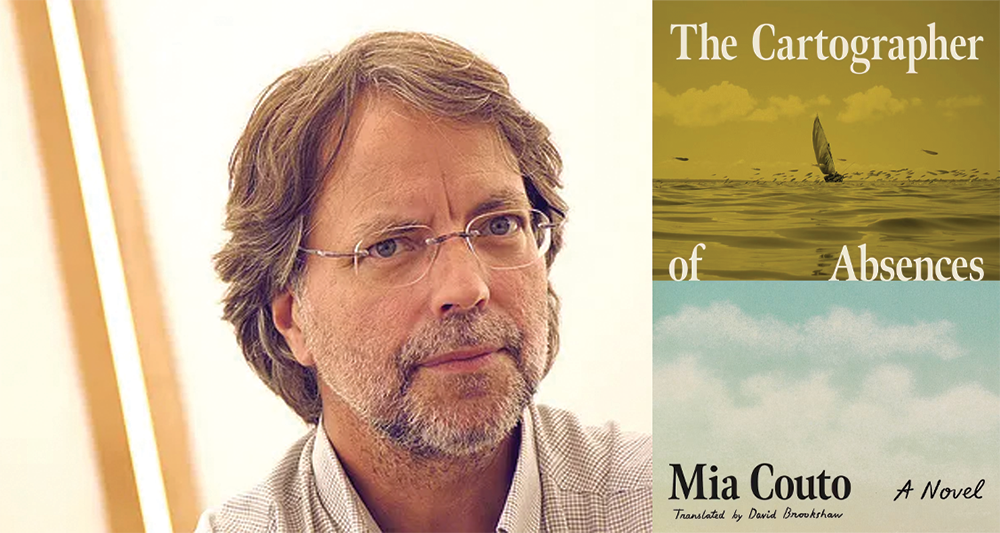
The Cartographer of Absences by Mia Couto, translated from the Portuguese by David Brookshaw, Farrar, Straus and Giroux, 2025

In March 2019, as Cyclone Idai bore down on Mozambique, it arrived with a weight familiar to Mia Couto. The author, born in Beira—the country’s second-largest city—in 1955, had spent decades chronicling how both natural and manmade violence has torn through his homeland, leaving open, unhealing wounds. In his latest novel, The Cartographer of Absences, the cyclone’s approach is both the temporal frame and symbolic force of such persistent fractures; the storm unearths what has been buried and almost forgotten.

The novel follows Diogo Santiago, an internationally recognized Mozambican poet, who returns to his birthplace of Beira for a literary tribute. Suffering from depression and unable to write, he sets out on the journey to ostensibly “lay his memories to rest,” and expects a ceremonial homecoming. Instead, he receives a cardboard box from Liana Campos, a mysterious resident whose grandfather once served as an inspector with PIDE—Portugal’s brutal secret police. The box contains a trove of documents from the final convulsions of Portuguese colonial rule: interrogation transcripts, confiscated poems, bureaucratic reports, and family papers. Together, they reveal the hidden architecture of violence that has shaped both Diogo and Liana’s families, including the fate of the former’s cousin, Sandro, who disappeared during the war, and the suspicious death of the latter’s mother, Almalinda. READ MORE…
What’s New in Translation: May 2023

New translations from the Spanish, Portuguese, and Chinese!

This month, our editors feature three titles that showcase what’s possible when a writer fully showcases a firm and brilliant insight into their reality. From a collection of short stories that investigate the violence of Latin American society, to a multifaceted depiction of colonial Mozambique, to essays that focus on the intimate dailyness of human lives in twentieth-century China, these works educate, provoke, and enthrall. Read on to find out more!

ampuero

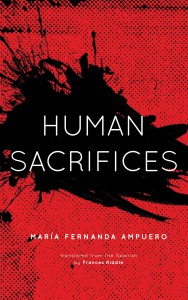
Human Sacrifices by María Fernanda Ampuero, translated from the Spanish by Frances Riddle, The Feminist Press, 2023

Review by Rubén Lopez, Editor-at-Large for Central America

In Human Sacrifices, a collection of short stories, María Fernanda Ampuero traces the deterioration of individuals who have survived an overwhelmingly violent reality. With guts, blood, and a dense anger, she escorts us to a precipice with each story, strips us naked, and delivers us to a place where the wounds of Latin American are made real, and thus can be dissected. Published by Editorial Páginas de Espuma in 2021 and now appearing in English translation by Frances Riddle, the collection contains twelve stories that question our reality as one occasionally resembling more a traitorous deception.

The stories in Human Sacrifices are profoundly Latin American, but more specifically, they describe the experience of vulnerable Latin American women: a unique kind of hell. Gendered violence is present in almost all the narratives—a bone that vertebrates the monster: “Desperate women,” states one of the protagonists, “serve as meat for the grinder. Immigrant women are bones to be pulverized into animal fodder.” The opening story, “Biography,” is perhaps the most intimate, narrating in first person the terror of being a migrant woman in a foreign country. The narrative implants the dehumanizing panic of crossing invisible borders in pursuit of a less harsh horizon, as well as the fear of becoming an anonymous number, a disappeared woman, a name written on a wall. As the narrator states: “I remember someone once told me that the stars we see have been dead for a long time, and I think that maybe the disappeared women might also shine on like that, with that same blinding light, making it easier to find them.”

READ MORE…