Language: French

Translation Tuesday: “Mal Paso” by Hugo López Araiza Bravo

Spanish/French/English—a multilingual Translation Tuesday, translated by criticism editor Ellen Jones


Select translation:

“But why do you want to go to Haiti?” they asked her in Santo Domingo. “You crazy?”

She only smiled like a naïve foreigner, mumbled something about a sociolinguistic interest in the borderlands, and went out of the department with her Lotman under her arm. While she waited for the bus to the coach station she looked over the timetable that her classmates had reluctantly given her. It was going to take the whole day. The first thing she had to do was leave the city by the Carretera Sánchez.

“I’m only going as far as Barahona,” the driver warned her when he heard where she was going. “From there, you’re on your own.”

She didn’t mind. She sat on the left hand side so she could say goodbye to the sea; she fixed her eyes on the waves while the vehicle moved over the concrete. The blue was giving way little by little to green. When nothing but mountains was visible, she fell asleep. She woke up just in time to see the Arco del Triunfo.

She had a hard time finding someone to take her the rest of the way. Finally she ended up with a lorry driver whose job was to supply sugar cane to the city’s sugar factory. He was loading his vehicle with big water bottles.

“There’s not enough water over there,” he explained. “I’m going to make more on this trip than I make in a month going back and forth like crazy.”

They set off when the driver was sure that he’d made use of every cubic metre of his hold. They left the city behind and went into the sugar plantations. The lorry’s cabin shook with a wave of vituperation against the sugar industry. How they were worked from sun up to sun down. How bateyes still existed. How people were dying from machete wounds. How even after everything slavery still persisted, it’s just that now they called it minimum wage. Then the Laguna del Rincón appeared, and the criticism was directed towards uncontrolled fishing and the loss of heritage as a result of greed.

“They extract gypsum from that mountain,” he concluded signaling towards the other side. “Don’t get me started on the mines.”

She didn’t. She wasn’t about to get involved in ethical debates with a man who was trying to sell water at the price of mercury to the victims of an earthquake. Besides, enough people had confided in her their misfortunes for her to know that all of Latin America was singing from the same song sheet: each country had its own versions of the same general ills.

They stopped in Duvergé for something to eat: rice and pigeon peas. As soon as their plates were clean her companion stood up.

“We’ve got to get to Jimaní before nightfall: it’ll be hard to find somewhere to spend the night.”

They could barely make out the city when it became clear that something was out of the ordinairy. It was seething. For the second biggest cité in the municipalité, there were too many people. And people in the streets. They had to réduice their speed to avoid running someone over. They soon understood that they were principalment refugees. They stopped in front of a house d’aspect humble.

“They’re distant relatives” her guide excused himself. “Tomorrow you can go to the border. It’s only two kilometres away.”

She passéd the nuit on a pallet in the cuisine.

She sortied early, with only a piece of manioc in her estomac. She calculated that she’d have to marche for three quarts of an hour. The streets were as full as the précéding nuit. The soldats from the Fortaleza looked suspicieusely at the people going past. She commenced to move between the multitudes, parfaitly aware that she was swimming à countercurrent. Quand she left the last houses behind, the route became more sauvage. Elle décida to walk on one side so it would be more facile to mouve. Those who were coming in the opposée direction looked like they hadn’t eaten in days. They came with almost zéro, with seulely the robes they were wearing quand tout had se passé. On her right était the Étang Saumâtre, et elle imagina that if the dominicain gouvernment had not permetted the réfugiés to entrer, these waters would now be full de illegaux swimming pour their survie.

Elle could déjà see Mal Paso. Le nom was apt: négliged constructions that spat out misérables, infernal portes. She made her way à travers the réfugiés et entréed a totalement chaótique square. There were pleine de gens en the mouve, here et là camions could be seen, still trying to continuer with their commerce. Among them were the improviséd campements for those who still pensaient que they pourraient retourn. Elle parcrossed le perimetre lentement, completely submergéed. Vraiment Mallepasse. Elle vint more proche à la frontière. Un point de contrôle de Casques Bleus garded le passage.

“Eh! La fille!”, lui hurla l’un des soldats. “Tu peux pas passer! Rien que de l’aide internationale y peut traverser! C’est pas du tourisme, une catastrophe pareille!”

Elle resta immobile. De l’autre côté, elle vit l’Ayiti. Tout te sanble diferan de lót bò a.


–¿Pero por qué tú quieres ir a Haití? –le preguntaron en Santo Domingo–. ¿Estarás tú loca?

Ella sólo sonrió cual extranjera ingenua, balbució algo sobre el interés sociolingüístico de la frontera y salió de la facultad con su Lotman bajo el brazo. Mientras esperaba la guagua hacia la central de autobuses repasó el itinerario que a regañadientes le habían dado sus compañeros. Le iba a ocupar todo el día. Lo primero que tenía que hacer era salir de la ciudad por la Carretera Sánchez.

–Yo voy sólo hasta Barahona –le advirtió el conductor cuando se enteró de su destino–. A partir de ahí, se ampara sola.

No le importó. Se sentó del lado izquierdo para poder despedirse del mar; clavó los ojos en las olas mientras la máquina avanzaba por el concreto. El azul fue cediendo poco a poco al verde. Cuando no se distinguía más que monte, cayó dormida. Despertó justo a tiempo para ver el Arco del Triunfo.

Le costó trabajo encontrar quién la llevara el resto del camino. Finalmente dio con un camionero encargado de abastecer de caña al ingenio de la ciudad. Estaba cargando su vehículo con garrafones.

–Allá hace falta el agua –explicó–. Voy a hacer más con este viaje de lo que gano en un mes dando vueltas como loco.

Partieron cuando el conductor estuvo seguro de que cada metro cúbico de su caja estaba aprovechado. Dejaron detrás la ciudad y se adentraron en los cañaverales. La cabina del camión se removió con un vendaval de vituperios al sistema azucarero. Que se trabajaba de sol a sol. Que seguía existiendo la raya. Que la gente moría de una herida de machete. Que después de todo se mantenía la esclavitud, aunque ahora le dijeran salario mínimo. Entonces emergió la Laguna del Rincón, y la queja se dirigió hacia la pesca indiscriminada y la pérdida del patrimonio por culpa de la avaricia.

–De ese monte sacan yeso –concluyó señalando hacia el otro lado–. No me haga comenzar con las minas.

No lo hizo. No estaba para meterse en debates éticos con un hombre que pretendía venderles agua a precio de mercurio a los damnificados de un terremoto. Además, ya había protagonizado suficientes confidencias de desgracias como para saber que toda Latinoamérica cojea del mismo pie: cada país tiene sus propias versiones de los males generales.

Pararon en Duvergé por algo de comida: arroz con guandules. En cuanto limpiaron el plato su compañero se paró.

–Hay que llegar a Jimaní antes que anochezca: nos va a costar trabajo encontrar dónde pasar la noche.

Apenas divisaron la ciudad se dio cuenta de que algo había fuera de lo commún. Bullía. Para ser la segunda ciutat más grande del municipio, le sobraba gent. Y gent en las calles. Tuvieron que diminuir la velocidad para evitar atropellar a alguien. Pronto comprendió que se trataba en su majoría de refugiados. Se detuvieron frente a una casa d’aspecto humilde.

–Son parientes lejanos –se excusó su guía–. Mañana tú podrás ir a la frontera. Está apenas a dos kilómetros.

Passó la noche en un catre en la cuisina.

Sortió temprano, sólo con un trozo de yuca en el ventre. Calculaba que devía marchar tres quartos de hora. Las calles estaban tan plenas como la noche précédente. Los soldats de the Fortaleza miraban méfiantes las gens que pasaban. Commenzó a moverse entre la multitude, parfaitamente consciente de que nadaba à contrecorriente. Quand dejó atrás las últimas casas, el chemino se devenió más agreste. Décidió andar par un lado, de sorte que le fuera más fácile déplazarse. Los que veníaent en sens contrairio paraîcían no aver mangiado en varios días. Veníaent casi sans nada, seul con las robes que portaban quand tout se avía passado. À su derecha étaiba el Étang Saumâtre, et se immaginó que si el gouverno dominicain no hubiera permis la entrée de refugiés, esas aguas serían ahora pleines de illegaux nageando pour la supervivencia.

Elle veía déjà Mal Paso. Lui iba bien el nom: unos bâtiments négligéados qui escupían misérables, unas portes al enfer. Se ouvrió paso à travers de los réfugiés et entró en une plaza totalement chaótique. Étaiba pleine de gens en mouvemiento, aquí et là se apréciaban los camions que avían todavía essayé continuer con el commerce. Entre eux étaiban les campaments improvisés de los que pensaient todavía que pourraient retournar. Parcourrió le pérímétre lentement, duramente impressionée. Vraiment Mallepasse. Elle vint más proche à la frontière. Un point de contrôle de Casques Bleus vigilait le passage.

«Eh! La fille!», lui hurla l’un des soldats. «Tu peux pas passer! Rien que de l’aide internationale y peut traverser! C’est pas du tourisme, une catastrophe pareille!»

Elle resta immobile. De l’autre côté, elle vit l’Ayiti. Tout te sanble diferan de lót bò a.

***

Hugo López Araiza Bravo is a Mexican writer and translator. His first book, Infinitas cosas, won the 4º Virtuality Literario Caza de Letras. His second will be out soon, and he's been shadow-boxing with a novel for over four years. In 2012, he won the Concurso 43 de Punto de Partida in literary translation, with a fragment of a novel by Amélie Nothomb. He's currently studying for a Masters in Translation at El Colegio de México.   Ellen Jones edits the criticism section of Asymptote, and contributes the occasional translation. She has a B.A. in English literature and Spanish, and an M.St. in English Language from the University of Oxford. She is now a Ph.D. candidate at Queen Mary University of London, researching English-Spanish code-switching in contemporary fiction, and the particular challenges associated with reading, publishing, and translating this kind of writing.

July Issue Highlight: “Excerpt” by Cia Rinne

A look at one of our multilingual feature's star poems.

Translator’s Profile: Alyson Waters

Q&A with Alyson Waters, translator from the French and managing editor of Yale French Studies.

Alyson Waters’s translations from the French include works by Louis Aragon, René Belletto, Eric Chevillard, and Albert Cossery. She is the 2012 winner of the French-American Translation Award for her translation of Chevillard’s Prehistoric Times. Waters has received a National Endowment for the Arts Translation Fellowship, a PEN Translation Fund grant, and residency grants from the Centre National du Livre, the Villa Gillet, and the Banff International Literary Translation Centre. She teaches literary translation at New York University and Columbia University and is the managing editor of Yale French Studies. She lives in Brooklyn.

***

Asymptote: Describe your current/most recent project. Why is it cool? What should we know about it?

Alyson Waters: My current project is a translation of Jean Giono’s Un roi sans divertissement for New York Review Books. The title comes from one of Pascal’s Pensées:  “A king without diversion is miserable; and therefore we see a great number of people constantly about the king whose sole task it is to amuse and avert the thought of the king from himself.” It’s an amazing book, a kind of existential mystery/roman noir. It has a very complicated structure, moving back and forth from the time of the telling of the story to the time of the events, and told in several narrative voices in an almost oral style. There’s a great passage in the book (among many) where the main narrator (or Giono?) inserts in the middle of his story the following:

“Obviously there exists a system of references comparable, for example, to the economic understanding of the world and in which Langlois’ blood and Bergues’ blood have the same value as the blood of Marie Chazottes, Ravanel, and Delphin-Jules. But there exists, encasing the first, another system of references in which Abraham and Isaac move logically, one following the other, toward Mount Moriah; in which the obsidian knives of the priests of Quetzalcoatl logically drive deep into selected hearts. And we are informed of this by beauty. One cannot live in a world where one believes that the exquisite elegance of the guinea fowl’s plumage is pointless. This is just an aside. I wanted to say it, and I did.” READ MORE…

What’s Foreign and Familiar: Part I

Writer Yuen Sin reflects on a childhood and adulthood spent finding herself between languages

“What is the Burmese word for cockroach (kar-chwa)?

Auntie Moe Moe interrogated in a mixture of Mandarin and Hokkien dialect. My brother glanced at me haplessly as I rummaged through the repository of my memory, biting my lips as my live-in domestic helper, nanny, and aunt tapped her feet impatiently.

There it was. “Po heart.”

The romanization under my childish scrawl appeared in my head, and I triumphantly recited the two syllables hiding beneath my tongue. READ MORE…

Translation Tuesday: “Night Visit” by Emmanuel Bove

His eyes left the comforting flame of the lamp, seemed to follow the flight of a bird, then landed on me.

What was making me sad? My books—all my books—were sleeping on the shelves. No one had spoken badly of me. My family and friends had no particular worries. I found myself in the midst of all things. So I did not need to fear that events, in my absence, would take a turn I would be unable to change. I was not unhappy with myself. And, even had I been, this intensity of feeling was different.

It was eleven o’clock at night. A lamp without a shade lit my desk. I had not gone out all day. Whenever fresh air has not put color in my cheeks, I don’t feel at ease. My wrists are smoother and I notice, with some displeasure, that the down covering them is silkier, and when I go to bed, my unexpended energy makes me uncomfortable.

I was dozing in an armchair. At the seam where the red velvet meets the wood, golden tacks form a border. One of them was missing and, there, the edge sagged a bit. I sat motionless. My hand tugged at this seam without my being aware of it, as it sought unconsciously to pull out the next tack.

It was only once I had managed to pull it out that I became aware of what I was doing. I felt a small joy at this discovery, as I feel each time I catch myself doing something without realizing it, or when I bring to light a sensation in me of which I was unaware. It makes me as happy as a ray of sunshine or a kind word. Anyone who would criticize me for this tiny joy will never understand me. I think that seeking knowledge of oneself is a pure deed. To criticize me for digging too deep into myself would be to criticize me for being happy.

I have to say, though, that this joy is very fragile. It really is not equal to the joy a ray of sunshine gives us. Quickly it disappears, and I have to look for something else inside me to bring it back to life. Then, in the intervals, it seems that everything is hostile to me and that the people around me, with their simple joy, are in reality happier than I am.

*

I was reading when there was a knock at the door. It was my friend Paul. He rushed in and the door, which he had yanked behind him so it would close, stopped half-way.

“What’s the matter, Paul?”

“Nothing.”

His face was pale, and his eyes darker than usual. He dropped onto the sofa, which he knew was soft.

“But what is it?”

He stood, walked around the room as I put my book down, and lit a cigarette, then sat again. He was smoking the way nervous people do, his cigarette drooping from his mouth. From time to time, he would spit out bits of tobacco.

“Please, Paul, tell me what’s happened to you.”

I looked at him. I tried to find a gesture, an expression, something in his bearing that would reassure me. But there was nothing. If he had been holding some object, his fingers would have trembled. He must have realized this because he avoided touching anything whatsoever.

“Paul, I’m your friend. Tell me everything. You know if there’s anything I can do for you, I’ll do it. It hurts me to see you like this, without being able to help you.” READ MORE…

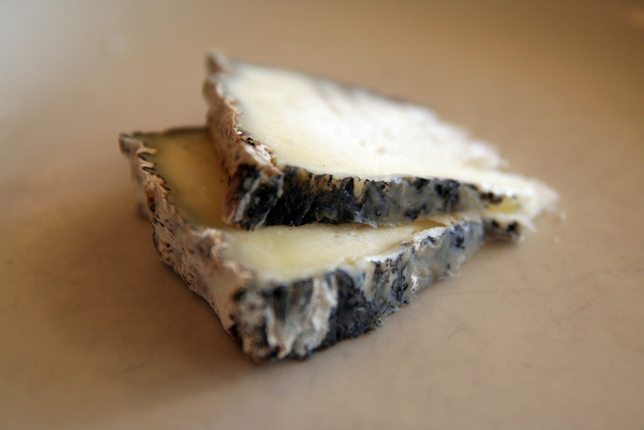
What’s a Tomme Cheese?

In her continued column about food & language, Nina Sparling examines just what—and how—"tomme" cheese has come to mean

Some words for foods are easily translatable. The word’s functional meaning shifts effortlessly between tongues. Tomato and pomodoro both indicate Solanum lycopersicum, member of the nightshade family. Poulet, pollo, and chicken look the same rubbed with oil and garlic roasting in a hot oven. In these cases, there is little room for deliberation: oil, butter, wine. Rice, wheat, corn. Their translations are patently accessible. Learning the words for foods in other languages is particularly satisfying. There’s immediate sensory recognition: the words indicate familiar tastes, smells, textures, and sights. The intimacy with what we eat follows. In learning to say tomato in another language, we begin to feel in it also.

But this question of feeling is where it gets finicky. While most anything carries a “literal” meaning in another language, its usage and implication remain awkward in translation. A New York bakery and a Parisian boulangerie operate in different ways. In both places flour is mixed with yeast and water, let to rise and baked. Yet we do not eat bread in the same ways, and the bread we eat is not the same.

Take, for example, the French word tomme. My first day of work at the cheese shop a colleague asked me what kind of cheese I liked. Tomme, I said. He was quick to call me out.

Tomme is not a kind of cheese. Be more specific.” READ MORE…

Translation Tuesday: Poems by Boris Vian

Translated by Jeremy Page

THE SPIDERS 

To Odette Bost


Into the houses where children die

Go some very old people.

They sit down in the antechamber

Their sticks between their black knees.

They listen, nod their heads.


Every time the child coughs

Their hands clutch their hearts

And make big yellow spiders

And the cough, rising through the furnishings,

Is shredded, listless as a pale butterfly.


They have vague smiles

And the child’s cough stops

And the big yellow spiders

Rest, shaking,

On the polished boxwood handles

Of the sticks, between their hard knees.


And then, when the child is dead

They get up, and go elsewhere…

READ MORE…

In Review: “Self-Portrait in Green” by Marie NDiaye

Translated by Jordan Stump, and published by Two Lines Press

Let me talk about selfies.

Are you annoyed yet? I promise this isn’t a curmudgeonly thinkpiece about millennials; nor is it a listicle written by said millennials in defense of the selfie.* No, I’d like to talk about self-portraiture, which became conceivable as soon as mirrors and other reflective surfaces were available. (Narcissus may have enjoyed his reflection in antiquity, but he wasn’t real, and pools of water are never that smooth). The idea here is objectivity. A stable you that you can see.

Even without gadgetry (mirrors, glassy ponds, cameras et al)—I don’t think a selfie is a foray into solipsism. More the opposite: the way the self-it-self has been constructed is a result of the litany of selves surrounding it. We adjust to resemble, even when affirming our individual self-ness. Every selfie (can we say “self-portrait” now? I’m sorry!) exists as an algorithmic product of the selves around it, which, through refraction and contortion, inform whatever “self” is portrait-ed. This is true even sans Instagram.

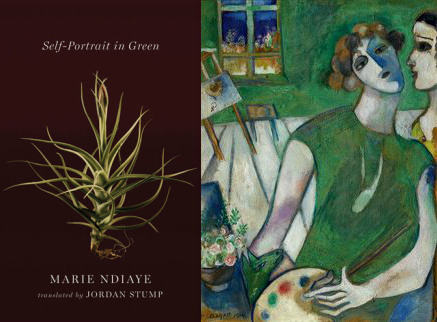
This, at least, is my hypothesis after reading Two Lines Press’ 2014 publication, Self Portrait in Green, by French writer Marie NDiaye and meticulously translated by Jordan Stump. The slender novella is written in the first person against the stark relief of an ominous threat, one of a flood that is slated to destroy the village the narrator inhabits, by 2003. Through a series of recollections, Self Portrait in Green navigates a universe of threat, both environmental and interpersonal, through an interconnected series of engagements the narrator litanies against women afflicted by the color green.  READ MORE…

Women, Cooking

On women, place, and nourishment

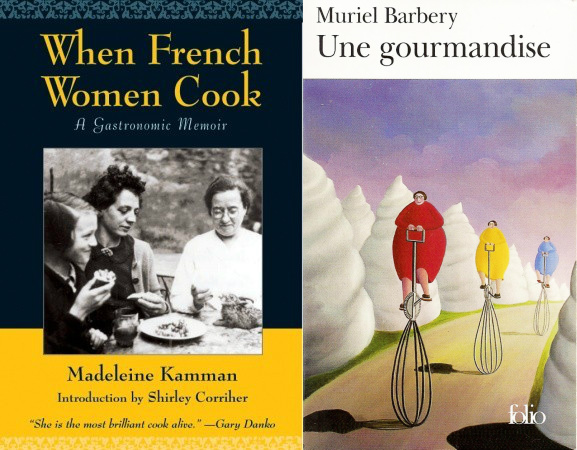
I have never been able to cook from Madeline Kamman’s When French Women Cook. I read the recipes and my mouth waters: noisettes de porc au pruneaux from Claire in Touraine and tarte à l’orange from Magaly in Provence. Yet I cannot convince myself to cook them. The lists of ingredients appear too systematic for food that has more to do with familiarity and wisdom than measurement.

The herbs in my fridge have spent too long away from the earth, the red ocean perch far too many hours out-of-water. The stage is wrong: a railroad apartment in West Harlem with dusty windowsills and dreamed-of copper pots could never measure up to a grandmother’s worn-in kitchen. I dream of meeting these women, listening to them, absorbing their habits and tricks. More than their food, I want their knowledge. READ MORE…

Marcel Schwob’s “Mimes” – Mime XXI

Book of Monelle translator Kit Schluter brings to English the haunting final installment of Marcel Schwob’s “Mimes”!

Read all previous posts in Asymptote’s “Mimes” translation project here.

Mime XXI. The awaited shade

The little guardian of the Temple of Persephone has laid out honey cakes sprinkled with poppy seeds in the baskets. For a long time now she has known that the goddess never so much as tastes them, for she watches from behind the pilasters. The Good Goddess remains unmoved and sups beneath the earth. And if she were to eat of our foods, she would rather bread rubbed with garlic and vinegar; for the bees of Hades produce a honey flavored of myrrh and the women who walk in the violet meadows there-below rattle black poppies without end. Thus the bread of the shades is dipped in honey that smells of embalmment and the seeds scattered upon it come with a desire for sleep. And thus why Homer said that the dead, governed by Odysseus’ broadsword, came by the ruck to drink the black blood of sheep in a square trench dug into the soil. And only this once did the dead partake of blood, in order to regain their life: customarily they repast on funereal honey and dark poppies, and the liquid that flows through their veins is the very water of the Lethe. The shades dine on sleep and drink of oblivion.

READ MORE…

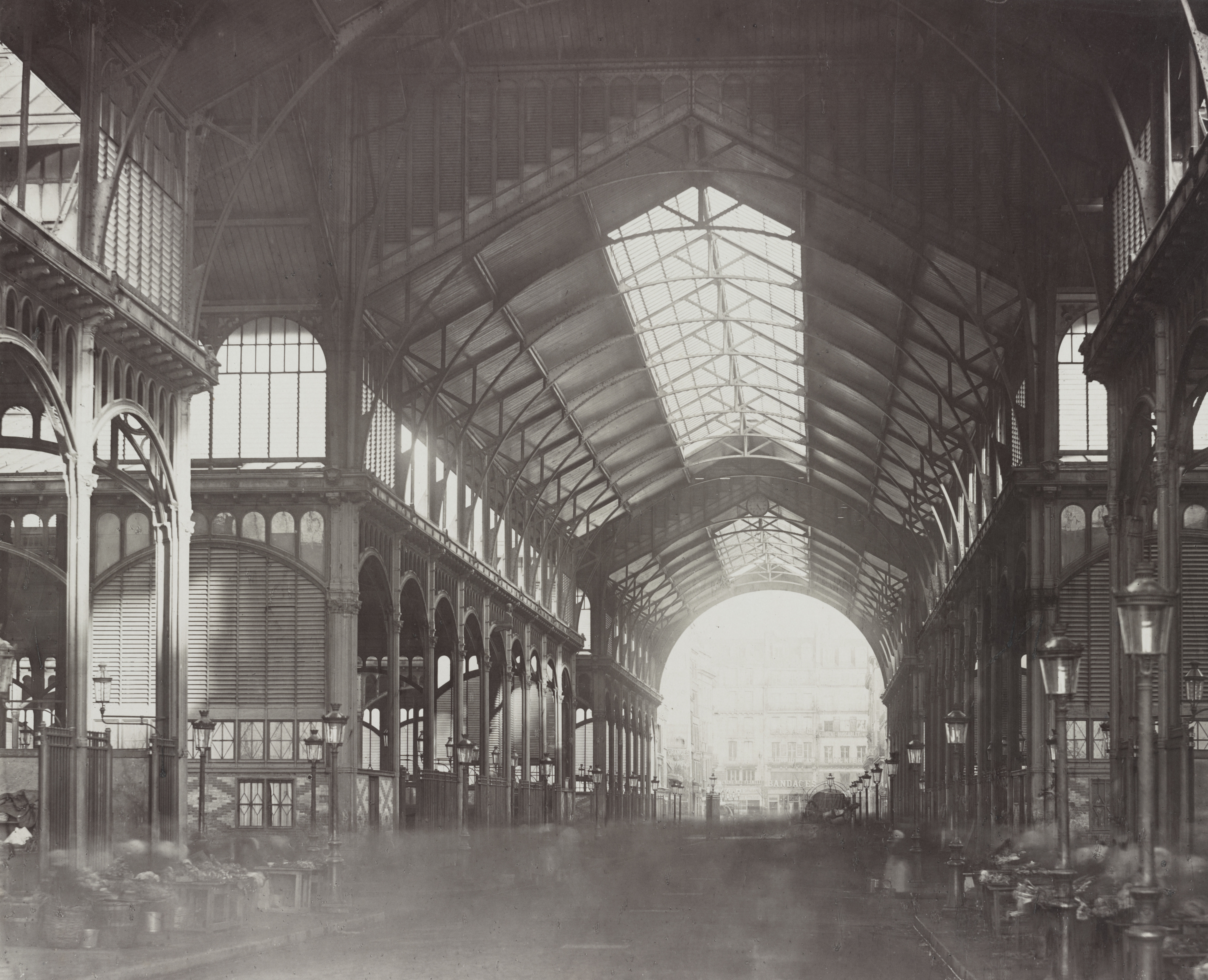
Au Marché, with Emile Zola

Nina Sparling finds Emile Zola's Les Halles in an NYC farmer's market. Part 3 in a series on food, literature, and translation

Runners zipped down the bike lane, out to beat the rising temperatures. We arrived at Skillman Avenue, just west of 43rd Street, a little after 7am. The sun was rising, the sky still lit with the glow reserved for early-risers and weekend revelers. It was opening weekend at the Greenmarket in Sunnyside, Queens. Ron parked the truck with a jolt and I almost spilled my coffee. The cider, oversized apple turnover, and apple farmers had not arrived yet. Patrick pulled up behind us, honking. He would unload crates of integrated pest management apples and tomatoes, challenging the expectations of seasonal produce. He works with Jesus and together they take home thousands, I’m sure. READ MORE…

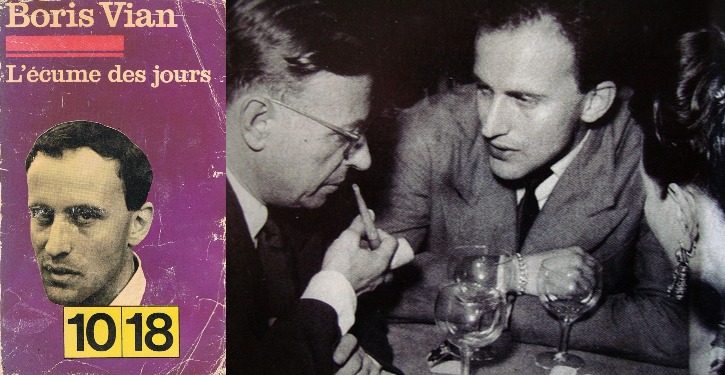
Drinking with Boris Vian

Part II in a series on food, literature, and translation—this time featuring Boris Vian and his classic "L'ecume des jours"

There is a way a room full of people drinking cocktails feels. It is distinct from the stale fog that spills from a fridge packed with six packs, and it is altogether different from the rosy-cheeked stupor induced by a case of wine. There is a severe and attentive atmosphere to the room. The alchemy of balancing sweetness, bitterness, and bite in a few ounces is mysterious and tempting. There is a self-awareness that comes with drinking an old fashioned, an edge to the precarious glass that a Manhattan arrives in. There is also enormous satisfaction in drinking a good one. The pleasure doesn’t last long—the drinks are always short and expensive. READ MORE…

Marcel Schwob’s “Mimes” – Mime XIX and Mime XX

“Then I enfolded her in my arms—but clasped nothing besides the beguiling air.”

Read all previous posts in Asymptote’s “Mimes” translation project here.

Mime XIX. The mirror, the golden pin, the poppy

First to speak, the mirror:

I was shaped in silver by a skilful craftsman. At first I lay hollow like his hand and my other face looked like the ball of a wall-eye. But then I was given curvature enough to reflect images. Finally Athene breathed her wisdom into me. I am aware of the desires of the girl who holds me and already I tell her that she is pretty. Still at night she rises and lights her bronze lamp. She directs the gilded flight of the flame towards me, and her heart craves some other face than hers. I show her own white temple and her sculpted cheeks and the swelling tips of her breasts and her eyes full of curiosity. She almost touches me with her trembling lips—but the golden burning lights up her face alone; all else remains dark within me.

READ MORE…

Colette’s Kicked Fish versus Pizza via Bushwick

A new column by Nina Sparling on food and translation

It was January in New York and exceptionally cold. I took refuge in the kitchen and picked the complicated recipes, the ones that would prove that I could, that I had the patience and humility to follow the details of the book. I pulled the Roberta’s Cookbook off the shelf. Roberta’s opened in Bushwick, Brooklyn, in the winter of 2008. The restaurant is a couple hundred feet from the Morgan Avenue stop off the L train, one of the vital organs of the neighborhood. Industrial buildings turned post-grad housing with complicated zoning laws line the streets. From outside the restaurant it looks like a bunker. The cookbook was new to the collection, a gift I had given my mother. It lay horizontal atop my parents’ mass of weathered, yellowing, greasy cookbooks.

The cookbook has high-design photographs of food and blurry low-res pictures of PBR-fueled parties side by side. The narrative between recipes is crass and anti-corporate. The restaurant and its clients have found emancipation from domesticity, freedom from the boredom of home. The food shows an attention to detail and creativity. There are nods to simplicity with a dose of the unexpected: a plate of blistered padrón peppers with savory lemon curd and fennel pollen. The plate comes to the table still smoking. The peppers appear to vibrate in the noise: loud people and loud music. Pizza arrives, seared in the eight-hundred-degree wood-fired oven by the front door. The food resonates in the space: it’s delicious, it’s quick, and it’s informal.

In those pages, eating dinner is a performance.

READ MORE…