
Posts filed under 'Liveright'

What’s New in Translation: December 2025

The latest from Japan, Peru, Germany, Austria, Czechia, South Korea, Brazil, and Hungary!

In our final round-up of the year, we present a thrilling novel capturing the margins of Germany as the nation begins to veer into fascism, a collection gathering the voices of powerful Hungarian women poets, a Brazilian novel testifying to the colonial erasure of indigenous language and being, a series of essays considering the act of reading as an oppositional force against capitalism, and more!

kappa

Kappa by Ryonosuke Akutagawa, translated from the Japanese by Geoffrey Bownas, Pushkin Press, 2025

Review by Kaelie Giffel

Even if one is unfamiliar with his work, English readers will recognize the name Ryonosuke Akutagawa from the prestigious Japanese literary prize, named after him posthumously by a friend. Kappa is a novella published in the final year of the author’s life. Pushkin Press’s reissue of Geoffrey Bownas’s 1970 translation comes on the heels of a 2023 retranslation by Lisa Hofmann-Kuroda and Allison Markin Powell, published by New Directions in 2023. Multiple, competing translations indicate the continued importance of Akutagawa’s work, which has a renewed urgency in our time.

Kappa is a philosophical meditation on whether difference can be encountered without violence and how we might meet others in the strange in-between spaces. Structured as a frame narrative, its inciting incident is the testimony of a patient in an unnamed mental institution. The patient speaks about meeting strange creatures with tummy pouches called Kappas. The Kappas have their own cultural, historical, and philosophical institutions and orientations to life, and the narrator lives among them for a while, alternately admiring, baffled, or repulsed as he learns more about their existence. They oppose birth control for silly reasons; sacrifice workers who have been laid off by literally eating them; prohibit artistic performance because they believe the general public to be hopelessly stupid; and are generally misogynist—female Kappas are cast as libidinous huntresses that oppress male Kappas. The narrator is bewildered by the similarities and differences between himself (Japanese) and the Kappanese. Hence, the mental institution.  READ MORE…
Growing, Growing, Gone: A Review of Death and the Gardener by Georgi Gospodinov

[T]he fiction of Death and the Gardener is suggesting that the only way to get through both death—and life—is by transforming experiences.

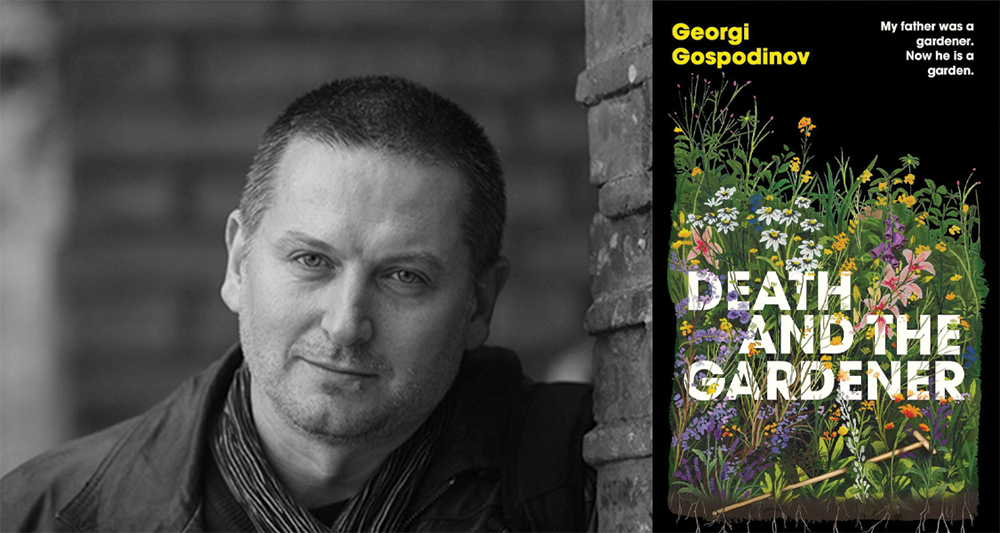
Death and the Gardener by Georgi Gospodinov, translated from the Bulgarian by Angela Rodel, Liveright, 2025

“What happens to the garden . . . when the gardener is gone?” asks the narrator of Georgi Gospodinov’s new novel, Death and the Gardner. After winning the International Booker Prize in 2023 for Time Shelter, the Bulgarian writer returns with a novel featuring a similarly famous Bulgarian writerwith the additional autobiographical detail of a father who has died from cancer, leaving his garden behind. Within this autofiction, the reader will not have to wait long for an answer to that primary, haunting question: “The garden will continue to flourish, even without its gardener, what he has planted will still grow, bear fruit, but wildness will also start to make inroads, after some time weeds and grasses will overtake everything.” The seasons will cycle the plants through life and death—and life again. In a garden, even without its gardener, there is still promise of spring; perhaps it’s this promise of revival that makes gardening an ideal outlet for grief.

I began my first garden three years ago as my dad lay dying of cancer in the living room. His friends—now my friends—had shown me how to hoe a straight line between two markers and brush in the seeds, then how to cover them with soil, going back down the lines. What they couldn’t do was prepare me for when the tilled dirt filled with weeds, for when my dad died and I inherited his house and its garden. That first summer, I ripped up endless roots, but the weeds kept on growing.

The narrator of Death and the Gardener does not work at his father’s garden after he dies, but he does use it as the central grounding image for the book that he writes. Though Death and the Gardener calls itself a novel on the cover, it reads with the intimacy of a memoir in Angela Rodel’s expert translation. Acknowledging this slippery approach to genre, the narrator admits, “This book has no obvious genre; it needs to create one for itself.” He too wonders “whether the kindling of those words cools [grief], or just inflame it all the more.” Writing, then, is taken to be like gardening after a death: a way to bargain for just a little more time with that person. This cathartic use of writing (and gardening) in grief is nothing new, but Gospodinov’s approach draws particular attention to the push and pull of the writing itself, and how this kind of detailed remembering both brings back his father and reproduces the trauma of witnessing him suffer and die. READ MORE…