
Posts filed under 'revolution'

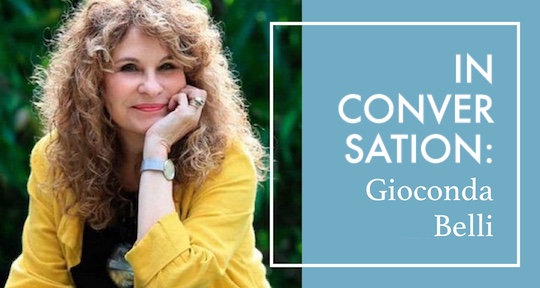
The youth carry the fire and the rejection against tyrants in their blood: An Interview with Gioconda Belli

This new rebellion has been a spontaneous movement, organized by the social memory we, as Nicaraguans, have after fighting another dictatorship.

Since the late 1950’s people in Nicaragua began actively fighting and opposing the Somoza dictatorship—Anastasio Somoza took power for the first time in 1937. In the mid-1970’s the opposition grew stronger, and in 1979, the Sandinistas came together, and launched the People’s Revolution. Guerrillas, artists, rebels, and civilians united against the somocistas. And on July 19th, 1979, victory was announced. The Sandinista Revolution brought together people like the Cervantes Prize-Winning Author, Sergio Ramírez, the former Catholic priest and poet, Ernesto Cardenal, the poet and novelist Gioconda Belli, and the current Nicaraguan president, Daniel Ortega Saavedra.  

Ortega later came to power in 1979 for a four-year period and then again in 2007. He has since become a mirror image of Somoza; he has been in office for more than ten years and has recently silenced, threatened, and killed members of the opposition.

In mid-April of this year, thousands gathered on the streets of Nicaragua to show their discontent against the government of Daniel Ortega and Rosario Murillo, in particular for issues relating to environmental rights, corruption, public health, and lack of transparency. Four months later, the protests have not slowed down and neither has the repression coming from the Policía Nacional de Nicaragua and other orteguistas. Every day, images of bravery and brutality come from Nicaragua. El presidente, who was once part of the Sandinista revolution that ousted the Somoza dictatorship that shackled the country for more than thirty years, has now become a tyrant himself and has betrayed the ideals that he, alongside writers and activists like Claribel Alegría and Sergio Ramírez, fought so diligently for in the seventies and eighties. 

Gioconda Belli, one of Central America’s most beloved and important writers, has openly criticized Daniel Ortega and his government. In early August, the poet and novelist won the Hermann Kesten Prize for her outstanding efforts in support of persecuted writers, and she joined the ranks of other prominent writers and Human Rights advocates, such as Harold Pinter and Iryna Khalip.

Belli, who was one of the artists that walked alongside the Sandinista revolution, next to people like Ernesto Cardenal and Carlos Mejía Godoy, says she’s hopeful. “There is always hope,” she says. She also admits she trusts in the Nicaraguan youth that has bravely fought for a fairer society. The revolution, she argues, in the hands of the young men and women marching in Managua, in León, in Masaya, is alive and well. “Whenever you think of tyrants, such as Daniel Ortega, you must remember that their time will eventually come,” she adds. Finally, art, music, and literature, according to Belli, are the tool Nicaragua has to plan for a better future.

More than three hundred people have been killed by the hands of the orteguismo since the protests began, on April 18th. Daniel Ortega has been in power since 2007.
READ MORE…

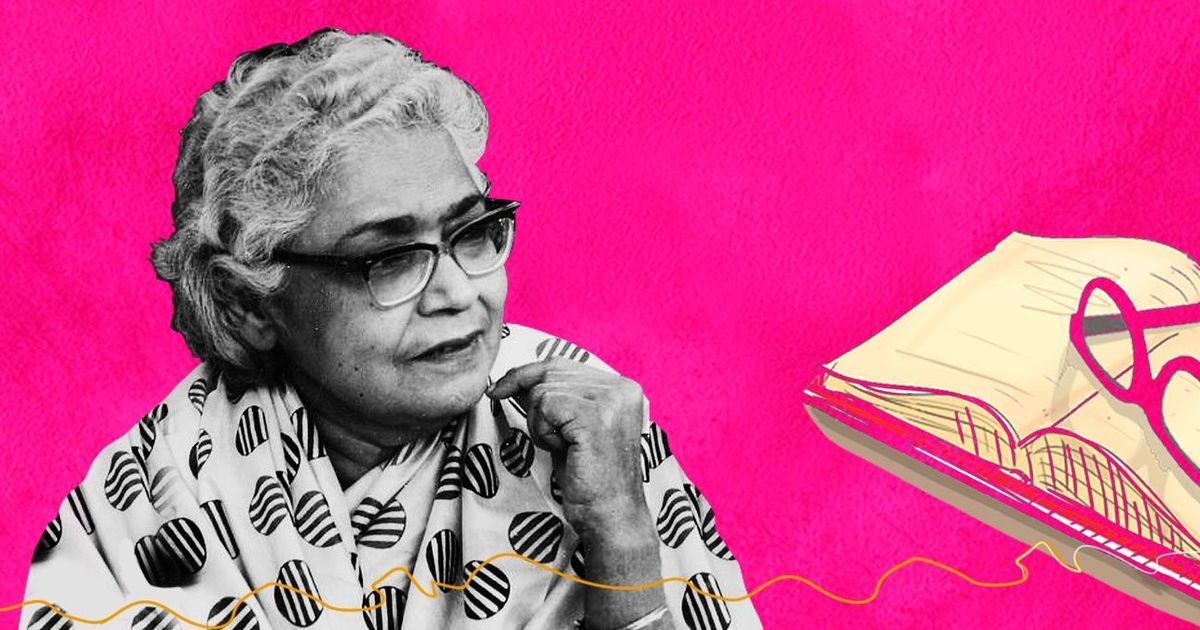
In Review: Ismat Chughtai’s Quit India

This varied and beautifully calibrated volume succeeds in sustaining the legacy of one of India’s most radical twentieth-century authors.

Twenty-six years after her death, Ismat Chughtai (1915-1991) is one of Urdu’s most famous short story writers; among her immediate contemporaries, only Saadat Hasan Manto’s reputation matches hers, and we can confidently say that she has no successor.

The Quilt, the first of her works to be presented to international audiences in the year of her death, was a collection of her short fiction. The title story, which had a lesbian theme, created a scandal and attracted the ire of colonial censors when it was first published in the early forties. Other stories in the volume proved the author to be a storyteller of the finest calibre. In 1995, more than half a century after its original debut, a translation of her magnificent feminist bildungsroman, The Crooked Line (1942), where the heroine’s life paralleled her own, pre-empted and fictionalised many of the ideas from Simone de Beauvoir’s The Second Sex. Although it is still in print in the US with the pioneering Feminist Press, the UK edition has been discontinued. Several more translations of her stories, essays, memoirs, and long and short fiction, accompanied by a slew of biographical and critical studies, have enhanced her reputation year by year and made her one of the most translated writers across the subcontinent. However, they have only been published in India and Pakistan and have not been picked up by Anglo-American publishers.

Chughtai’s fiction ranges from stories for children and reminiscences of her friends and family, to the harrowing low life in Bombay’s slums and drug-fuelled high life in the city’s gaudy film world, to a novel about Islam’s first martyrs—a choice that surprises admirers of this iconic socialist-feminist icon. But even today some critics claim that The Quilt overshadows her other fictions and use the early stories to measure her later work. Others, including myself, would say this is grossly untrue: Ismat, though she preferred to write about what she knew best, was versatile within her chosen range of subversive kitchen sink drama and outspoken social satire, as we can see from the several renditions into English of all her major works by Tahira Naqvi, her most frequent translator, which are published in Delhi by the pioneering Women Unlimited (Penguin India also publishes a handful of translations by Mohammad Asaduddin).

READ MORE…

Pop Around the World: the Russian Invasion of 1962

Songs of revolution and regret

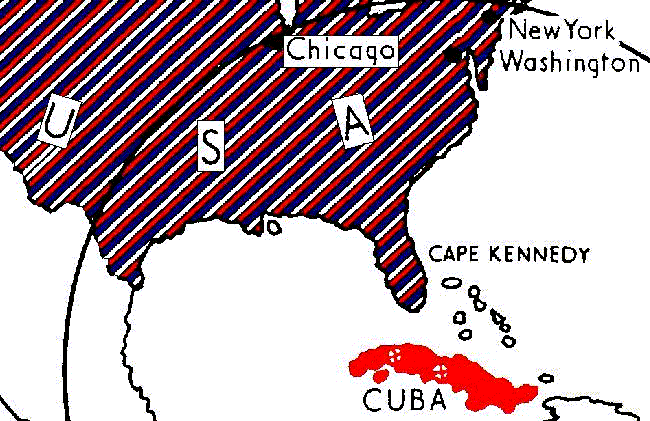
Though those Russian missiles never made it over from Cuba to the US in 1962, several Russian songs did hit their targets, flourishing in foreign ears even in the permafrostiest months of the Cold War.

Perhaps the best-known Russian tune out west is “Those Were The Days,” a song based on “Дорогой длинною,” pioneered by Ukrainian-born cabaret singer Alexander Vertinsky (who recorded the version embedded above) and written by Russian composer Boris Fomin to lyrics by Konstantin Podrevskii. Read in translation, the song sings of grief and of regret for past joys gone too soon:

READ MORE…