

Posts filed under 'mystery'

Cracks in the Ordinary: Yasmina Reza’s Babylon in Review

How are ordinary people pushed to inconceivable acts of violence and stupidity?

Babylon by Yasmina Reza, translated from the French by Linda Asher, Seven Stories Press, 2018

The “soirée entre amis” (literally an evening among friends) is one the most quintessential of French clichés. Quintessential not only for its pervasiveness in art centred in Paris, but also because it is ridiculously pervasive in real life, too. A staple, even, of life in France. And, if like Yasmina Reza, you believe that “you can’t understand who people are outside [their] landscape,” what better setting for the exploration of the pressures and absurdities of daily existence than precisely a dinner party between friends, a space that demands constant performance due to its many spoken and unspoken social rules?

In a fictional suburb of Paris, Elisabeth and her husband, Pierre, are throwing a party for their friends and family. Invited, at the very last minute, are their neighbours the Manoscrivis, Jean Lino, and Lydie. The party goes well, but tragedy strikes shortly after: Elisabeth and Pierre are woken in the middle of the night by Jean Lino, who has killed his wife after a banal domestic dispute. Even more inexplicable is what follows as Elisabeth, a sensible and rather ordinary woman, decides to help Jean Lino get away with the crime, despite sharing nothing more than a tentative friendship.
READ MORE…

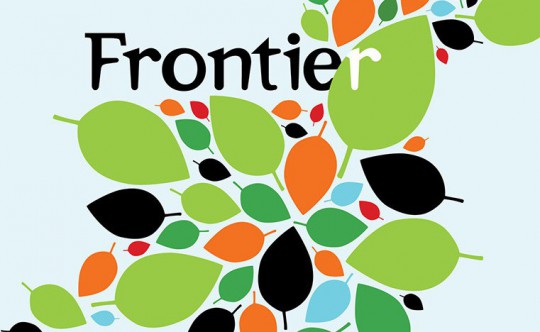
In Review: Can Xue’s Frontier

[Grace] thought one of the frontier’s major characteristics was that the scenery outside exerted tremendous pressure on people.

Luijin lives in Pebble Town, a place that lies between two peripheries. People often travel there from the interior, as her parents once did, moving farther and farther north until they arrive at the border of the frontier. The Snow Mountain, eternally white, watches over the townspeople in the slight distance. ‘Surreal’ and ‘mystical’ can perhaps describe the lives of those who live and work in Pebble Town, with its disappearing, floating tropical gardens, the grove of Poplar trees, roaming snow leopards and the impalpable Design Institute.

The narrative unfolds through a dozen or so perspectives, each a unique unveiling of the subtle yet marvelous flow of life that plays out in the mind of its author, Can Xue. And here is where our plot summary ends, at least in the typical sense. The narrative arc is perhaps the least helpful point of reference for a reader of Can Xue, and it would do no service here, to either reader or subject, to continue. That is not to say the story lacks structure (more on that later), but that to focus on it here would be to disregard what makes her work so unique. It is what lies behind the walls of narrative and concrete plot points that interests Can Xue: the intangible is valued over the material.

As with much of Can Xue’s translated work, people and things, time and space, all tend to envelope each other like a mist. Perhaps most notable in her short stories, her ability to find careful footing in the space between the real and the surreal is unique and achieves a balance that is both remarkable and often unsettling. In Frontier (Open Letter, 2017), her newest novel to appear in English, this balance is penetrating and comes through most forcefully in the town itself. In a letter to her parents, who have left Pebble Town to return to the city, one of the primary characters, Luijin, writes, “she felt that Pebble Town was a slumbering city. Every day, some people and things were revived in the wind. They came to life suddenly and unexpectedly.” For the reader, Pebble Town both grounds and disorientates us at the same time, without interruption. It serves as neither a character nor a place, but magnifies what is around it; enhances and completes it. Can Xue leaves no landmarks or way points to light the path when navigating this curious place, except to remind us “on snowy days, one’s field of vision widens.”

READ MORE…

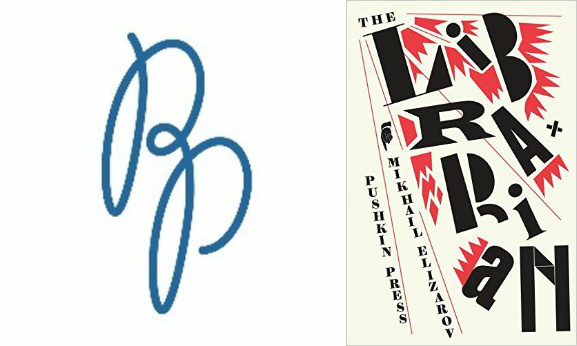
In Review: “The Librarian” by Mikhail Elizarov

By turns absurdist, satirical, and downright funny: "The Librarian" takes a page from every book

 For the most part, The Librarian is a novel about a young man in quarter-life crisis named Alexei, who is thrust into the role of the fearless leader of a secret society that revolves around a collection of “magical” books.

Borrowing from many science fiction or fantasy novels, Mikhail Elizarov’s story, translated by Andrew Bromfield, begins with some world-building. In the tone of a dry, literary historian, the narrator relates the life of a fictional Soviet writer named Gromov. To the uninitiated reader, Gromov’s books are merely badly-penned propagandist fiction, in which “Good triumphed with excruciating regularity.” Under the right conditions, however, they cause readers to become enraptured, band together, and carry out alarming acts of violence. READ MORE…