
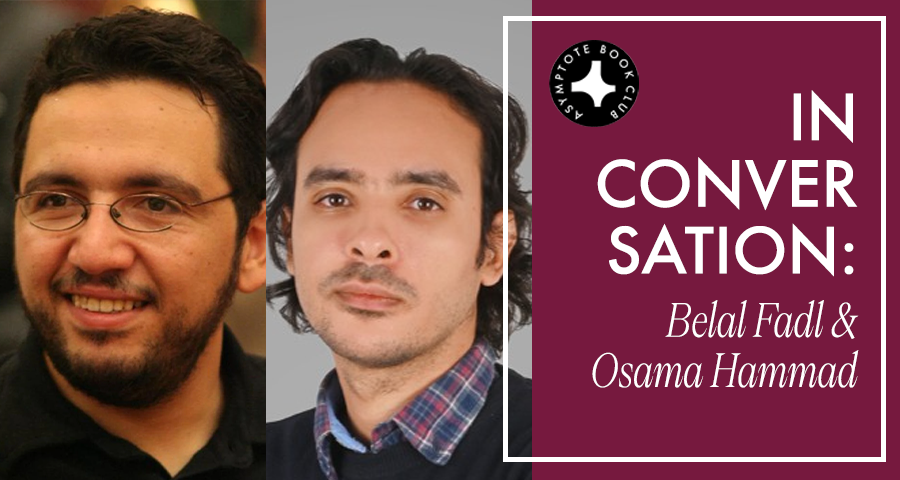
In The Completely True Tales of Um Mimi and Sharawi the Adulterer, Egyptian screenwriter and author Belal Fadl introduces the underground of Cairo with fierce humor and unbridled intensity, drawing on the vividity of vulgarity and the frenzy of the marginalized to capture the explosive nature of the capital. The book was banned in Egypt, though achieved notoriety beyond the nation for both its style and content, lauded for its refusal to censor or sanitize. In this interview, Fadl and translator Osama Hammad speak to us about authorial honesty, the book’s colorful reputation, and about what it means to face reality in fiction.
The Asymptote Book Club aspires to bring the best in translated fiction every month to readers around the world. You can sign up to receive next month’s selection on our website for as little as USD20 per book; once you’re a member, join our Facebook group for exclusive book club discussions and receive invitations to our members-only Zoom interviews with the author or the translator of each title.
Ibrahim Fawzy (IF): Belal, how did The Completely True Tales of Um Mimi and Sharawi the Adulterer first come into being?
Belal Fadl (BF): It grew out of my personal experience as a student at Cairo University in the 1990s—though I wasn’t thinking of it as a novel. Like many other writers, I believed my first novel had to be epic, something like Dostoevsky’s Crime and Punishment. You start with imitating the works that impress you, and only later do you discover your own voice. García Márquez’s greatest tip is to write what you know.
When I started writing short stories during my journalism work in 1995–96, I tried—unsuccessfully—to write a story about a barber called Sharawi (from the Arabic word for hair). I don’t know why I chose him, but maybe because a barber can be such a distinctive character. I failed, but I felt that the material belonged to something longer and deeper. READ MORE…