
What does it mean to write truth into literature? In recent decades, books that are largely autobiographical but also explicitly include fictional elements have become a very popular genre in Scandinavia. It’s a conversation that crosses borders and has many names, from “reality literature” in Norway and Sweden (or sometimes “witness literature”) to “autofiction” in Denmark. More and more authors from Scandinavian countries are working in this genre, taking inspiration from authors like Tove Ditlevsen and her The Copenhagen Trilogy and penning highly lauded literary work based on their lived experiences. Recent examples include Andrev Walden’s Bloody Awful in Different Ways, Vigdis Hjorth’s Is Mother Dead and Karl Ove Knausgård’s My Struggle. Though these titles differ in many ways, they also share much in common. If “reality literature” has one unifying claim, it is that writing should bring us closer to truth. But truth in literature is never simple and in autofiction two approaches matter: one based on fact, and one based on feeling. One insists that truth is found in lived experience backed up by historical records and documents; the other suggests that creative reconstructions can produce a truth of their own.
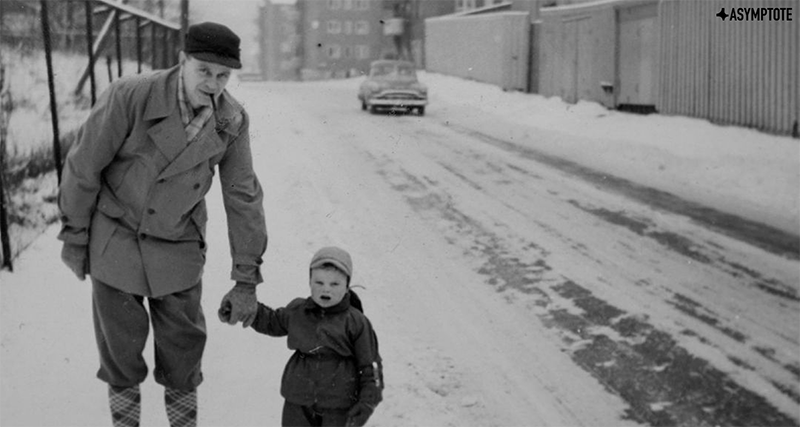
Norwegian poet, playwright, and novelist Niels Fredrik Dahl—sadly not yet translated into English—enters this conversation with a diptych of sorts, consisting of Mor om natten (2017) and Fars rygg (2023), the latter of which was awarded the Nordic Council’s Literature Prize in 2024. In these two autofictional works, he returns to the silences, absences, and fractures in his family history—first, in a portrait of a mother who battles depression, and later in a reconstruction of his father’s childhood before, during, and after World War II. Of course, as with most good family portraits, these books are also a portrait of the author himself, as a child growing up with his mother’s sadness and a father he never quite knew, and as an adult, dealing with a profound sense of loneliness. By shifting between autofiction’s two modes across his two works, Dahl demonstrates that truth in literature is never a stable concept, but always a matter of perspective and curation.