

Before we turn the page on the tumultuous year that was 2025, let’s look back on the pieces that readers couldn’t stop reading, sharing, and talking about—i.e., our most popular articles across four massive quarterly issues. From insightful essays to mind-bending fictions, this curated-by-you selection features work from all around the world that not only captured your attention but also seized your imagination. Wonder if your own favorite made the list? Every day from now till Dec 31st, we’ll be counting down to our most-read article of the year, so come back here each day to find out!
First up at #10 is Johanna Drucker’s “Attention as Predation: Fields of Influence and Omnivorous Forces of Alignment”—a fitting grand opening to our Fall 2025 Special Feature themed on attention, as urgent to the moment as it is riveting a read.
Distinguished Professor Emerita in the Department of Information Studies at UCLA, Drucker poses a radical re-imagining of the nature of attention itself. Rather than a self-willed, intentional act, Drucker describes the exchange of attention between subject and object as a bottomless energy field where we consume as we are consumed: an ouroboric cycle where we feed off a topic as it feeds off our attention. The result is a serious argument for us all living in dystopia.
Drucker’s theory is an enlightening framework for the digital age, importantly, one that credits attention as the primary instrument of authoritarianism—Exhibit A: Donald Trump’s command of the media landscape.
Here’s a brief explanation in Drucker’s own words:
“Most recently, the Trump phenomenon demonstrates the way the accumulation of attention
becomes a social force, a type of predation on the body politic in which influence devours the
source on which it feeds . . . they become consumed in the process of absorption, returning the investment of attention to the system which, in turn increases in energy and demands more attention to sustain itself. Huge as they are, enormous as transactional beings, focal points in a massive network of attention exchange, the central figures are themselves colonized by the process. In a vulnerable individual, this can be fatal, but in a socio-pathological one the focal object inflates, feeding from an increasingly insatiable need.
. . .
Authoritarianism works through alignment. Alignment is driven by affect and instrumentalized through attention. Attention consumes its participants—subjects and objects alike—and in its current ravenous high scale dynamic, becomes predatory. The monopoly will only be broken by distributing attention across multiple attractors the terms and values of which remain to be determined but must operate through an appeal to affect.”
Hence, attention as predation seems perfectly rational. It would certainly validate any victims of media induced burn-out. The modern attention field is amplified by media with a global reach; it’s no leap that our biological capacity to handle information is being abused. That attention may be “a vector driven by a devouring appetite for mind control . . .of which we are only somewhat aware” is horrifying at best. With a tyrant behind the wheel? Ill tidings to our autonomy.
While the longer I ponder this explanation, the more the puzzle pieces fit, Drucker’s theory is yet untested. The research gap for understanding this re-conception: communication studies linked to neuroscience, quantum physics, and electromagnetic energy studies (yes, this is my formal call-to-action).
Drucker goes on to amp the radical factor: mapping the attention-sphere. If attention is a social force, how does it flow? Spread? Exchange? For news items like presidential debates, celebrity scandals, sports matches; can we track the spread from source to expansion?
If this theory bears true, here’s the next hollow thought: What next? What would re-distributing the monopoly on our attention look like? When news can go global, it’s hard to imagine stepping back in a world that’s shifted online.
This piece defines the saying “food for thought.” If you’re as fascinated as I am; I urge you to pick it up. And if this theory becomes fact? You heard it here first.
We’ll be releasing these day-by-day through the end of the year, so tune in tomorrow for number nine!
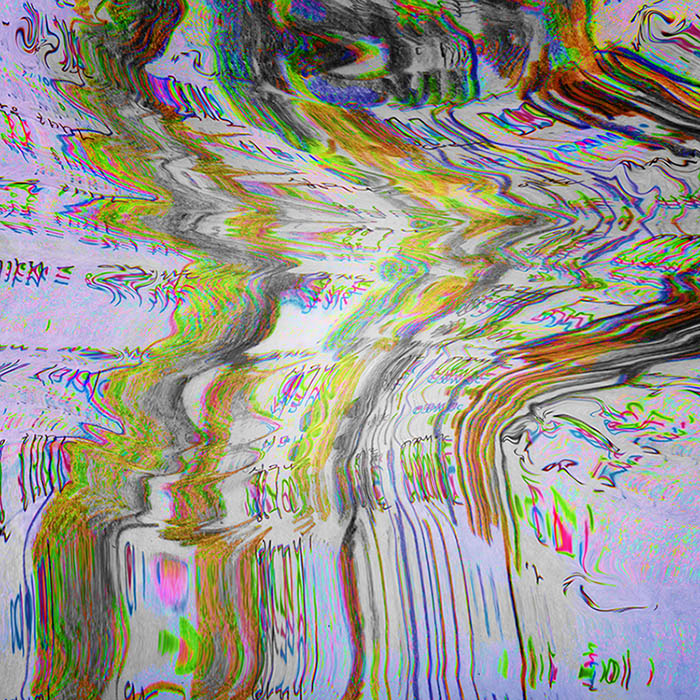
Artwork by Jayoon Choi
Says past contributor Eliot Weinberger: “Literature always manages to slip through the real and symbolic walls of oppressive governments. Asymptote may be a small chisel and drill, but these things force cracks that, time and time again, have eventually brought the walls down.” If you feel the same way about the work we do and want to give us wings in the New Year, consider chipping in a one-time donation of any amount you can afford or signing up a sustaining member from just $5 a month!
REVISIT OUR TENTH MOST WIDELY READ ARTICLE OF THE YEAR
*****
Discover more on the Asymptote blog:
- What’s New in Translation: December 2025
- What’s New in Translation: November 2025
- What’s New in Translation: October 2025