
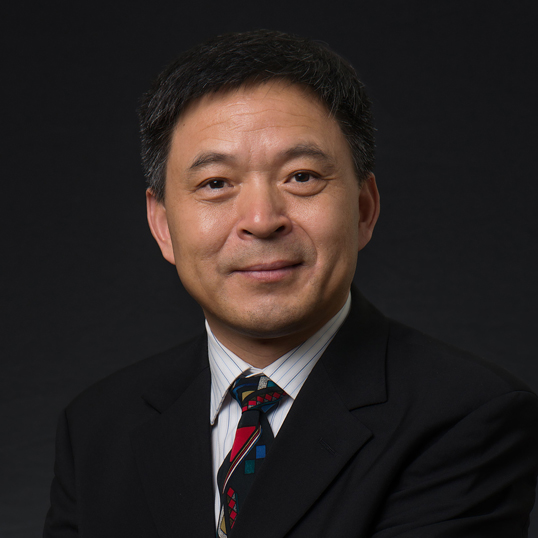
—A. J. Carruthers
In your long and distinguished career as a professor and literary scholar your work has covered different areas, among them Chinese, Australian, and North American literatures, literary theory and criticism, literary intersections with philosophy and art, geographic and diasporic literary studies, and so forth. What has stayed the same in your career, and what has changed?
Thank you for your question. Yes, I have developed a great interest in reading extensively in various fields and have become something like a jack-of-all-trades, which helps me to build up good habits of taking things comparatively and critically. I guess it has something to do with my background. I was born in the countryside and my parents were illiterate, and they could offer me nothing in my studies but honest ways of looking at things around me. The books were hard to come by in my childhood and I was eager to grab any books that I could find. As the idiom says, beggars can’t be choosers, but it was almost futile in the countryside, especially during the cultural revolution when books were burned or confiscated, so my reading was quite limited. When I was enrolled in Nanjing University, I became an avid reader and learner. My major was English, and I also learned French, Japanese, and German. The learning of foreign languages opened a new window to me; regrettably, the study of these languages stopped halfway because of the heavy workload from my courses. Nanjing University has a very good English program and the library there offers books I had yearned for in my dreams, and I roamed the seas of books. Later my MA mentor, a Yale PhD from 1934, enlightened me when he suggested to me the importance of extensive reading and a range of knowledge before developing critical writing abilities. I remember my BA thesis is on the life philosophy of Thomas Hardy’s epic, The Dynasts, and I borrowed a copy with Japanese annotations from Nanjing Library as it was not available at the university. I read Nietzsche and Schopenhauer to go with my understanding of the epic, with limited success. My MA thesis is on T. S. Eliot, a writer who strides between America and England, who for the first time made me realize the importance of the national affiliations of a writer and the paradoxes involved. In my reading of him, I found similarities with Chinese Daoist ideas, and that finding encouraged my comparative approaches to literary writings. My PhD dissertation takes a comparative approach to diasporic writers in America and Australia, with the help of my supervisor, who is a guru on Australian literature. In my writing, I realize that literary theory itself can be regarded as a form of world literature as it transcends national boundaries and engages in comparative and critical studies. When I began my work in Shanghai in the late 1980s, I had a chance to translate the Canadian economist Richard G. Lipsey’s textbook Economics into Chinese at the invitation of Shanghai Joint Publishing Co., Ltd., but the manuscript was not published because of the June Fourth Incident. The translation of the book, however, introduced me to the fundamentals of economics. Later, I also had a chance to moonlight for an American pharmaceutical company for four years and the Legal Affairs department of Shanghai municipal government for four years, which took me to different fields not in theory, but in practice, and the experience of which broadens my knowledge of social reality. The accelerating globalization of markets brought in an unprecedented economic development, but also great problems, both culturally and economically. The globalization and deglobalization debate echoes in many ways the paradoxical debate of the Daoist ideas of One and Many, Yinyang, and the five agent theories of mutual inclusion and interdependence, which are still needed in this age of global economic inequality and global climate change. We should realize that we have moved from inter- to trans-complexities, in which we have to have more interaction with each other to deal with world problems such as climate change and the discrepancies between the rich and the poor. You ask me about what stays the same, and what changes, and this reminds me of the dialectics of the I Ching in which constancy is change, and change is constancy. Well, I am still as curious as ever in pursuing new knowledge, but my focus shifts gradually from cultural translation to global climate concerns, both of which entails collective human effort to cope with an unpredictable future.
I have a copy of an old book of yours, Being and Becoming: On Cultural Identity of Diasporic Chinese Writers in America and Australia. It’s about diasporic Chinese literature in the Anglophone world. It’s about the contradictions of time and space, history and location, nations and classes, etc. The last paragraph of the book is talking about Edward Said’s Culture and Imperialism, a book that I think is still relevant and that I still love, despite that I go much further now with regard to what to do about imperialism and how to act against it. But I want to focus on your last sentence, which goes like this: “But so long as the world develops in unequal ways, with cultural and economic hegemony still prevailing, it is perhaps very difficult for diasporic writers to go out of the shadow of Hegel’s master/slave allegory, which will still be the source of numerous cultural and political opportunities and anxieties” (289). This is perennially interesting to me.
Do you think that the uneven development of the world today still creates these contradictions for diasporic writers? Do you think that unequal development has a direct impact on the formation of cultures in the imperial core, and even outside of it? What is “cultural hegemony” today and where does it come from?
Thank you for your interest in my old book. Reading it retrospectively, it is immature in many ways, but the comparative approach and Chinese views are there. I still hold the view that economic inequality and the ideology of the state apparatus are some of the main reasons that influence the literary productions of diasporic writers, as they move from the place they are familiar with to an unfamiliar one, with different cultures and different markets.
The 2008 financial crisis increased the inequalities of the world, with poverty persisting around the world, even in the richest countries. Some critics began to doubt the so-called free economic system of the capitalist world, and the conflicts and confrontation between the rich and the poor never stop. The growing gap between the rich and the poor is fully manifested in the discussion and debate in the mainstream media and on social media platforms, targeting those arrogant rich groups whose view resonate with Gant’s comments: “Never mind about algebra, here. That’s for poor folks. There’s no need for algebra where two and two make five.” Inequality and uneven development bear their marks in the global economy, which makes visible the challenge never seen before in this brave new world. The confrontation between the Global South and the rich countries will inevitably be seen in new social and economic narratives. The contradiction and conflicts of immigration and anti-immigration is the result of the increasing unequal economic and cultural developments, and in this sense, cultural hegemony still rings true.
Cultural hegemony was a most original social and philosophic concept put forward by the Italian Marxist writer Antonio Gramsci, mainly in his Selections from the Prison Notebooks, a book he wrote when he was put in prison by Mussolini’s government and that was subject to inspection by the prison authorities. The book is full of equivocations and confusions as the author tries to dodge inspection, and so it has been interpreted differently by different thinkers in different ages. Basically, cultural hegemony refers to the leadership and domination of a social institution over other groups in the cultural, ethical, and ideological dimensions. For Marx, the economic base is the foundation of the superstructure, and in the age of globalization, investment, and exploitation go faster in more intangible ways, which increases rather than reduces global economic inequality. The ruling group takes advantage of the economic resources and what Althusser termed “ideological state apparatuses” to consolidate their control. The modern manifestation of the master/slave allegory can be seen perhaps most paradoxically in the Anthropos and Humanities dichotomy in which Anthropos is subject to inspections by the Humanities as though it were under a microscope. The Global South is subject to the ideologies of the developed countries, and the diasporic writers or writings from the Global South cannot be immune from these ideologies as their writing is subject to the market and to the global publishing industry.
In today’s globalized context, the American ambition of global cultural hegemony is best seen in their global expansions, such as the proliferation of their media conglomerates, their economic threats, and their disregard for the national cultures of other countries. In this world of unequal economic developments, the authorities represented in the rich countries should be commensurate with their responsibility and the relations should be reciprocal and the recognition symmetric, but it is a sad fact that through the ideological manipulation of certain cultural apparatuses such as schools, media, and religious institutions, the worldview of the ruling class becomes gradually internalized.
If I may, I think that while there are many aspects of Australian literature that are far more advanced than ever before, especially migrant, First Nations, and diasporic writing, I find that there is still a lack of worldliness among us. Our referencs are frequently still the United States and the UK. You mention cultural hegemony and the phrase “national culture,” which to me sounds Fanonist and Leninist. I still like it. And what you say about symmetrical relationships reminds me of the term “multipolarity,” which is a good way to describe the emerging Global South and the end of unipolar US hegemony—and theories of unequal exchange never departed from Marx and Engels, who provided the first analyses of world markets, industrial and finance capitalism, and its relationship to imperialism.
But we have a real problem here in Australia because we still look to the West for authority and legitimacy. I speak for myself in the past as well. But I don’t think it’s entirely our fault. This could change if we had more opportunities to really engage with world literature in translation and in the original languages, to go outside more, to see the world, to become part of the world and our region. We need global infrastructure for it.
What do you think about the state of “world literature” today? Do we need a World Council for Literature, a new world body? Perhaps through the UN? Do we need more formal mechanisms to bring writers and critics together around the world? What do you think about the relation between literature and peace? Is cultural exchange necessary in a time of war and conflict?
Your question reminds me of the paradoxical saying of Confucius: a gentleman seeks sameness, but at the same time allows difference. We are now living in a world of paradoxes and differences in which we are continuing the effort of striving for sameness, but at the same time we are entitled to fully respect the differences, therefore continuing the story of the Tower of Babel, though some people may think the world we are living in is a far cry from those halcyon days in our imagination.
The idea of world literature came with the great German poet Johann Wolfgang von Goethe who, during a dialogue with his young disciple Eckermann in 1827, recounted his excitement of and infatuation with reading literatures from other countries, especially China. Goethe’s reading of Chinese novels broadens his vision of literatures from other nations and makes him realize the value of literary works from other cultures in helping human beings to understand each other and foster a better intercultural understanding. As he said to Eckermann, “National literature is now rather an unmeaning term; the epoch of world literature is at hand, and everyone must strive to hasten its approach.” When Eckermann asked him about the strangeness of the Chinese novel, Goethe answered, “Not so much as you might think . . . the Chinese think, act, and feel almost exactly like us; and we soon find that we are perfectly like them, except that all they do is more clear, pure, and decorous, than with us.”
Goethe’s reading of Chinese literary works established a foundation for the commensurability of cultures and became a catalyst for his concept of “World Literature” (Weltliteratur), a concept that expresses his vision of seeing beyond national boundaries and that ushers in an age of transnational exchange in which human experiences expressed in different literary traditions are shared and understood through translations and communications, and thus a narrow mind and biases can gradually be eliminated. This dialogue tells us that the idea of world literature was very closely connected with the practice of translation from the beginning. The question remains, however, who translates? For whom? For what purpose? Goethe cherishes what he regards as shared by human beings, but his basic ideology is essentially Western: “While we thus value what is foreign, we must not bind ourselves to some particular thing, and regard it as a model. We must not give this value to the Chinese, or the Serbian, or Calderon, or the Nibelungen; but, if we really want a pattern, we must always return to the ancient Greeks, in whose works the beauty of mankind is constantly represented.” For Goethe, the Greeks or the Greekness is the manifestation of universality, the original One, against which all cultures may be measured, whether they are German, French, or Italian. This Eurocentric universality or concept of the world is continued by the Hungarian scholar Hugo von Meltzl, a follower of Goethe and a supporter of Weltliteratur, who modelled his Weltliteratur as a Dekaglottismus, consisting of what he regards as civilized languages: German, English, Spanish, Dutch, Icelandic, Italian, Portuguese, Swedish, and French, as well as Latin, while excluding all the Eastern and African languages. This Eurocentric practice has dominated Western comparative literature studies for a long time until recent years when the third and fourth worlds were awakened and there was a gradual shift from Euro-American literature to literatures from other parts of the world. The call for a new understanding of the world and the rise of “world literature” offers an opportunity for third or fourth worlds or minor nations and cultures to break through the language barriers through translation, though some scholars still hold the view of incommensurability of cultures and untranslatability of literatures, which becomes an obstacle of, rather than a catalyst to, the study of world literature.
Twenty years after Goethe, Karl Marx and Friedrich Engels supported Goethe’s impressionistic description with a materialist theory that the emergence of world literature is the inevitable product of world economy: “The bourgeoisie has through its exploitation of the world market given a cosmopolitan character to production and consumption in every country . . . The intellectual creations of individual nations become common property. National one-sidedness and narrow-mindedness become more and more impossible, and from the numerous national and local literatures, there arises a world literature.” For Marx and Engels, the bourgeoisie mode of production, driven by the pursuit of markets, compels all nations towards homogenization and cosmopolitanism in production and consumption, and produces a world market or global market, which, thrust by the ruthless capitalist expansion into the world, produces a global dissemination of their products and ideologies from which the idea of world literature is inseparably intertwined. This kind of expansion and exploitation produces unequal economic development and power relations, as well as more exploitation of less developed nations. The capitalist commodity-driven mechanism of world literature tends to serve as a catalyst for the homogenization of cultures in the age of market globalization, as linguistically English has become a global language, a global lingua franca, something hard to imagine even for English linguist David Crystal. The global English in world literary studies lead critics and writers into a paradoxical situation of “forgetting English” or using English against English. For example, the Booker Prize, established by the Booker Group, which exploited businesses in the colonized nations, offers prizes first to English language literatures in formerly colonized commonwealth nations and then extends to world literatures in English and produces through market orientation an increasing impact in world literature studies. As Huggan comments, “Is Booker’s promotional push the sign of a new transnational era in which writers increasingly demonstrate the global proportions of the English language; or is it rather the strategy of a multinational corporate enterprise that seeks alternative markets in order to expand its own commercial horizons?”
The present age surely witnesses a flowering of world literary studies so far as the literary market is concerned. The modern industry has established a world market, which is endowed with a cosmopolitan character, as Marx and Engels predicted. The publication of the series Literatures as World Literature by Bloomsbury Publishing and similar titles by other publishers in English shows the paradoxical development of one (world literature in English) and many (literatures from different nations and fields in English), and this is a testament of translation, production, and circulation in modern world literature studies, as Damrosch suggests.
You mention a World Council for Literatures—I think think that is a very good idea for convening writers and critics from around the world to engage in regular exchanges and dialogues. Bilateral exchanges on a smaller scale, in my view, can also serve as a good mechanism. The inaugural China Australia Literary Forum held in Sydney, Australia in 2011—co-hosted by the Chinese Writers Association, The J. M. Coetzee Centre for Creative Practice of the University of Adelaide, the Writing and Society Research Centre of Western Sydney University, and the Australian Embassy in Beijing—became a great success, and was followed by a second forum in Beijing in April 2013, a third in Sydney in August 2015, and a fourth in Guangzhou in May 2017. These forums invited writers and critics from both countries—like J. M. Coetzee, Alexis Wright, Brian Castro, Nicholas Jose, Ivor Indyk, Gail Jones, David Walker, and Anthony Uhlmann from Australia; and Mo Yan, Tie Ning, Li Yao, Liu Zhenyun, Xu Xiaobin, Ye Xin, and Li Er from China—to exchange their views on writing and the prospects of translation and publishing between the two countries. The translation of Australian literary works into Chinese, for example, helps Chinese readers to know more about Australian writers and their literary cultures.
Talking of cultural exchange in a time of war and peace, yes, a certain mechanism is needed to encourage people to build more communications between writers, translators, and critics from different cultures to share their ideas and thoughts so that intercultural understanding will be increased. I appreciate the West–Eastern Divan Orchestra, set up jointly by Edward W. Said and Daniel Barenboim and named after West-östlicher Divan, an anthology of poems written by Goethe, a great initiator and proponent of world literature and world cultures. The orchestra consists of musicians from different and even antagonistic cultural backgrounds, and makes people see rays of hope and desire peace in antagonistic and hostile environments.
The regional wars and conflicts and the fast economic developments in the world have exacerbated the global climate and produced tragic consequences, which are hard to restore. In recent years, study of the Anthropocene in the world crisis has led people to look back at the Chinese idea of shanshui (literally “mountains and waters”), which has been the dominant subject of Chinese painting since the tenth century. (The handscroll painting of Streams and Mountains Without End from the Northern Song Dynasty in China, for example, inspired Gary Snyder’s Mountains and Rivers Without End.) By definition, a landscape is the external world—the mountains and waterways that contrast with the constructed world of human structures and activities. The Chinese shanshui art is a manifestation of the inherent awe and respect of human beings towards nature, which shows a striking contrast to human-centered paintings from Europe. The shanshui art would serve as a good example of harmony and peace in the world, and if we can be taught more of this kind of philosophy, we might reduce more potential conflicts and wars.
To return to your work. One of your more recent books is called Translation in Diasporic Literatures. To me this is an extraordinary work, of an older vein, a type of criticism we don’t have as much of anymore, perhaps a type of criticism that was made possible by the likes of Said and the openings of world literature. It’s culturally capacious, yet you also bring in semiotics, and I particularly like the way you use semiotics.
What can semiotics do for reading and do you think semiotics is a necessary part of the critic’s arsenal?
I am more of an amateur in semiotic studies, but I do have a great interest in signs and symbols and their signifying systems. I remember twenty years ago when I went to Lijiang, Yunnan Province in southwest China, I happened to come across the pictorial sign language of Dongba, those symbols used by the Naxi people of Lijiang in Yunnan as a unique pictographic writing system, and I was deeply impressed and joked that if I were 20 years younger, I might stay there to decipher and study those Dongba Glyphs and the Semantic Indexes involved. It undoubtedly arouses my curiosity as to the cognitive, psychological, and semantic representation systems of signs and pictorials which seem so different from Western languages. What kind of meanings do these signs want to convey? And why is human communication so different in a different culture? This reminds me of a story told by Chinese linguist Yuen Ren Chao regarding the cognition of water expressed differently by different people in different cultures: “The story is told of an English woman who always wondered why the French call water de I’eau, the Italians call it del’acqua, and the Germans call it das Wasser. “Only we English people,” she said, “call it properly ‘water.’ We not only call it ‘water,’ but it is water!” This spirit of “it is water” shows how closely words and things are identified by the speakers, even though the relation is actually arbitrary.” This story tells us that language is arbitrary and there is no logical link between sound and meaning. If language was not arbitrary, all languages would use similar sounds for the same concepts. Take the above story as an example: several elderly women argued with each other simply because their respective sign systems differed. This illustrates that different languages use different sign systems. Language is arbitrary because words are symbols—their meanings depend on cultural agreement in a particular context, not on any natural bond between sound and meaning. The specific words and sentences we use are called “parole,” according to Ferdinand de Saussure, while the entire sign system is called “langue.” Concrete parole varies greatly from person to person and moment to moment, yet it can express thoughts and emotions in a way that others who share the same language can comprehend precisely because they all adhere to the same norms—or rather, the same sign system governs their meaning.
The configuration of words and sentences in Saussurean semiotics can be compared to the configuration of lines in trigrams and hexagrams in the I Ching, or The Book of Changes, the first of the Six Classics of Confucian canon that influenced subsequent Chinese thoughts and literary writings and can be called the first semiotic text in China. The I Ching shows interesting combinations of signs, symbols, and words and is seen in every part of Chinese culture, which is, in a semiotic sense, quite interdisciplinary. The semiotic traits of the Chinese classic generate different combinations of natural phenomenon and present a dynamic understanding of the world. For instance, when describing the eight trigrams and the sixty-four hexagrams, the Xici zhuan (繫辭傳 Commentary on the Appended Statements) says, “This is why the Changes has the Taiji (Great Ultimate); Taiji gives birth to the Two Properties (Yinyang), the Two Properties give birth to the Four Images (four seasons), the Four Images give birth to the Eight Trigrams, the Eight Trigrams determine the auspicious and ominous, and the auspicious and ominous give birth to the Great Patrimony” (是故易有太極,是生兩儀,兩儀生四象,四象生八卦,八卦定吉凶,吉凶生大業).
In the text, the Chinese primordial One gives birth to Yin and Yang, which produces four images (Xiang). The word Xiang is often interpreted as images, but basically it is associated with lines—lines in trigrams and hexagrams configured differently in different contexts. Instead of saying in the beginning was the Word, the I Ching would say in the beginning was lines. The combinations of yin (--) and yang (—) lines constitute the basic signifying system of trigrams (three-line figures) and hexagrams (six-line figures). The so-called Eight Trigrams, very basic to the I Ching, are interpreted as symbols that represent eight natural objects or phenomena of the world, namely Heaven, Earth, Thunder, Wind, Fire, Water, Mountain, and Marsh. By combining pairs of trigrams into sixty-four combinations, called the sixty-four Hexagrams, the world was formed. In a semiotic sense, we might say that these figures and their combinations can be considered as symbolic representations of universal principles and signs of the dynamic transmutations of nature and can be interpreted therefore as a form of communication and a way of understanding the world. In this case, we may say that the sign systems in the I Ching are deeply connected to Chinese cosmology, providing a framework for understanding the relationship between the microcosm (the individual) and the macrocosm (the universe), which can serve as a mirror image of the Western semiotic study of signs and signifying systems and their ways of reconceptualizing the world through sign interpretations and human communications. In essence, the I Ching can be seen as a sophisticated system of symbolic communication, offering a unique perspective on meaning, change, and the interconnectedness of the world.
With regard to semiotic impact on literary studies, we can see that a substantial number of Chinese literary critics are indebted to the semiotic ideas of the I Ching as manifested through xiang and signifying systems of lines. Wenxin diaolong (The Literary Mind and the Carving of Dragons), a most comprehensive theory of Chinese literature by Liu Xie, is considered as coming directly out of the I Ching. The Chinese poetics of Yixiang (imagery) is also regarded as originated from the xiang in the I Ching. The lines, or images, show the great connections between images and meanings. The Chinese word Xiangxiang is similar to the English word imagination, which shows the aesthetic process from perception to conception. Juxiang (concrete images) and chouxiang (abstract signs) are often considered as complimentary to each other. Xiang in this case is considered as everything in nature depending on different combinations in different contexts.
In sum, we might say that semiotics as a study of signs and symbols and their use or interpretation is a valuable lens for analyzing world literature. By examining how literary texts use signs to create meaning, semiotics can reveal deeper cultural and social insights and help us understand how literature reflects, shapes, and interacts with the world around it, bridging cultural gaps, fostering better cross-cultural understanding, and moving beyond a Eurocentric perspective to include diverse voices and traditions and encourage a broader understanding of world literature.
What are your current projects? What is life like these days in Shanghai?
I retired in June this year from SISU. Retirement takes me into the world of the “leisure class,” not exactly the Veblen type, but surely more leisure of my own and more freedom of choices. I was soon rehired by SISU Xianda College. The good thing with Xianda is that I do not have too much work or too many duties as might be demanded, and this will give me time and freedom to do things I like. I am planning to write some more essays of my personal interest, hoping I may have my papers, both in Chinese and in English, collected and published in monographs. I am also planning to do some more research in the field of diasporic Chinese writers, translation studies, and eco-critical explorations. I may also do some translations, pick up some books I like and introduce them into Chinese. I like teaching, and I have never stopped teaching for the past thirty-eight years. Life in Shanghai gradually gets back to normal, typhoon is often reported to come, but often brushes past. Shanghai is really a magic city, or Mato, a name popularized by Japanese writer Muramatsu Shofu in his novel of the same name, which described the city’s captivating and mysterious nature. Shanghai is certainly the most cosmopolitan of all Chinese cities—I hope you will find time to come back.

